
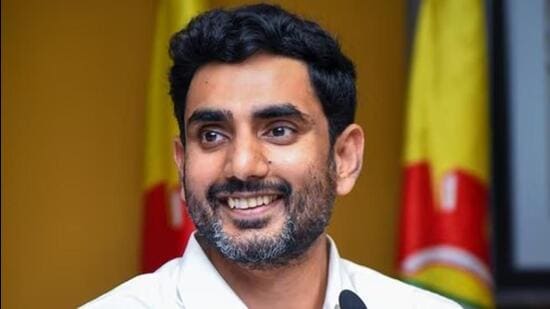
Andhra Pradesh CM Naidu appoints son Nara Lokesh as TDP working president| India News
# Lokesh Named TDP First Working President
By Political Desk, India News Observer, April 15, 2026
In a watershed moment for Andhra Pradesh politics, Chief Minister N. Chandrababu Naidu officially appointed his son and cabinet minister, Nara Lokesh, as the working president of the Telugu Desam Party (TDP) on Wednesday, April 15, 2026. This monumental decision marks the first time in the 44-year history of the regional heavyweight that a working president has been established. The strategic elevation formally anoints the 43-year-old leader as Naidu’s political heir apparent, signaling a generational shift designed to future-proof the party while allowing the Chief Minister to focus on state governance and the completion of major infrastructure projects. [Source: Hindustan Times]
## A Historic Shift in TDP Leadership
Since its foundation by the legendary actor-turned-politician Nandamuri Taraka Rama Rao (NTR) in March 1982, the Telugu Desam Party has maintained a highly centralized leadership structure. For over four decades, the party president—first NTR, and subsequently N. Chandrababu Naidu since 1995—wielded absolute executive authority over party affairs, candidate selection, and grassroots management. The creation of the working president post shatters this 44-year tradition, introducing a decentralized command structure aimed at administrative efficiency. [Source: Hindustan Times | Additional: Historical political records of Andhra Pradesh]
Political analysts view this structural change as a necessary evolution for a modern regional party. At 76 years of age, Chief Minister Naidu has increasingly focused his energies on the monumental tasks of rebuilding the state capital, Amaravati, and expediting the Polavaram irrigation project—twin promises that formed the bedrock of the TDP-Janasena-BJP alliance’s landslide victory in the 2024 assembly elections. By delegating the day-to-day organizational responsibilities to Nara Lokesh, Naidu ensures that the party machinery remains robust and continuously engaged with the electorate, preventing the administrative lethargy that often plagues ruling parties mid-term.
“This is a classic institutionalization of succession,” notes Dr. V. Ramakrishna, a veteran political scientist based in Visakhapatnam. “By creating a statutory position within the party constitution for Lokesh, Naidu is moving away from an informal, ad-hoc power transfer to a formalized leadership transition. It gives Lokesh the necessary constitutional authority to reorganize district committees, discipline rogue cadres, and implement new digital campaign strategies without constantly seeking the party president’s seal.”
## The Political Maturation of Nara Lokesh
The elevation of Nara Lokesh is not merely a product of dynastic succession, but the culmination of a grueling political coming-of-age. When Lokesh formally entered active politics a decade ago, critics frequently dismissed him as a reluctant scion, citing his early electoral setbacks and initial difficulties with public oratory. His defeat in the Mangalagiri constituency during the 2019 assembly elections was heavily weaponized by the opposition YSR Congress Party (YSRCP) to brand him as a lightweight.
However, the turning point in Lokesh’s career arrived during the TDP’s time in the opposition between 2019 and 2024. His ambitious **”Yuva Galam” (Voice of the Youth)** padayatra—a grueling walkathon spanning over 3,000 kilometers across Andhra Pradesh—fundamentally transformed his public image. The padayatra allowed him to shed his elite, Stanford-educated corporate persona and connect with grassroots realities. During this massive outreach campaign, he engaged directly with unemployed youth, distressed farmers, and marginalized communities, formulating a comprehensive youth manifesto that later became a cornerstone of the TDP’s 2024 election platform. [Source: Public domain electoral and party records]
This extensive groundwork paid off spectacularly in 2024 when Lokesh secured a resounding victory in the very same Mangalagiri constituency, winning by a record margin. Since assuming office as the Minister for Information Technology, Electronics, and Human Resource Development, Lokesh has been aggressively courting global tech investments to Visakhapatnam and Amaravati, echoing his father’s successful transformation of Hyderabad in the late 1990s. His dual success as a mass mobilizer and a performing cabinet minister provided the crucial internal legitimacy needed for this new appointment.
## Strategic Timing and the 2029 Vision
The timing of this appointment—two years into the TDP-led NDA government’s term—is a calculated political maneuver. The honeymoon period of the 2024 victory is naturally concluding, and the party needs to begin fortifying its grassroots structures for the 2029 electoral cycle.
As working president, Lokesh’s immediate mandate involves several critical objectives:
* **Revamping Booth-Level Committees:** Overhauling the grassroots network to ensure maximum penetration of government welfare schemes and to counter opposition narratives.
* **Digital Integration:** Expanding the TDP’s already formidable digital infrastructure, utilizing data analytics to map voter sentiment in real-time.
* **Youth Empowerment:** Identifying and grooming a new generation of political leaders within the party ranks to replace retiring veterans, ensuring the party remains relevant to Gen Z voters.
“The 2029 elections will be fought on a vastly different demographic landscape,” stated a senior TDP politburo member on the condition of anonymity. “Almost 40% of the electorate will be under the age of 35. Lokesh perfectly bridges the gap between the senior leadership’s experience and the aspirations of the youth. His appointment is our roadmap to maintaining dominance in Andhra Pradesh.”
## Navigating Alliance Dynamics
A crucial aspect of Lokesh’s new role will be managing the intricate dynamics of the ruling NDA coalition in Andhra Pradesh. The alliance between the TDP, Janasena Party (led by Deputy Chief Minister Pawan Kalyan), and the Bharatiya Janata Party (BJP) has been stable, but requires constant nurturing.
Pawan Kalyan’s immense popularity and his effective governance as Deputy CM have created a powerful dual-engine dynamic in the state. Lokesh, in his capacity as working president, will now serve as the primary interlocutor between the TDP cadre and the grassroots workers of Janasena and the BJP. Ensuring seamless coordination at the district and mandal levels, particularly concerning local body elections, will be a critical test of his political acumen. Early reports suggest that both alliance partners have privately welcomed the move, viewing Lokesh as a pragmatic and accessible leader who values coalition dharma. [Source: General political analysis of current AP coalition politics]
## Countering the Opposition’s Nepotism Narrative
Unsurprisingly, the appointment has drawn immediate fire from the opposition. The YSRCP, still attempting to recover from its severe electoral defeat in 2024, has seized upon the development to reiterate allegations of dynastic politics. YSRCP spokespersons quickly took to social media, accusing Naidu of treating the Telugu Desam Party as a “family fiefdom” and arguing that the move sidelined senior leaders who have dedicated their lives to the party.
However, the TDP’s counter-narrative is robust and meticulously planned. Party strategists are quick to point out the irony of the YSRCP—a party named after and exclusively controlled by the Y.S. Rajasekhara Reddy family—leveling accusations of nepotism. Furthermore, TDP leaders emphasize that Lokesh did not parachute into the role; he earned it through the grueling 3,000 km Yuva Galam padayatra, enduring police harassment during the previous regime, and securing a massive popular mandate in Mangalagiri.
“To call this mere nepotism is to ignore the sweat and blood Lokesh poured into the party during its darkest hours between 2019 and 2024,” asserted a TDP official during a press briefing in Amaravati. “He stood as a bulwark against the previous government’s vendetta politics when his father was unjustly incarcerated. The cadre demanded this elevation; the leadership merely formalized it.”
## Challenges Ahead for the New Working President
Despite the celebratory mood at the TDP central office, NTR Bhavan, the road ahead for Nara Lokesh is fraught with complex challenges.
**Balancing Governance and Party Affairs:** As a cabinet minister handling crucial portfolios like IT and Education, Lokesh already bears a heavy administrative burden. Successfully attracting foreign direct investment (FDI) to a state that is still developing its capital infrastructure requires relentless focus. Splitting his time between cabinet duties and the exhaustive demands of managing a massive regional party will test his stamina and organizational skills.
**Managing Senior Egos:** The TDP boasts a cadre of highly experienced, seasoned politicians who have worked with Chandrababu Naidu for decades. Eliciting genuine deference and cooperation from these party veterans, many of whom are twice his age, will require tact, diplomacy, and a collaborative leadership style. Lokesh must ensure that his mandate for bringing “new blood” into the party does not alienate the old guard whose institutional memory is invaluable.
**Delivering on the Jobs Promise:** A central pillar of Lokesh’s political brand is job creation. His mantra of generating localized employment through IT hubs and manufacturing zones resonated deeply with voters. As working president, any failure to deliver on these economic promises will reflect not just on the government, but heavily on his personal political capital going into 2029.
## Conclusion: A New Era for Andhra Politics
The appointment of Nara Lokesh as the first-ever working president of the Telugu Desam Party is far more than an internal administrative shuffle; it is a definitive statement of intent. By breaking a 44-year tradition, N. Chandrababu Naidu has initiated a carefully calibrated transition of power, ensuring that the party possesses a clear, youthful leadership pipeline.
For Lokesh, the title brings immense power but equally monumental expectations. He is no longer just the Chief Minister’s son or a prominent cabinet minister; he is now the functional custodian of one of India’s most successful regional political machines. As Andhra Pradesh continues its rapid push towards becoming a premier investment destination under the NDA government, Lokesh’s ability to seamlessly blend technocratic governance with shrewd, grassroots political management will inevitably dictate not just his own political destiny, but the future trajectory of the state itself.





