
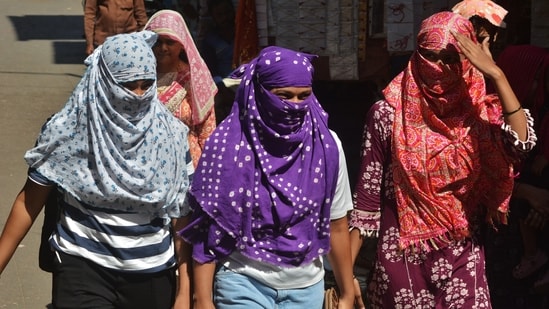
Heat wave to prevail across Maharashtra; yellow alert for Mumbai on Thursday| India News
# Maharashtra Heatwave: Mumbai on Yellow Alert
By Staff Correspondent, The Climate Sentinel, April 16, 2026
A severe and unrelenting heatwave has tightened its grip across the western Indian state of Maharashtra, prompting the India Meteorological Department (IMD) to issue critical health and weather advisories. According to the latest meteorological assessments, maximum temperatures are expected to soar between 42 and 44 degrees Celsius across vast swathes of Madhya Maharashtra and the drought-prone Marathwada region until at least April 18. Simultaneously, the coastal metropolis of Mumbai has been placed under a localized yellow alert for Thursday, warning millions of residents of oppressive heat and dangerously high humidity levels. [Source: Hindustan Times | Additional: India Meteorological Department Bulletins].
## Scorching Temperatures Grip the Interior
As India progresses deeper into the pre-monsoon summer of 2026, the interior districts of Maharashtra are bearing the brunt of an extreme thermal anomaly. The IMD’s forecast of 42 to 44 degrees Celsius for Madhya Maharashtra and Marathwada highlights a significant departure from normal mid-April baseline temperatures. Cities such as Jalgaon, Malegaon, Parbhani, Nanded, and Chhatrapati Sambhajinagar are currently transforming into virtual furnaces during peak afternoon hours.
The geography of Madhya Maharashtra and Marathwada makes these regions naturally susceptible to intense summer heating. However, the current prolonged spell is particularly severe due to the absence of pre-monsoon showers and sustained anti-cyclonic wind patterns. These clear skies allow for maximum solar radiation to reach the earth’s surface, trapping heat in the lower atmosphere.
**Key Regional Impacts:**
* **Madhya Maharashtra:** Urban centers like Pune and Nashik are witnessing uncharacteristically high daytime temperatures, severely impacting daily commerce and outdoor labor.
* **Marathwada:** Already vulnerable to water scarcity, the region’s topsoil moisture is being rapidly depleted. Reservoirs are experiencing accelerated evaporation rates, exacerbating the perennial water stress in agrarian communities.
* **Vidarbha:** Though slightly outside the primary warning zone, neighboring Vidarbha continues to simmer, contributing to a contiguous heat belt across central India.
## Mumbai’s Yellow Alert: The Humidity Factor
While interior Maharashtra battles dry, baking heat, the situation in Mumbai presents a different, yet equally hazardous, meteorological challenge. The IMD has issued a yellow alert for Mumbai for Thursday, a designation meant to urge the public to “be updated” and exercise caution.
In Mumbai, the absolute air temperature rarely breaches the 40-degree mark due to the moderating influence of the Arabian Sea. However, the coastal humidity creates a compounding effect, drastically elevating the “feels-like” temperature, scientifically referred to as the heat index.
When absolute temperatures hover around 35 to 37 degrees Celsius alongside relative humidity levels exceeding 60%, the human body’s primary cooling mechanism—the evaporation of sweat—is severely hindered. This phenomenon brings Mumbai perilously close to dangerous wet-bulb temperatures.
“The yellow alert for Mumbai is less about the sheer thermal reading on the thermometer and entirely about the physiological stress caused by the combination of heat and coastal moisture,” explains Dr. Anjali Deshmukh, an independent climatologist specializing in coastal urban microclimates. “In these conditions, outdoor exposure for prolonged periods can trigger heat exhaustion much faster than in a dry 42-degree environment.” [Source: Hindustan Times | Additional: Independent Climate Analysis].
## The Meteorological Drivers Behind the 2026 Heat
To understand the severity of this heatwave, it is essential to look at the macro-level meteorological drivers dominating the Indian subcontinent in April 2026. The transition out of the strong El Niño phase of 2023-2024 has left lingering atmospheric anomalies. While the Pacific Ocean is currently experiencing ENSO-neutral conditions, the Indian Ocean Dipole (IOD) and localized atmospheric blocking patterns are playing a massive role.
Currently, a mid-tropospheric anti-cyclone is positioned over the central Arabian Sea and adjoining peninsular India. This system acts as a dome, pushing air downward. As the air descends, it compresses and warms, suppressing cloud formation and blocking any cooling maritime breezes from penetrating deep inland.
Furthermore, the advection of hot, dry winds originating from the arid regions of Rajasthan and the Pakistani plains is funneling directly into Maharashtra. The IMD notes that until the wind direction shifts or a significant western disturbance breaks the high-pressure ridge, the heatwave conditions will persist through April 18, and potentially longer in isolated pockets.
## Civic Action and Health Advisories
In response to the IMD’s warnings, local municipal bodies, including the Brihanmumbai Municipal Corporation (BMC) in Mumbai and district collectorates across the state, have activated their respective Heat Action Plans (HAPs).
The primary concern is public health. Heat-related illnesses exist on a spectrum, ranging from mild heat cramps and heat syncope (fainting) to severe heat exhaustion and life-threatening heatstroke. The state health department has ordered all primary health centers (PHCs) and district hospitals to maintain dedicated heat wards, complete with adequate stocks of oral rehydration salts (ORS), intravenous fluids, and active cooling mechanisms.
The BMC has issued stringent guidelines for Mumbaikars under the yellow alert:
1. **Hydration:** Citizens are advised to drink water frequently, even when not thirsty, and consume natural cooling beverages like buttermilk, lemon water, and coconut water.
2. **Timing Outings:** Residents are strongly urged to avoid direct sunlight between 11:00 AM and 4:00 PM, the period of maximum solar insolation.
3. **Vulnerable Populations:** Special care must be taken for the elderly, infants, and those with pre-existing cardiovascular or respiratory conditions, as their thermoregulatory systems are more easily overwhelmed.
4. **Labor Protection:** Construction sites and outdoor industrial units are being advised to alter shift timings, ensuring laborers are not engaging in heavy physical exertion during peak afternoon hours.
## Agricultural Toll in Vulnerable Corridors
Beyond the immediate human health crisis, the 44-degree Celsius temperatures are inflicting severe damage on Maharashtra’s agricultural sector. Marathwada, a region historically plagued by erratic monsoons and groundwater depletion, is facing acute agricultural distress.
By mid-April, farmers are typically engaged in post-harvest activities for Rabi (winter) crops and beginning land preparation for the upcoming Kharif (monsoon) season. However, the extreme heat is baking the topsoil to a hardpan, making tilling virtually impossible without substantial irrigation—a luxury few possess.
Horticulture is particularly hard hit. Orchards of sweet lime (mosambi), mango, and pomegranate are experiencing heavy fruit and flower drop due to thermal stress. “When temperatures cross 42 degrees, the transpiration rate of plants exceeds their ability to draw water from the soil, leading to rapid wilting and cellular damage,” notes Dr. Milind Sharma, an agricultural extension officer based in Aurangabad. “Even with drip irrigation, the ambient air temperature is simply too hostile for optimal fruit development.” [Source: Independent Agricultural Field Research].
Furthermore, the heatwave is accelerating the depletion of the Jayakwadi Dam, the lifeline of Marathwada. Falling reservoir levels spell trouble not just for irrigation, but for the drinking water supply of millions of residents over the critical months of May and June.
## Urban Heat Islands and the Changing Climate
The situation in Mumbai and Pune underscores the growing crisis of Urban Heat Islands (UHI). Rapid urbanization, the systematic destruction of green cover, and the proliferation of concrete and asphalt have fundamentally altered the microclimates of these cities. Buildings and roads absorb solar radiation during the day and re-emit it at night, preventing the city from cooling down.
Consequently, nighttime temperatures in Mumbai are remaining stubbornly high, hovering around 28 to 30 degrees Celsius. This lack of nocturnal cooling deprives the human body of the physiological rest it needs to recover from daytime heat stress.
The escalating frequency, intensity, and duration of such heatwaves are in direct alignment with global climate change projections. The Intergovernmental Panel on Climate Change (IPCC) has repeatedly warned that the Indian subcontinent is a hotspot for severe heat extremes. The baseline temperature of the region has shifted upward, meaning that natural weather fluctuations now ride on a much warmer foundation, pushing extreme weather events into unprecedented territory.
## Conclusion: Navigating the Heat
As Maharashtra braces for the continuation of this brutal heatwave through April 18, the convergence of interior dry heat and coastal humidity demands immediate and coordinated public response. The yellow alert for Mumbai is a stark reminder that extreme weather risks are not solely defined by thermometer readings, but by the complex interplay of atmospheric conditions and urban infrastructure.
For the residents of Madhya Maharashtra and Marathwada enduring 44-degree days, the immediate priority remains securing adequate water and minimizing heat exposure. Looking ahead, meteorologists expect a brief respite if changing wind patterns allow marine moisture to penetrate inland, though the true relief will only arrive with the onset of the Southwest Monsoon in June.
Until then, state authorities and citizens must rely on proactive adaptation. The heatwaves of 2026 are not anomalous outliers; they are a manifestation of the new climate reality. Building long-term resilience—through urban greening, robust public health infrastructure, and climate-smart agriculture—is no longer a theoretical goal, but an urgent necessity for the survival and prosperity of Maharashtra.





