CBI arrests DGCA deputy director, senior executive of private firm in bribery case| India News
# CBI Arrests DGCA Official in Bribery Case
**By Special Correspondent, National News Desk**
**April 19, 2026**
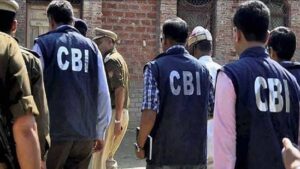
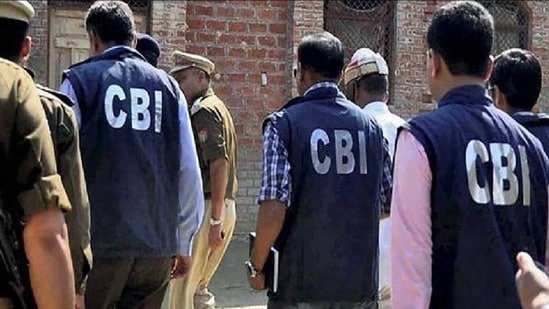
**New Delhi** — In a targeted crackdown on bureaucratic corruption within India’s apex aviation regulatory body, the Central Bureau of Investigation (CBI) arrested a Deputy Director of the Directorate General of Civil Aviation (DGCA) and a senior corporate executive on Sunday, April 19, 2026. The intelligence-led sting operation culminated in the apprehension of **Bharat Mathur, a Senior Vice President of a prominent private corporate group**, alongside the regulatory official, for allegedly exchanging a bribe of **₹2.5 lakh**. The illicit payment was reportedly facilitated to expedite pending aviation clearances. This high-profile enforcement action highlights the federal agency’s zero-tolerance approach toward graft in India’s rapidly expanding civil aviation sector. [Source: Hindustan Times]
## The Sting Operation: Uncovering the Illicit Network
The arrests carried out on Sunday evening were the result of weeks of covert surveillance and intelligence gathering by the premier investigative agency. According to initial reports, the CBI had received a tip-off regarding a syndicate operating within the regulatory corridors of New Delhi, where routine files and mandatory safety clearances were allegedly being deliberately stalled to extort financial favors from corporate aviation divisions.
The CBI registered a First Information Report (FIR) under the **Prevention of Corruption Act, 1988**, before laying a meticulously planned trap. Undercover operatives monitored the communication between the corporate executive and the DGCA official. The operation reached its climax when the ₹2.5 lakh cash transaction took place, leading to the immediate arrest of both individuals red-handed.
Federal agents subsequently launched coordinated search operations at the residential and official premises of the accused in Delhi and the National Capital Region (NCR). These raids aim to secure electronic evidence, communication logs, and physical documents that might reveal a larger web of disproportionate assets or systemic bribery involving other corporate entities. [Source: Hindustan Times | Additional: Public records on CBI procedural guidelines]
## The Corporate Connection: Why Companies Seek Regulatory Shortcuts
The arrest of **Bharat Mathur**, identified as a Senior Vice President in a major corporate group, sheds light on the immense pressure faced by private entities managing independent aviation fleets or seeking rapid regulatory approvals. While the specific corporate group has not been officially named pending further investigation, industry insiders note that corporate aviation divisions frequently interact with the DGCA for a myriad of essential approvals.
In the highly capital-intensive aviation sector, time translates directly into significant financial impact. An aircraft sitting on the tarmac awaiting a routine inspection clearance, a route dispersal approval, or an airworthiness certificate renewal costs corporate owners millions in depreciation, parking fees, and lost operational efficiency.
This financial pressure often creates a dangerous vulnerability. When bureaucratic bottlenecks delay legitimate operations, corporate executives may feel incentivized—or extorted—to pay “speed money” to move files across a bureaucrat’s desk.
### Key Approvals Vulnerable to Rent-Seeking
Corporate groups and private charter operators regularly rely on the DGCA for:
* **Non-Scheduled Operator’s Permit (NSOP):** Required for flying private charters.
* **Certificate of Airworthiness (CoA):** Mandatory certification before any aircraft can take to the skies.
* **Import Clearances:** Authorizations required to bring foreign-leased or purchased aircraft into Indian airspace.
* **Crew Clearances:** Approval of training manuals, pilot proficiency checks, and foreign flight crew licensing.
## Systemic Vulnerabilities within the DGCA Framework
The Directorate General of Civil Aviation is the cornerstone of India’s aviation safety and regulatory framework. From investigating minor runway incursions to certifying multi-billion dollar aircraft fleets, the power wielded by its officials is immense.
Over the past decade, the Ministry of Civil Aviation has heavily pushed for the digitization of the regulator through the **eGCA (e-Governance in Civil Aviation)** initiative. The primary goal of this platform was to eliminate the human interface, thereby reducing the scope for bribery and ensuring transparency in how files are processed.
Despite these technological advancements, certain critical approvals—especially those requiring physical safety audits, subjective evaluations of training manuals, and on-site aircraft inspections—still demand human intervention. It is within these remaining offline interactions that corrupt practices occasionally find a foothold.
An internal audit of pending regulatory files is expected to be part of the CBI’s expanded probe to determine if the arrested Deputy Director had a history of deliberately delaying applications to solicit bribes. [Additional: General Aviation Industry Reports 2025-2026]
## Industry Experts Weigh In on Aviation Compliance
The reaction from the broader aviation and corporate governance communities has been one of concern, coupled with calls for deeper structural reforms.
“The arrest is a stark reminder that while the eGCA platform has resolved many frontline ticketing and licensing delays, the complex, high-stakes approvals for corporate aviation remain susceptible to rent-seeking,” said Dr. Vikram Sanyal, an independent aviation safety consultant and former regulatory auditor. “When an executive is willing to risk a criminal conviction over ₹2.5 lakh to get a file cleared, it indicates a severe bottleneck in the ease of doing business that bad actors are exploiting.”
Corporate governance analysts point to the compliance failure on the part of the private firm. “Under the amended Prevention of Corruption Act, bribe-givers are held equally liable,” noted Meera Chandran, a legal expert specializing in corporate compliance. “Companies must institute robust internal anti-bribery management systems. If a Senior Vice President is caught facilitating cash payments to a government official, it exposes the entire corporate board to severe legal and reputational risks.” [Source: Independent Industry Analysis]
## Macro-Economic Implications: Protecting India’s Aviation Boom
India currently stands as one of the fastest-growing domestic aviation markets globally. Post-pandemic recovery and massive fleet orders by commercial airlines have pushed the country’s aviation infrastructure to its limits. Maintaining an unblemished regulatory environment is not just a matter of domestic law enforcement; it is deeply tied to India’s international standing.
### The ICAO and FAA Factor
Global aviation bodies, including the **International Civil Aviation Organization (ICAO)** and the **Federal Aviation Administration (FAA)** of the United States, periodically audit the DGCA. These audits measure the regulator’s ability to enforce safety standards objectively and transparently.
| International Body | Type of Audit | Consequence of Failure |
| :— | :— | :— |
| **ICAO** | Universal Safety Oversight Audit Programme (USOAP) | Global safety concerns flagged, increasing insurance premiums for airlines. |
| **FAA** | International Aviation Safety Assessment (IASA) | Downgrade to Category 2, preventing Indian airlines from adding new US routes. |
| **EASA** | Third-Country Operator (TCO) Authorization | Restrictions on Indian aircraft operating within European airspace. |
If corruption is perceived to influence safety clearances, it threatens India’s safety rankings. In 2014, the FAA temporarily downgraded India to Category 2 due to a shortage of full-time flight operations inspectors. While India has since regained and maintained its Category 1 status, incidents of bribery within the regulatory body risk attracting intense scrutiny from international watchdogs. Ensuring that the DGCA remains completely insulated from corporate influence is vital for the continued global expansion of Indian carriers. [Additional: ICAO/FAA historical data context]
## Legal Proceedings and Immediate Next Steps
Following their arrest on April 19, the CBI is slated to present the DGCA Deputy Director and corporate executive Bharat Mathur before a special CBI court in New Delhi. The federal agency is expected to seek extended custodial interrogation to unearth the full extent of the conspiracy.
Key areas of the upcoming investigation will likely include:
1. **Digital Forensics:** Extracting WhatsApp chats, emails, and call detail records (CDRs) between Mathur and the official to establish a timeline of the extortion or negotiation.
2. **Financial Trails:** Tracing the origin of the ₹2.5 lakh cash to determine if it was withdrawn from corporate accounts under the guise of “miscellaneous expenses,” which would implicate the company’s financial controllers.
3. **File Audits:** Reviewing all aviation files handled by the accused Deputy Director over the past three years to identify other companies that may have benefited from—or been victimized by—similar demands.
## Conclusion: A Wake-Up Call for Regulatory Governance
The CBI’s swift action sends a decisive message to both bureaucrats and corporate entities: the manipulation of regulatory frameworks for personal or corporate gain carries severe consequences. While ₹2.5 lakh may seem like a relatively small figure in the multi-billion-dollar aviation industry, it represents a critical breach of trust in a sector where safety and protocol must remain absolute.
As India’s skies grow increasingly crowded, the DGCA’s role as an impartial, efficient, and incorruptible watchdog becomes ever more crucial. This incident will likely serve as a catalyst for the Ministry of Civil Aviation to further tighten internal vigilance, aggressively push the remaining offline regulatory procedures onto the transparent eGCA platform, and mandate stricter compliance audits for private operators.
For the corporate sector, the arrest of a Senior Vice President underscores the necessity of stringent ethical guidelines. Companies must recognize that navigating the complexities of Indian bureaucracy cannot rely on under-the-table transactions, as the legal and reputational fallout far outweighs the temporary convenience of an expedited file. [Source: Hindustan Times | Additional: Editorial Analysis]