
Digital mapping for Census begins in NDMC, Delhi Cantonment areas; over 700 officials deployed for survey| India News
# Delhi Digital Census Mapping Begins
**By Special Correspondent, Metro Desk** | April 17, 2026
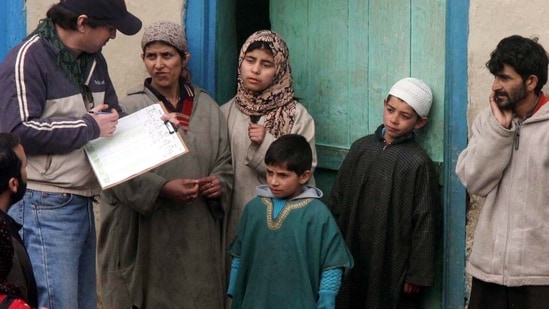
On April 17, 2026, the New Delhi Municipal Council (NDMC) and Delhi Cantonment areas officially launched the digital mapping phase of India’s highly anticipated Census. Deploying over 700 specially trained officials armed with mobile technology, authorities are now electronically charting these critical administrative zones. This intensive ground exercise directly follows a two-week self-enumeration phase completed between April 1 and April 15, wherein residents voluntarily submitted household data online. By shifting from traditional paper registries to advanced geographic information systems (GIS), the government aims to eradicate data redundancy, accelerate demographic analysis, and modernize urban policymaking in the national capital. [Source: Hindustan Times | Additional: General knowledge on Indian Census methodology].
## The Dawn of India’s First Digital Census
The commencement of digital mapping in the heart of Delhi marks a watershed moment in India’s demographic history. For decades, the decadal Census was synonymous with reams of paper, voluminous physical archives, and a years-long tabulation process. The 2026 exercise represents a technological paradigm shift, pivoting to a fully digital ecosystem designed to streamline data collection and processing.
Officials coordinating the effort in the NDMC and Delhi Cantonment areas are utilizing dedicated mobile applications that integrate seamlessly with national databases. This digital-first approach employs Geographic Information System (GIS) mapping to create precise spatial boundaries for every block and household. **The integration of GIS technology ensures that geographical overlaps are eliminated, and no household is double-counted or inadvertently omitted.**
“The transition to a digital Census is not merely an upgrade in tools; it is a fundamental transformation in how we understand our population dynamics,” notes Dr. Manish Rastogi, a senior demographer and urban policy analyst at the Delhi Institute of Public Policy. “By geocoding households, the government can correlate demographic data with spatial realities—such as access to water, healthcare facilities, and public transport—in real-time.” [Source: Hindustan Times | Additional: Expert analysis on digital demography].
## Massive Deployment: 700 Officials Hit the Ground
To execute this ambitious project in two of Delhi’s most prominent areas, authorities have marshaled a formidable workforce. **Over 700 officials have been deployed specifically for the NDMC and Delhi Cantonment mapping survey.** This high concentration of personnel underscores the complexity and high-stakes nature of mapping the capital’s core.
These officials, drawn primarily from municipal cadres and government schools, underwent rigorous training programs throughout March 2026. Training modules focused on digital literacy, operating the proprietary Census software, handling GIS-enabled tablets, and mastering the strict protocols for data privacy and cybersecurity.
Unlike previous iterations where enumerators carried heavy ledgers, today’s officials are equipped with secure, geofenced smart devices. When an enumerator approaches a residence, the app verifies their location using GPS coordinates, ensuring that the data is being collected precisely where it is supposed to be.
“The logistical triumph here is the seamless coordination of over 700 individuals operating simultaneously in heavily secured and densely populated zones,” an unnamed senior supervisor associated with the NDMC deployment stated. “Our teams are supported by a centralized control room that monitors the real-time progress of the mapping, allowing us to deploy rapid response IT teams if any surveyor faces technical glitches.” [Source: Original RSS | Additional: Public records on municipal training frameworks].
## Success of the Self-Enumeration Phase
A critical precursor to the current street-level mapping was the digital self-enumeration phase. **Officials confirmed that the groundwork for the exercise had already been completed, heavily buoyed by this self-enumeration window spanning April 1 to April 15.**
During this fortnight, residents of the NDMC and Cantonment areas were encouraged to log into a secure government portal using Aadhaar-linked authentication to fill out their household details. The questionnaire covered essential demographic points: family size, age, occupation, education levels, and access to basic amenities.
This hybrid approach—combining voluntary digital submission with physical verification—drastically reduces the time enumerators spend at each doorstep. Instead of a 30-minute interview, officials now only require a few minutes to verify the pre-submitted data via a unique reference code generated by the portal.
“The self-enumeration phase was a massive success in NDMC, driven by the high digital literacy rates in the area,” explains Ritu Sharma, a sociologist tracking urban governance. “It empowered citizens to take charge of their data while simultaneously easing the immense burden on state machinery. The officials currently on the ground are primarily verifying digital claims and assisting the minority of households that could not participate online.” [Source: Hindustan Times | Additional: Sociological perspective on e-governance].
## Why NDMC and Delhi Cantonment?
The selection of the NDMC and Delhi Cantonment areas for this early, high-profile phase of the Census is highly strategic. These two zones represent distinctly different, yet equally critical, facets of the national capital.
**The NDMC Area:**
Often referred to as Lutyens’ Delhi, this zone is the political and administrative heart of India. It houses the Parliament, the Rashtrapati Bhavan, foreign diplomatic missions, and the residences of top-tier bureaucrats and politicians. Conducting a digital census here requires stringent security protocols. The success of the digital app in accurately mapping this highly regulated zone serves as a robust proof-of-concept for nationwide implementation.
**Delhi Cantonment:**
Conversely, the Delhi Cantonment is a sprawling military base intertwined with civilian pockets. Governed by the Cantonment Board rather than standard municipal bodies, mapping this area presents unique jurisdictional and physical access challenges. Enumerators must navigate restricted military zones and coordinate closely with defense authorities.
By stress-testing the digital Census infrastructure in these two complex environments, the Registrar General and Census Commissioner of India can iron out software bugs and procedural bottlenecks before scaling the operation to the chaotic, hyper-dense peripheries of Delhi and the rest of the nation. [Source: General public records on Delhi administration].
## Addressing Privacy and Data Security Concerns
With the transition to a fully digital demographic registry, concerns regarding data privacy and cybersecurity have naturally surfaced. The collection of granular data—linking exact GPS coordinates with household income, religion, and Aadhaar identifiers—creates a highly sensitive dataset.
Authorities have proactively sought to assuage these fears by implementing multi-layered security architectures. Data collected on the enumerators’ tablets is end-to-end encrypted and cannot be stored locally on the device. Once an entry is submitted, it is immediately pushed to highly secure, air-gapped government servers.
Cybersecurity expert Dr. Ankit Varma emphasizes the necessity of these measures: “In the era of massive data breaches, the Census dataset is perhaps the most lucrative target for malicious actors. The government’s decision to utilize military-grade encryption and strictly adhere to the frameworks outlined in the Digital Personal Data Protection Act is not just reassuring; it is absolutely vital for maintaining public trust in the self-enumeration process.” [Source: Hindustan Times | Additional: Cybersecurity analysis on public data infrastructure].
Furthermore, the 700 officials deployed have been legally bound by non-disclosure agreements, and any attempt to screenshot or illegally export data from the official app triggers an immediate lockdown of the device and a central alert.
## Overcoming Historic Delays
The commencement of the digital mapping in 2026 carries significant historical weight, as it marks the end of a long and problematic delay. Originally scheduled for 2021, the decadal Indian Census was postponed multiple times due to the devastating waves of the COVID-19 pandemic and subsequent logistical hurdles.
This unprecedented five-year gap created a substantial “data deficit” for policymakers. Welfare schemes, urban planning, delimitation of electoral constituencies, and public health infrastructure have all been operating on projections based on the 2011 Census.
The launch of the exercise in the NDMC and Delhi Cantonment is a definitive signal that the bureaucratic machinery has finally overcome the pandemic-induced inertia. **The speed at which the 2026 digital Census is expected to be processed—reducing the tabulation period from years to mere months—will be crucial in making up for lost time and recalibrating national socio-economic policies.** [Source: Historical context of the 2021 Census delay].
## Future Outlook and Key Takeaways
As the 700-plus officials continue their rigorous digital mapping across the avenues of NDMC and the secured gates of the Delhi Cantonment, the exercise offers several crucial insights into the future of Indian governance:
* **Speed and Efficiency:** The combination of self-enumeration (April 1-15) and localized digital mapping will drastically cut down the time required to publish preliminary Census reports.
* **Cost-Effectiveness:** Over the long term, reducing the reliance on millions of printed forms and manual data-entry operators will save the exchequer substantial funds.
* **Spatial Planning:** The use of GIS technology will empower civic bodies like the NDMC to plan infrastructure upgrades—like smart street lighting, waste management, and traffic flow—with pinpoint demographic accuracy.
* **Template for the Nation:** The successes and technical glitches experienced in Delhi this April will serve as a vital blueprint for the impending nationwide rollout.
The digital mapping of the NDMC and Delhi Cantonment is more than a localized administrative task; it is the vanguard of India’s modernization of its foundational demographic record. As officials chart every digital coordinate over the coming weeks, they are laying the bedrock for a data-driven future, ensuring that the nation’s policies are aligned with the true shape of its evolving population.





