
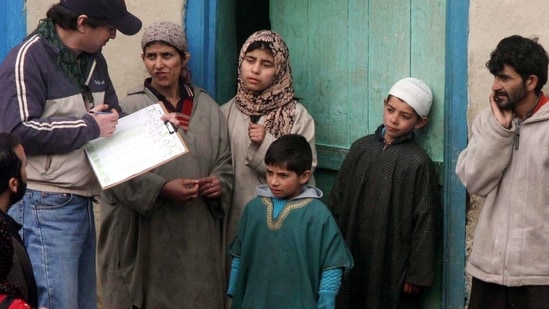
Digital mapping for Census begins in NDMC, Delhi Cantonment areas; over 700 officials deployed for survey| India News
# Delhi Census 2026: Digital Mapping Begins in NDMC
By Special Correspondent, National Affairs Desk, April 17, 2026
The much-anticipated digital mapping phase for India’s first fully paperless Census commenced on Friday across the New Delhi Municipal Council (NDMC) and Delhi Cantonment areas. Deploying over 700 trained enumerators, the Registrar General of India initiated the comprehensive door-to-door digital survey following a successful self-enumeration period that ran from April 1 to April 15. This groundbreaking technological shift aims to streamline demographic data collection, eliminate logistical redundancies, and ensure real-time tracking, setting a vital precedent for the nationwide rollout of the 2026 Census operations. [Source: Hindustan Times].
## Groundwork Completed: The Self-Enumeration Phase
The transition from a traditional paper-based census to a highly sophisticated digital model requires immense preparatory work. According to senior census officials, the structural groundwork for the current phase was finalized weeks in advance. A major milestone in this preparation was the self-enumeration phase, which allowed residents of the NDMC and Delhi Cantonment zones to voluntarily update their household data through a dedicated government portal.
Between April 1 and April 15, citizens utilized their Aadhaar-linked mobile numbers to log into the secure Census web portal. This interface allowed heads of households to fill out a comprehensive digital questionnaire, inputting details such as family size, occupational status, educational qualifications, and migration history.
“The self-enumeration window was a pilot success. It not only empowered citizens to take charge of their demographic representation but also significantly reduced the anticipated workload for our on-ground staff,” stated a senior official from the Ministry of Home Affairs, who requested anonymity. Families that successfully completed the self-enumeration generated a unique reference code, which is now being cross-verified by the visiting enumerators to close the data loop efficiently. [Source: Hindustan Times | Additional: Ministry of Home Affairs Public Briefings].
## Strategic Deployment of Over 700 Officials
Executing a digital census in a densely populated and politically significant geography like New Delhi demands precision. To achieve this, the government has deployed over 700 specially trained officials across the NDMC and Delhi Cantonment limits. These enumerators, largely comprising government school teachers, municipal workers, and local revenue department staff, have undergone rigorous technical training over the past three months.
The choice of NDMC and Delhi Cantonment as the initial launchpads is highly strategic. These areas are characterized by well-defined civic infrastructure, high digital literacy rates, and clear geographical boundaries, making them ideal testing grounds for the new mobile application.
Equipped with government-issued biometric tablets and smartphones pre-loaded with the proprietary Census App, these officials are tasked with visiting households that either did not participate in the self-enumeration phase or require data verification. The app functions entirely offline, syncing securely with central servers only when a verified, encrypted connection is established, thereby ensuring seamless operation even in areas with fluctuating network connectivity.
## The Mechanics of Digital Mapping
A core component of the 2026 Census is the integration of Geographic Information System (GIS) technology. Digital mapping goes beyond merely recording the names and ages of residents; it involves the spatial tagging of every residential and commercial structure.
During the current phase in Delhi, enumerators are using the app’s geofencing capabilities to tag household coordinates. This creates a highly accurate digital base map of the city’s population density, housing infrastructure, and utility access.
**Key Features of the Digital Mapping Exercise:**
* **Geospatial Tagging:** Every household is assigned a unique spatial footprint, eliminating the risk of double-counting or missing isolated residences.
* **Real-time Dashboarding:** Supervisory officials can monitor the progress of the survey in real-time through centralized dashboards.
* **Multi-language Support:** The mobile application supports 18 regional languages, allowing enumerators to switch interfaces based on the respondent’s comfort.
* **Automated Error Flagging:** The software includes built-in logic checks that instantly flag contradictory data (e.g., a 10-year-old listed as holding a postgraduate degree), prompting the enumerator to correct the entry on the spot.
Dr. Manish Tiwari, a prominent demographer and researcher at the Institute of Economic Growth, noted the transformative nature of this technology. “By integrating digital mapping with census enumeration, India is leaping decades ahead in its statistical capabilities. The spatial data collected now will allow urban planners to map exact demographic pressures against existing infrastructure like hospitals, schools, and transit nodes. It is a paradigm shift from a static spreadsheet to a dynamic, living map of the nation,” Dr. Tiwari explained. [Additional: Expert Analysis].
## Overcoming the Paper Legacy and Pandemic Delays
The current exercise is particularly momentous given the historical context. The decennial Indian Census, an uninterrupted exercise since 1881, faced its first major derailment in 2021 due to the COVID-19 pandemic. The subsequent delays, while initially viewed as a setback, provided the Office of the Registrar General and Census Commissioner of India the crucial time required to overhaul the methodology.
Moving away from the millions of tons of paper previously required for printed schedules, the digital shift is both environmentally sustainable and economically prudent in the long run. The paper-based 2011 Census involved staggering logistical hurdles, including the physical transportation, scanning, and manual data entry of over 2.7 million paper booklets. The digital leap in 2026 is projected to cut down the data processing time from years to mere months.
### Comparative Look: 2011 Paper Census vs. 2026 Digital Census
| Feature | 2011 Census (Paper-based) | 2026 Census (Digital-first) |
| :— | :— | :— |
| **Data Collection Medium** | Paper schedules & pens | Mobile Apps & Tablets |
| **Self-Enumeration** | Not available | Web portal (April 1-15 pilot) |
| **Data Processing Time** | 2 to 3 years | Estimated 3 to 6 months |
| **Error Correction** | Manual, post-survey | Real-time logic checks on app |
| **Mapping Integration** | Hand-drawn paper maps | Real-time GIS & Geofencing |
## Data Security and Privacy Concerns
With the digitization of sensitive demographic data, concerns regarding data privacy and cybersecurity have naturally surfaced. The collection of granular data, including exact geographical coordinates and Aadhaar integration during the self-enumeration phase, has prompted civil society to ask rigorous questions about the safety of the National Population Register (NPR) and Census databases.
To address these concerns, the government has mandated end-to-end encryption for all data transmitted via the Census App. Once an enumerator submits a household’s data, it is locally encrypted on the device and automatically wiped from the hardware as soon as it syncs with the secure servers of the National Informatics Centre (NIC).
“Security protocols for the 2026 Census are modeled on banking-grade encryption standards,” stated cybersecurity policy analyst Priya Venkatraman. “The localized wiping of data ensures that even if an enumerator’s tablet is lost or stolen, no citizen’s personal information can be extracted. However, the true test will lie in the sustained protection of the centralized NIC servers against advanced persistent threats.” [Additional: Cybersecurity Policy Insights].
## Public Policy and Future Implications
The data generated from the NDMC and Delhi Cantonment digital mapping will serve as the immediate bedrock for refining the national census strategy. However, the broader implications of the completed 2026 Census will deeply influence India’s socio-economic and political landscape for the next decade.
One of the most critical aspects tied to the updated population figures is the impending delimitation of parliamentary and assembly constituencies. The freezing of constituency boundaries based on the 1971 Census is set to be lifted following the publication of the first census taken after 2026. The exact spatial and demographic data currently being mapped in Delhi will eventually dictate political representation, resource allocation, and the restructuring of electoral maps across the country.
Furthermore, accurate, digitized population data will allow for hyper-targeted welfare delivery. Schemes related to housing (Pradhan Mantri Awas Yojana), food security, and public health can be routed with pinpoint accuracy, minimizing leakages and ensuring that marginalized urban populations—often missed in manual surveys—are properly documented and serviced.
## Conclusion and Next Steps
The commencement of digital mapping in the NDMC and Delhi Cantonment areas marks a definitive turning point in India’s administrative history. By successfully completing the groundwork and the April 1-15 self-enumeration phase, the government has demonstrated the viability of a hybrid citizen-participatory model.
As the 700 deployed officials navigate the streets of the capital over the coming weeks, their feedback will be instrumental in patching software bugs, refining the user interface, and optimizing offline sync capabilities. The success of this micro-level deployment will directly influence the macro-level rollout, determining how quickly and efficiently the diverse, geographically complex, and populous expanse of India can be digitally mapped.
For now, the digital census is no longer a theoretical concept but an active, on-ground reality. As India moves further into the digital age, this monumental data-gathering exercise will not merely count the country’s residents but will strategically map the future trajectory of the nation’s growth.





