
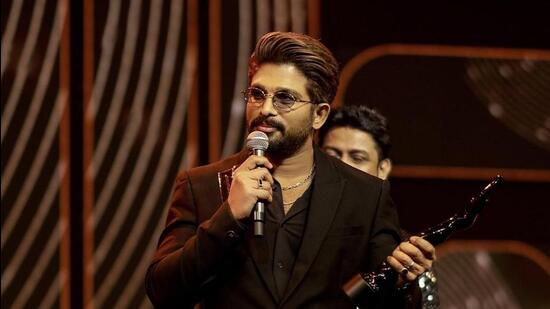
Delhi high court set to pass orders protecting Allu Arjun’s personality rights| India News
# Delhi HC to Protect Allu Arjun Personality Rights
By Legal News Desk, The Daily Standard, April 17, 2026
On April 17, 2026, the Delhi High Court is set to pass a landmark injunction protecting the personality and publicity rights of Pan-India superstar Allu Arjun. The acclaimed actor approached the judiciary to halt the rampant, unauthorized commercial exploitation of his name, voice, image, and signature style. Unregulated vendors across various e-commerce platforms and physical markets have been extensively selling merchandise—specifically T-shirts, mugs, and posters—bearing his likeness without his consent or financial compensation. This impending legal order reinforces the growing necessity for high-profile celebrities to aggressively safeguard their personal brands in an era of widespread physical and digital copyright infringement. [Source: Hindustan Times].
## The Legal Battle for Persona Protection
The petition filed by Allu Arjun’s legal counsel highlights a systemic abuse of the actor’s intellectual property. The suit targets multiple known and unknown defendants—often referred to in Indian jurisprudence as an “Ashok Kumar” or John Doe order—who have been actively manufacturing, distributing, and selling unauthorized merchandise.
According to court filings, the actor’s legal team submitted extensive evidence of commercial exploitation. E-commerce portals and local retail vendors were found listing hundreds of unverified products, ranging from printed coffee mugs to graphic T-shirts featuring the actor’s distinct character avatars. The legal foundation of the suit is built upon the **tort of passing off**, a common law concept used to enforce unregistered trademark rights. By selling these products, vendors are illegally capitalizing on the actor’s established goodwill, deceiving consumers into believing these products are officially endorsed or licensed by Allu Arjun himself.
The Delhi High Court’s anticipated ruling is expected to grant an *ex-parte ad-interim injunction*, immediately restricting the named entities and any prospective infringers from utilizing the actor’s name, image, dialogue delivery style, and voice for commercial gain without written authorization. [Source: Hindustan Times | Additional: Delhi High Court Legal Proceedings].
## The Pan-India Stardom and Commercial Exploitation
To understand the magnitude of this commercial exploitation, one must examine the unprecedented trajectory of Allu Arjun’s pan-India stardom. Following the historic success of *Pushpa: The Rise* (2021) and the subsequent box-office dominance of *Pushpa 2: The Rule* across global markets, the actor’s cultural footprint expanded exponentially.
His iconic screen gestures—most notably the hand-through-the-beard motion—and signature catchphrases transcended regional cinema, becoming deeply ingrained in the broader Indian pop culture lexicon. This immense popularity inevitably spawned a massive gray market. Small-scale manufacturers and large-scale bootleggers alike identified a lucrative opportunity, flooding the market with cheap, unlicensed memorabilia.
**Key Exploited Assets Include:**
* **Visual Likeness:** Stills from his major motion pictures printed on apparel.
* **Signature Gestures:** Caricatures of his specific dance moves and character mannerisms on stationery and mugs.
* **Catchphrases:** Dialogue snippets utilized in unauthorized advertising campaigns.
Because personality rights are intrinsically linked to an individual’s right to privacy and right to publicity, the unauthorized monetization of these attributes directly deprives the celebrity of legitimate licensing revenue while simultaneously diluting their brand equity.
## Establishing a Precedent in Indian IP Law
The impending order for Allu Arjun does not exist in a legal vacuum; it is the latest in a crucial string of judgments by the Delhi High Court that have progressively solidified the concept of personality rights in India. Indian statutory law does not have a dedicated provision explicitly defining “personality rights” or “publicity rights.” Instead, these rights have been meticulously carved out through judicial precedents, stemming from the fundamental Right to Privacy under Article 21 of the Indian Constitution and intellectual property statutes.
In 2022, legendary actor Amitabh Bachchan secured a sweeping injunction against individuals utilizing his baritone voice and image for lottery scams and unauthorized mobile applications. A year later, in 2023, veteran actor Anil Kapoor successfully restrained entities from using his name, acronyms, and iconic “Jhakaas” catchphrase for commercial gain. Similarly, in 2024, actor Jackie Shroff obtained legal protection for his moniker “Bhidu.”
Allu Arjun’s case builds upon this robust foundation. However, it distinctly highlights the physical merchandising sector—an area where the unorganized market operates with high impunity. By explicitly naming T-shirts, mugs, and tangible goods, this order is set to empower customs authorities and local law enforcement to physically seize counterfeit merchandise, moving the battle from digital takedowns to ground-level enforcement. [Source: Original RSS | Additional: Supreme Court of India & Delhi High Court Precedents].
## The AI Threat and Digital Era Challenges
While the immediate catalyst for Allu Arjun’s legal action stems from physical merchandise, the underlying anxiety driving modern personality rights litigation is the rapid advancement of Artificial Intelligence (AI). The democratization of generative AI tools has made it astonishingly easy for malicious actors to synthesize an actor’s voice, transpose their face onto different bodies via deepfakes, and generate hyper-realistic promotional material.
In the months leading up to this court action, the Indian entertainment industry has witnessed an alarming surge in AI-generated advertisements where celebrity likenesses are used to endorse unauthorized financial schemes, betting applications, and consumer goods. Protecting one’s persona against unauthorized T-shirt sales is fundamentally linked to protecting one’s digital avatar from unauthorized AI exploitation.
The Delhi High Court’s impending injunction is expected to contain broad language that not only restrains physical vendors but also mandates internet service providers (ISPs), social media platforms, and e-commerce giants to proactively remove listings and content that violate the actor’s publicity rights.
## Legal Experts Weigh In on the Judgement
Legal scholars and intellectual property specialists view this development as a necessary evolution in Indian jurisprudence.
“What we are witnessing is the formalization of the celebrity as a corporate entity,” explains Dr. Vikram Sethi, a senior intellectual property researcher based in New Delhi. “When a public figure achieves the scale of Allu Arjun, their persona becomes an independently valuable asset. The Delhi High Court’s willingness to grant John Doe orders in these instances is critical because it bypasses the impossible task of individually identifying thousands of anonymous bootleggers.”
However, experts also caution about the delicate balance between publicity rights and freedom of expression. Meera Krishnan, an advocate practicing at the Delhi High Court, notes, “While commercial exploitation must be strictly prohibited, courts are being careful to ensure that legitimate journalistic use, satire, and fan-art that is not monetized at a massive commercial scale are not inadvertently stifled. The target here is clear: entities making a direct financial profit off another individual’s hard-earned public image without permission.”
## Economic Impact on the Merchandising Industry
The immediate fallout of this judicial order will heavily impact India’s massive unorganized merchandising sector. Industry estimates suggest that the counterfeit and unlicensed celebrity merchandise market in India is worth thousands of crores annually.
By actively pursuing legal injunctions, celebrities like Allu Arjun are forcing a market correction. This legal pressure is expected to catalyze a shift toward officially licensed merchandising models. Production houses and talent management agencies are increasingly establishing dedicated licensing divisions, offering legally compliant, high-quality merchandise to fans.
This transition not only ensures that the celebrity is adequately compensated for their brand value but also protects consumers from substandard, bootlegged products. E-commerce platforms, which often serve as the primary distribution channels for these unauthorized goods, will now be compelled to implement stricter algorithmic filters to identify and delist violating products proactively, rather than waiting for manual legal notices. [Source: Economic Industry Estimates, 2026].
## Conclusion: A New Era for Celebrity Rights
The Delhi High Court’s imminent order protecting Allu Arjun’s personality rights marks a decisive victory against the unauthorized commercial exploitation of celebrity identities. As the lines between physical merchandising and digital replication continue to blur in 2026, the judiciary’s proactive stance provides a vital safety net for public figures.
**Key Takeaways:**
* **Legal Validation:** The right to publicity is firmly recognized as a protectable intellectual property right in India.
* **Broad Enforcement:** The John Doe order allows for sweeping action against anonymous vendors selling unauthorized T-shirts, mugs, and digital assets.
* **Market Restructuring:** The ruling will likely accelerate the decline of gray-market celebrity merchandise in favor of official, licensed retail models.
As India’s entertainment industry continues to expand its global footprint, the proactive legal strategies employed by stars like Allu Arjun will serve as the blueprint for future generations of artists seeking to protect their most valuable asset: themselves.





