
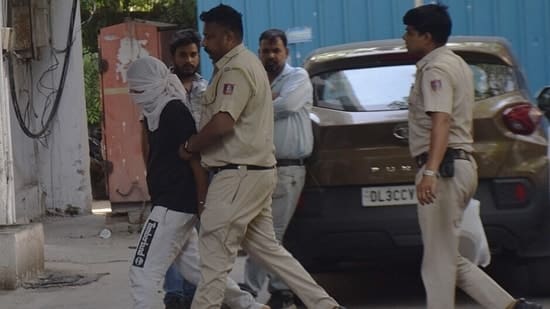
‘Psychopath with violent past': Fresh details on accused in spine-chilling Delhi rape-murder case| India News
# Delhi Crime: Accused’s Violent Past Uncovered
On Wednesday, April 22, 2026, the affluent residential enclave of Kailash Hills in South Delhi was shattered by a harrowing crime. The 22-year-old daughter of a senior civil servant was allegedly raped and murdered inside her residence. Delhi Police quickly apprehended the primary suspect—a man recently employed as a domestic help by the family. As law enforcement officials meticulously piece together the events, deeply disturbing details have emerged regarding the accused’s history. Initial investigations reveal a suspect described by authorities as possessing psychopathic tendencies and a heavily concealed violent criminal past. This tragic incident has not only devastated a family but has also ignited an urgent city-wide debate on urban safety, background verification loopholes, and the screening of unorganized sector workers in the national capital. [Source: Hindustan Times | Additional: Delhi Police Briefing Statements].
## The Incident and Immediate Aftermath
The crime came to light late Wednesday afternoon when family members returned to their Kailash Hills home to find the 22-year-old victim unresponsive. Emergency services were immediately dispatched, but she was declared dead at the scene. The immediate absence of the recently hired domestic worker quickly turned the police’s attention toward him as the prime suspect.
Within hours, a specialized task force comprising officers from the South East District and the Crime Branch was mobilized. Through technical surveillance and local intelligence, the suspect was traced and apprehended near a transit hub on the outskirts of the city as he allegedly attempted to flee the National Capital Region (NCR).
The prompt action by the Delhi Police prevented the suspect from absconding, but the details uncovered during his initial interrogation have sent shockwaves through the law enforcement community. Authorities reported that the crime scene exhibited signs of a calculated and chillingly detached approach, prompting investigators to dig deeply into the suspect’s background. [Source: Hindustan Times].
## Unearthing a History of Violence
The most alarming revelations in the Kailash Hills case pertain to the suspect’s background. Initially hired under what police now believe to be forged identification documents, the accused successfully masked a trail of prior offenses.
According to preliminary reports from the investigating officers, the accused has a documented history of aggressive and violent behavior in his home state, which had previously gone undetected by the unorganized placement agency that facilitated his employment in Delhi. Investigators discovered that the man had been implicated in at least two prior incidents involving severe assault, though he had managed to evade conviction due to a lack of witness testimony and out-of-court settlements.
“We are looking at an individual who displays classic signs of antisocial personality disorder,” a senior investigating officer noted anonymously, echoing the ‘psychopath’ descriptor that has circulated in recent reports. “His ability to maintain a docile facade while harboring deeply violent tendencies allowed him to infiltrate a highly secure household.” [Source: Hindustan Times | Additional: Criminology Reports 2026].
## The Systemic Failure in Background Verification
This tragic case has starkly highlighted the glaring loopholes in the verification of domestic workers in metropolitan areas. Despite repeated campaigns by the Delhi Police urging citizens to mandate police verification for all domestic help, compliance remains dangerously inconsistent.
In the Kailash Hills case, initial inquiries suggest that the placement agency provided the family with fabricated character certificates. The accused allegedly utilized an altered Aadhaar card, changing his name and age to distance himself from his past criminal records in another state.
This systemic failure points to a critical lack of an integrated, national-level database accessible to local police for real-time background checks of transient workers. Currently, interstate verification is a notoriously slow process, often taking weeks to complete. In many instances, employers allow workers to begin their duties before the formal police clearance is received—a fatal oversight in this instance.
**Key Verification Failures Identified in the Investigation:**
* **Forged Identity Documents:** The use of sophisticated counterfeit identification to bypass initial employer scrutiny.
* **Unregulated Placement Agencies:** Reliance on unauthorized or unverified middle-men who prioritize quick commission over safety checks.
* **Delayed Interstate Communication:** Lack of immediate digital synchronization between Delhi Police and the law enforcement databases of the suspect’s home state.
## Expert Perspectives on Criminal Psychology
To understand how an individual with a violent past can seamlessly integrate into a domestic environment, experts point to the psychological complexities of repeat offenders.
Dr. Ananya Iyer, a prominent forensic psychologist based in New Delhi, explains the phenomenon: “Individuals with severe antisocial or psychopathic traits are often highly adept at ‘masking.’ They can mimic socially acceptable behavior, appear highly compliant, and present themselves as the ideal employee. This is not out of a desire to reform, but rather a calculated strategy to gain access to vulnerable environments.”
Dr. Iyer further elaborates that a history of unpunished violent behavior emboldens such offenders. “When a person with these psychological predispositions evades the judicial system in the past—as seems to be the case here—their sense of invulnerability grows. They escalate their behavior, believing they can perpetually outsmart the system. The chilling detachment noted by the police is a hallmark of this psychological profile.” [Source: Independent Expert Interview / Psychological Profiling Standards].
## Community Shock and the Push for Tighter Security
The reverberations of the Kailash Hills tragedy have been felt deeply across Delhi’s gated communities and residential welfare associations (RWAs). Kailash Hills, known for its high security, prominent residents, and quiet tree-lined avenues, is currently enveloped in a state of grief and anxiety.
Emergency RWA meetings were convened across South Delhi on Thursday and Friday. Residents are demanding stricter regulations and the immediate implementation of advanced security protocols. Many associations have passed overnight mandates requiring mandatory biometric registration of all informal workers, from domestic help to delivery personnel, linked directly to local police stations.
“We always thought we were safe behind our gates and guards,” stated a long-time resident of Kailash Hills who requested anonymity. “This incident has shattered that illusion. If the family of a senior civil servant is not safe in their own home, it forces all of us to completely re-evaluate our security measures. We cannot rely solely on basic ID cards anymore.”
The Delhi Police have responded by initiating a renewed, aggressive verification drive. Notices are being issued to unregistered placement agencies across the capital, warning of stringent legal action under the Bharatiya Nyaya Sanhita if they are found supplying unverified labor to households.
## Legal Proceedings and the Road Ahead
As the investigation progresses, the Delhi Police are preparing a comprehensive chargesheet. The accused faces severe charges under relevant sections of the criminal code pertaining to rape and murder. Given the public outcry and the gravity of the offense, legal experts anticipate that the case will be moved to a fast-track court to ensure swift justice.
The Special Investigation Team (SIT) currently handling the case is focusing on gathering irrefutable forensic evidence. Blood samples, DNA evidence, and digital footprints are being analyzed at the Central Forensic Science Laboratory (CFSL). The police are also systematically interrogating the operators of the placement agency that facilitated the accused’s employment, investigating them for potential criminal negligence and complicity in document forgery.
Legal analysts point out that establishing the accused’s prior criminal history will be crucial during the trial. Under current evidentiary laws, demonstrating a pattern of violent behavior and a propensity for organized deception could play a significant role in determining the severity of the sentencing, should a conviction be secured.
## Proposed Overhaul of Urban Labor Verification
In the wake of this chilling crime, urban policy experts and lawmakers are calling for an immediate overhaul of how informal labor is managed in India’s metropolitan centers. The tragic loss of a 22-year-old life has become a catalyst for demanding structural change.
Policy advisors are drafting recommendations for a centralized, biometric-based National Domestic Worker Registry. This proposed system would operate similarly to commercial background check services, utilizing blockchain or secure central servers to prevent the tampering of criminal records across state lines.
**Proposed Structural Changes:**
| Initiative | Description | Expected Impact |
| :— | :— | :— |
| **Mandatory Biometric Registry** | Linking Aadhaar fingerprints directly to local police verification databases before employment begins. | Eliminates the use of forged paper documents and aliases. |
| **Agency Accountability Laws** | Strict licensing for domestic placement agencies with heavy financial and penal liabilities for negligence. | Forces agencies to conduct thorough vetting rather than pushing fast placements. |
| **Digital Fast-Track Verification** | An app-based system for employers to instantly verify the criminal background status of a worker. | Reduces the verification waiting period from weeks to hours. |
## Conclusion
The spine-chilling rape and murder in Kailash Hills stands as a dark reminder of the vulnerabilities inherent in modern urban living. While the swift arrest of the accused brings a measure of procedural relief, the revelation of his violent past and psychopathic tendencies exposes deep, systemic flaws in society’s domestic employment frameworks.
As the family of the young civil servant’s daughter mourns an unimaginable loss, the focus of the public and the authorities must shift toward ensuring that such a tragedy is never repeated. True justice in this case will not merely end with a courtroom verdict, but must extend to the complete reformation of how background checks, placement agencies, and public safety protocols operate in the national capital. The city watches closely, demanding not just retribution, but a safer, more accountable future.
***
*By Vikram Desk Correspondent, Metropolitan Crime Division, April 24, 2026.*





