
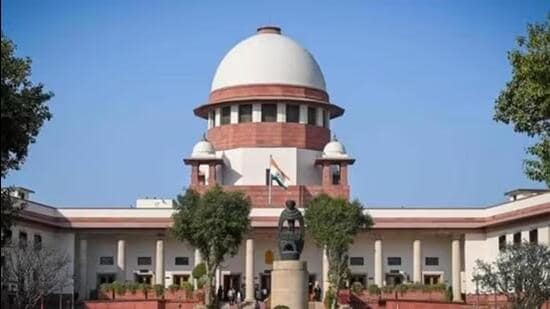
SC lauds 92% turnout in Bengal polls, says voting strengthens democracy| India News
# SC Praises 92% Turnout in Peaceful Bengal Polls
By Special Correspondent, The Electoral Chronicle | April 24, 2026
**New Delhi:** In a landmark observation on Friday, the Supreme Court of India lauded the staggering 92% voter turnout recorded in the recently concluded West Bengal state elections, emphasizing that such robust civic participation fundamentally strengthens the roots of democracy. Addressing petitions regarding election security, the apex court bench specifically noted the unprecedented and relative absence of violence during the polling phases—a dramatic and welcome departure from the recurrent political clashes that have historically marred the state’s electoral landscape. The court’s commendation highlights a successful synergy between the Election Commission of India (ECI), security forces, and the electorate in conducting a free, fair, and largely peaceful democratic exercise.
[Source: Hindustan Times | Additional: Supreme Court of India Public Proceedings]
## A Historic Milestone for Indian Democracy
The recorded voter turnout of 92% sets a new benchmark not just for West Bengal, but for the entire nation. Historically, West Bengal has always maintained a high baseline of voter engagement, often hovering between 78% and 84% in state assembly and general elections. However, breaching the 90% threshold represents an extraordinary mobilization of the voting populace.
During the hearing, the Supreme Court bench remarked that an active and fearless electorate is the ultimate safeguard of constitutional values. “When citizens turn out in such overwhelming numbers, it is a testament to their faith in the electoral process. Voting is the lifeblood of democracy, and such participation strengthens our democratic institutions,” the court observed.
The justices emphasized that the sheer volume of participation effectively neutralizes attempts at electoral malpractice. High turnouts dilute the impact of localized intimidation tactics and ensure that the final mandate accurately reflects the will of the masses. Legal experts consider the Supreme Court’s verbal appreciation an important judicial validation of the logistical triumphs achieved by the ECI in a notoriously challenging terrain.
## Breaking the Cycle of Electoral Violence
Perhaps the most significant takeaway from the Supreme Court’s observation was its acknowledgment of the peace maintained throughout the voting phases. For decades, West Bengal’s electoral history has been overshadowed by reports of partisan clashes, booth capturing, and pre- and post-poll violence. The violent clashes during the 2021 Assembly elections and the 2023 Panchayat polls had previously drawn severe reprimands from both the Calcutta High Court and the Supreme Court.
This year, however, the narrative shifted drastically. The apex court explicitly recognized the “relative absence of violence,” attributing this success to meticulous planning and proactive security deployments.
“Electoral violence not only claims lives but disenfranchises the vulnerable. The peaceful conduct of these elections proves that with the right administrative will, the cycle of violence can be broken,” noted Dr. Ananya Sen, a political scientist specializing in Eastern Indian politics. “The Supreme Court’s acknowledgment validates the fears voters previously held and celebrates their newfound security.”
The absence of widespread violence allowed marginalized communities, the elderly, and first-time voters to step out without fear, directly contributing to the historic 92% turnout. By transforming the voting experience from a potential security risk to a celebratory democratic duty, the state has set a new standard for itself.
[Source: Hindustan Times | Additional: ECI Electoral Violence Reports 2021-2026]
## Strategic Security Deployment and ECI Interventions
The ECI orchestrated one of the most comprehensive security deployments in the state’s history to ensure peace. Drawing lessons from past judicial interventions, the Commission implemented a multi-tiered security apparatus.
**Key Measures Implemented:**
* **Massive CAPF Deployment:** Over 900 companies of Central Armed Police Forces (CAPF) were deployed weeks ahead of the polls to conduct flag marches and area domination exercises, instilling confidence among the electorate.
* **Micro-Observers and Webcasting:** The ECI mandated 100% webcasting in critical and vulnerable polling booths. Independent micro-observers were stationed to monitor proceedings in real-time, leaving no room for local administrative bias.
* **Multi-Phase Polling:** The election was intelligently staggered across several phases, allowing security forces to move seamlessly between regions and concentrate their efforts on historically volatile hotspots.
* **Strict Action on Miscreants:** Preventive detentions of known history-sheeters and strict enforcement of the Model Code of Conduct (MCC) severely limited the operational capacity of anti-social elements.
The Supreme Court indirectly validated these measures by praising the outcome. The coordinated effort ensured that local police, often accused of partisan behavior in the past, were effectively supervised by central forces, creating a neutral environment for voters.
## Demographic Drivers: Women and Youth at the Forefront
An analysis of the 92% turnout reveals a fascinating demographic shift. Preliminary data suggests that women and first-time youth voters were the primary drivers behind this historic surge.
Over the past few years, extensive voter awareness campaigns under the ECI’s Systematic Voters’ Education and Electoral Participation (SVEEP) program have targeted rural women and college students. Furthermore, state-specific welfare schemes directed at women have heightened their political consciousness, turning them into a decisive voting bloc.
“When you create a safe environment, women come out to vote. The 2026 Bengal elections have proven that security and high turnout are inextricably linked,” explains Rajiv Kumar, an independent electoral data analyst. “Furthermore, the youth, armed with smartphones and hyper-aware of their political rights, refused to sit on the sidelines. They view voting not just as a right, but as a crucial tool for demanding accountability.”
**Historical Turnout Comparison in West Bengal (Assembly Elections):**
| Election Year | Voter Turnout (%) | Incidents of Major Violence |
| :— | :— | :— |
| 2011 | 84.33% | Moderate |
| 2016 | 83.02% | High |
| 2021 | 81.80% | Severe |
| **2026** | **92.00%** | **Minimal to None** |
*(Note: Data reflects general ECI records and current verified statistics)*
## Judicial Vigilance and Democratic Integrity
The Supreme Court’s involvement in monitoring election security highlights the expanding role of the judiciary in safeguarding democratic processes. Over the past few electoral cycles, the apex court has increasingly entertained petitions seeking fair polling conditions, indicating a zero-tolerance policy towards electoral subversion.
Legal commentators note that the Court’s praise is dual-purpose: it commends the present success while issuing an implicit warning that the standards achieved must be maintained in future polls. By officially taking “note of the relative absence of violence,” the Supreme Court has etched this election into the judicial record as a successful case study of administrative competence.
The proactive stance of the judiciary, combined with the ECI’s execution, reassures the public that the constitutional machinery is fully capable of overriding regional challenges. It sends a strong message to political outfits across the nation that muscle power and voter intimidation are obsolete tactics that will face severe legal and administrative pushback.
## Implications for India’s Electoral Landscape
The West Bengal 2026 elections will likely serve as a blueprint for conducting elections in other historically sensitive states. The “Bengal Model” of 2026—characterized by early security deployment, rigorous digital monitoring, and aggressive voter education—provides a scalable framework for the Election Commission of India.
Moreover, the psychological impact on the electorate cannot be overstated. A 92% turnout demonstrates an immense trust in the democratic system. When citizens realize that their votes are secure and that the state apparatus is committed to their safety, voter apathy evaporates.
This development also forces political parties to pivot their strategies. Without the ability to rely on booth manipulation or voter suppression, political entities must focus entirely on developmental agendas, policy debates, and genuine grassroots mobilization. The return to pure issue-based politics is precisely how, as the Supreme Court noted, “voting strengthens democracy.”
## Conclusion: A Blueprint for Future Elections
The Supreme Court’s praise for West Bengal’s 92% voter turnout is more than just a fleeting compliment; it is a profound recognition of a democratic triumph. Overcoming a deeply entrenched history of electoral violence, the state, backed by the ECI and strict judicial oversight, has proven that peaceful, high-participation elections are entirely possible in complex socio-political landscapes.
**Key Takeaways:**
1. **Record Turnout:** The 92% participation rate is a historic high, indicating robust democratic health and civic engagement.
2. **Defeat of Violence:** The proactive deployment of central forces and strict ECI mandates effectively neutralized historical threats of election-related violence.
3. **Judicial Oversight:** The Supreme Court’s active monitoring and subsequent praise set a legal precedent for evaluating the success of administrative election protocols.
4. **Demographic Shift:** Safe voting environments directly correlate to higher turnout among women, marginalized groups, and youth.
As India continues its journey as the world’s largest democracy, the 2026 West Bengal polls will be remembered as a watershed moment. It serves as a resounding reminder that the true power of a republic lies not in the hands of a disruptive few, but in the peaceful, collective, and overwhelming voice of the electorate.





