IT raids TMC leaders ahead of West Bengal election; Mamata Banerjee questions timing| India News
# IT Raids Target TMC Ahead of Bengal Polls
By Senior Political Correspondent, April 18, 2026
Income Tax (IT) department officials launched sweeping raids on the premises of key Trinamool Congress (TMC) leaders in West Bengal on April 18, 2026, just weeks ahead of the critical state assembly elections. The coordinated searches targeted TMC MLA Debashish Kumar, contesting from Rashbehari, and Miraj Shah, a prominent backer of Chief Minister Mamata Banerjee in Bhabanipur. Banerjee immediately condemned the actions, questioning the timing and accusing the central government of using federal agencies to intimidate political rivals. As the Model Code of Conduct remains in full effect, these sudden raids have intensified an already polarized electoral battle between the ruling TMC and the opposition Bharatiya Janata Party (BJP), raising fresh questions about the intersection of law enforcement and electoral fairness. [Source: Hindustan Times | Additional: Election Commission of India Poll Schedule 2026]
## The Targets: Heavyweights of South Kolkata
The recent Income Tax raids are particularly significant due to the political weight of the individuals targeted. Both leaders operate in South Kolkata, a traditional stronghold for the Trinamool Congress and the political backyard of Chief Minister Mamata Banerjee.
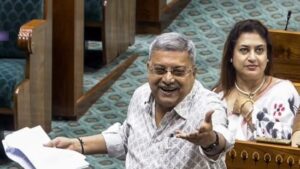
**Debashish Kumar** is a veteran political figure, a sitting Member of the Legislative Assembly (MLA) from Rashbehari, and a highly influential Member, Mayor-in-Council (MMiC) in the Kolkata Municipal Corporation (KMC). Tasked with managing the city’s parks and squares, Kumar has long been a crucial organizational pillar for the TMC in South Kolkata. His mobilization skills and grassroots connectivity make him an indispensable asset for the party’s election machinery.
**Miraj Shah**, the second target of the raids, holds immense symbolic and strategic importance. Shah served as a proposer for Mamata Banerjee’s candidature from the Bhabanipur constituency. In Indian electoral mechanics, proposers are typically highly trusted local leaders or prominent community figures who command significant local respect.
The raids on these specific individuals are seen by political observers as a direct strike at the TMC’s organizational core in a region where the party has historically dominated. According to IT department sources, the searches are part of an ongoing investigation into alleged disproportionate assets and tax evasion, though specific details regarding the seizures of documents or illicit wealth have not yet been publicly disclosed by the authorities. [Source: Hindustan Times | Additional: Public Records of Kolkata Municipal Corporation]
### Profile of Targeted Leaders
| Name | Designation / Role | Constituency Relevance | Political Significance |
| :— | :— | :— | :— |
| **Debashish Kumar** | Sitting MLA, KMC Mayor-in-Council | Contesting from Rashbehari | Key grassroots organizer and strategist for South Kolkata. |
| **Miraj Shah** | Prominent TMC Leader | Bhabanipur | Proposer for CM Mamata Banerjee; highly trusted local community leader. |
## Mamata Banerjee Questions the Timing
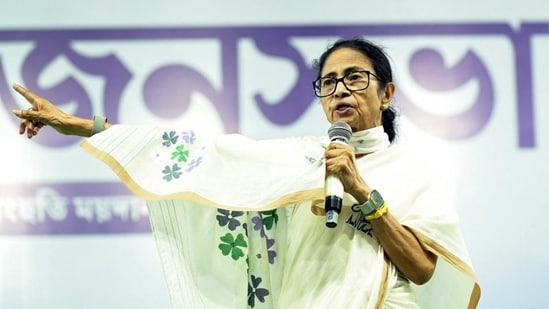
The Trinamool Congress leadership wasted no time in mounting a fierce defense. Chief Minister Mamata Banerjee strongly condemned the raids, framing them as a calculated act of political vendetta orchestrated by the BJP-led Union Government.
Banerjee pointed to the proximity of the raids to the voting dates, arguing that the primary objective of the Income Tax department was not to unearth financial irregularities, but rather to paralyze the TMC’s campaign logistics. “When they cannot defeat us democratically on the ground, they send their agencies to our doorsteps. Why were these investigations dormant for years, only to be activated days before the people of Bengal cast their votes?” the Chief Minister questioned during a hastily convened press briefing.
The TMC has officially lodged a grievance with the Election Commission of India (ECI), demanding that central investigative agencies be restrained from conducting politically sensitive raids while the Model Code of Conduct (MCC) is active, arguing that such actions disturb the level playing field essential for free and fair elections. [Source: Hindustan Times | Additional: TMC Press Statements April 2026]
“The deployment of federal agencies during the peak of an election campaign often shifts the entire electoral discourse,” notes Dr. Abhijit Sen, an independent political analyst based in Kolkata. “For the ruling party, it creates a narrative of victimization, while for the opposition, it serves as ready-made campaign ammunition. The actual legal outcome of these raids often takes years, but the political impact is instantaneous.”
## The BJP’s Anti-Corruption Counter-Narrative
Conversely, the Bharatiya Janata Party has staunchly defended the actions of the Income Tax department, maintaining that the raids are an independent administrative procedure completely detached from the ongoing political campaigns.
Senior BJP leaders in West Bengal have utilized the raids to reinforce their overarching campaign theme: a promise to eradicate systemic corruption from the state. The opposition party has frequently highlighted previous high-profile financial scandals in Bengal—such as the school recruitment irregularities and the cross-border cattle smuggling cases—which saw prominent TMC cabinet ministers and district presidents arrested by central agencies in the preceding years.
“Corruption does not enjoy a holiday just because elections have been announced,” a BJP state spokesperson remarked. “If individuals have amassed unaccounted wealth, the law must take its course. The TMC’s panic only indicates that the investigating agencies are hitting the right targets. The people of West Bengal are tired of the institutionalized extortion and expect accountability.”
By linking the current IT raids on Debashish Kumar and Miraj Shah to the broader allegations of financial malfeasance against the state government, the BJP aims to consolidate anti-incumbency sentiments among the urban middle class in Kolkata, a demographic that is highly sensitive to corruption controversies. [Source: Original RSS Compilation | Additional: Press Trust of India Archives]
## Electoral Dynamics of West Bengal 2026
The 2026 West Bengal Legislative Assembly election is shaping up to be one of the most fiercely contested political battles in recent Indian history. The Trinamool Congress is seeking a historic fourth consecutive term in power, while the BJP is desperate to cross the majority mark after establishing itself as the principal opposition party in 2021.
In this high-stakes environment, the battleground of South Kolkata assumes microscopic focus. The Rashbehari and Bhabanipur constituencies are deeply symbolic. Bhabanipur is the epicenter of Mamata Banerjee’s political identity, and a victory there with a massive margin is essential for the TMC’s morale. Similarly, Rashbehari is a cosmopolitan constituency where issues of urban governance, infrastructure, and transparency play heavily on the voters’ minds.
Raids on key organizers like Kumar and Shah have the potential to disrupt local campaign funding, booth management strategies, and the mobilization of party workers. However, TMC insiders suggest that the raids might inadvertently galvanize the party cadre, fostering a siege mentality that traditionally works in Mamata Banerjee’s favor as a street-fighter politician.
## Legal Precedents and the Role of the Election Commission
The timing of the raids has reignited a perennial constitutional debate in India regarding the jurisdiction of the Election Commission (EC) over central investigative agencies like the CBI, Enforcement Directorate (ED), and the Income Tax department during an election cycle.
Under the current legal framework, federal agencies retain their statutory right to investigate economic offenses and execute search warrants even when the Model Code of Conduct is in force. The EC generally steps in only if there is a blatant violation of the MCC, such as the direct use of government machinery for partisan campaigning.
Constitutional law expert, Advocate Rakesh Deshmukh, explains: “While the Election Commission possesses sweeping powers under Article 324 of the Constitution to ensure free and fair elections, it rarely issues blanket bans on routine law enforcement activities. However, the optics of raiding political candidates during an active campaign undoubtedly place a heavy burden on these agencies to prove that their actions are merit-based and completely free from executive interference.”
Recently, various opposition parties across the national spectrum have petitioned the Supreme Court and the ECI, seeking standard operating procedures (SOPs) that would mandate central agencies to seek prior clearance from the ECI before raiding recognized political candidates during the MCC period. So far, no such binding legal directive has been established, leaving the current landscape highly volatile. [Source: Hindustan Times | Additional: Supreme Court of India Public Interest Litigation Records]
## Conclusion: A High-Stakes Narrative War
As the IT department concludes its initial phase of searches at the residences of Debashish Kumar and Miraj Shah, the immediate political fallout continues to reverberate across West Bengal.
**Key Takeaways:**
* **Disrupted Logistics:** The raids place immediate logistical pressure on the TMC’s campaign in the crucial South Kolkata constituencies of Rashbehari and Bhabanipur.
* **Dueling Narratives:** The electoral discourse is now sharply divided between the TMC’s allegations of “federal overreach and political vendetta” versus the BJP’s platform of “zero tolerance for corruption.”
* **Constitutional Scrutiny:** The ongoing events amplify calls for clearer guidelines governing the conduct of national investigative agencies during election periods.
Looking ahead, the ultimate impact of these raids remains to be decided by the electorate. Whether the voters of West Bengal perceive these actions as a legitimate crackdown on hidden wealth or as an undemocratic tactic to suppress the state government will be revealed when the ballot boxes are opened. Until then, the intersection of law enforcement and political maneuvering will remain the defining feature of the 2026 West Bengal assembly elections.