
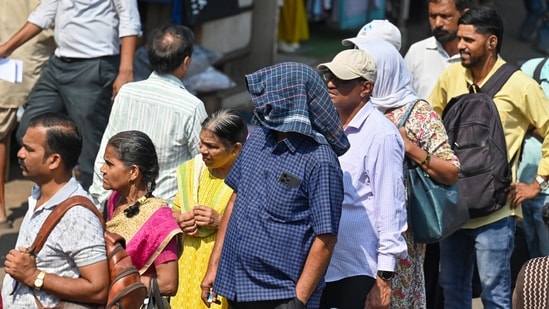
Weather news: North India sizzles under heatwave, yellow alert for Delhi, 45 degrees in UP's Prayagraj| India News
# North India Sizzles: Heatwave Grips Delhi
**By Staff Reporter, The India Chronicle | April 25, 2026**
**New Delhi** — North India is reeling under a severe, early-season heatwave as of Saturday, April 25, 2026, with temperatures skyrocketing dangerously across the plains. The India Meteorological Department (IMD) has sounded a ‘yellow alert’ for the national capital, Delhi, following a sharp spike in both minimum and maximum temperatures earlier today. Meanwhile, the state of Uttar Pradesh is bearing the absolute brunt of the scorching weather, with the city of Prayagraj recording a staggering 45 degrees Celsius. Driven by dry, hot westerly winds and a distinct lack of pre-monsoon showers, this extreme weather event is currently threatening public health, regional agricultural output, and power grids across Delhi, Uttar Pradesh, Rajasthan, and Odisha. [Source: Hindustan Times | Additional: IMD Public Advisories].
## The Expanding Heat Dome Over North India
The meteorological phenomenon currently stationed over the northern plains acts much like a “heat dome,” trapping high-pressure atmospheric conditions that push warm air downward, clearing the skies and causing the sun to relentlessly bake the earth. As of Saturday afternoon, a vast geographical stretch encompassing eastern Rajasthan, southern Haryana, Delhi, Uttar Pradesh, and parts of Odisha has reported maximum temperatures hovering between 42°C and 45°C.
These figures are roughly 4 to 6 degrees Celsius above the normal average for the final week of April. While May and June are traditionally the hottest months in the Indian subcontinent, the accelerated onset of severe heatwave conditions in April 2026 underscores an alarming climatic shift. Meteorologists have noted that the sudden transition from a relatively mild mid-April to blistering heat has caught many civic administrations off guard. The rapid loss of soil moisture and the total absence of cloud cover have only exacerbated the ground-level thermal radiation, creating stifling conditions even after sunset.
## Yellow Alert Issued for the National Capital
In response to the deteriorating weather parameters, the weather department has issued a targeted yellow alert for Delhi and its adjoining National Capital Region (NCR). A yellow alert acts as a “watch and stay updated” advisory, signaling that the weather conditions could worsen and severely disrupt daily life.
The primary trigger for this alert was a noticeable and uncomfortable increase in Delhi’s minimum temperature early Saturday morning. **The Safdarjung Observatory**, Delhi’s primary weather station, noted that the base temperature did not drop below 26.5°C overnight, a strong indicator that the urban landscape is retaining heat. By mid-afternoon, isolated pockets of the city, particularly areas like Najafgarh, Mungeshpur, and Pusa, reported maximum temperatures pushing past the 42°C mark. [Source: Hindustan Times].
Dr. Meena Iyer, a senior climatology researcher, explains the urban phenomenon: “Delhi is currently a victim of the Urban Heat Island (UHI) effect. Concrete, asphalt, and dense structural build-up absorb solar radiation throughout the day and slowly release it at night. When a synoptic heatwave combines with the UHI effect, the residents experience practically zero thermal relief, putting immense stress on the human cardiovascular system.” [Additional: Climate Research Context].
## Uttar Pradesh Bears the Brunt: Prayagraj Touches 45°C
While Delhi simmers, the situation in neighboring Uttar Pradesh has reached critical levels. The city of Prayagraj (formerly Allahabad) emerged as the hottest city in the state on Saturday, recording an oppressive 45 degrees Celsius. This temperature is dangerously close to the all-time April records for the region and signifies a severe heatwave condition, characterized by temperatures crossing 4.5 degrees above the seasonal baseline.
Other major urban centers in Uttar Pradesh, including Varanasi, Lucknow, Kanpur, and Agra, are similarly baking under the unrelenting sun, with mercury levels fluctuating between 43°C and 44.5°C. State authorities have issued advisories urging citizens, especially the elderly, children, and those with pre-existing comorbid conditions, to remain indoors between 11:00 AM and 4:00 PM.
The sweltering conditions in Prayagraj have emptied out local markets and streets, drastically impacting the daily wages of street vendors, rickshaw pullers, and construction workers. Local health clinics have already reported a modest uptick in patients presenting with dehydration, severe heat cramps, and early stages of heat exhaustion.
## Meteorological Context: Why is it So Hot in April 2026?
The severity of the current heatwave cannot be viewed in isolation. Meteorologists attribute this acute weather event to a combination of localized weather patterns and broader global climate shifts.
Firstly, there has been a glaring absence of active “Western Disturbances”—extratropical storms originating in the Mediterranean region that typically bring sporadic pre-monsoon rainfall to northwest India. Without these moisture-laden winds to break the heat cycle, the dry, hot westerlies blowing in from the Thar Desert and the arid regions of Pakistan face no resistance.
Secondly, the 2026 climatic baseline is influenced by the lingering effects of oceanic temperature fluctuations. “What we are witnessing in April 2026 is a textbook anti-cyclonic circulation over the central and western parts of India,” notes Dr. Rajesh Sharma, an independent atmospheric scientist based in Pune. “This circulation creates a sinking motion of air. When air sinks, it compresses and warms up further, obliterating any chance of cloud formation. Coupled with long-term climate change trajectories, these extreme heat events are becoming more frequent, lasting longer, and hitting higher peaks.” [Additional: Meteorological Analysis].
## Surging Power Demand and Grid Vulnerability
As the mercury rises, so does the region’s reliance on mechanical cooling. The heatwave has triggered a massive, synchronized surge in electricity demand across North India. In Delhi alone, peak power demand crossed 6,500 Megawatts (MW) on Saturday—a figure normally reserved for late May.
State electricity boards in Uttar Pradesh, Haryana, and Rajasthan are scrambling to secure adequate power supplies to prevent rolling blackouts. The sudden spike in demand for air conditioning, refrigeration, and agricultural water pumps places an immense burden on thermal power plants. The Ministry of Power has reportedly directed all imported coal-based plants to operate at full capacity to ensure grid stability during this critical period. However, the transmission infrastructure remains highly vulnerable; extreme heat can reduce the efficiency of power lines and transformers, increasing the risk of localized grid failures right when citizens need cooling the most.
## Agricultural Implications: The Threat to Regional Crops
Beyond urban discomfort, the early arrival of a severe heatwave poses a grave threat to the agricultural heartland of North India. Late April is a critical transitional period for Indian agriculture. While the primary Rabi (winter) crop, predominantly wheat, has largely been harvested in states like Madhya Pradesh and Gujarat, late-sown wheat in parts of Punjab, Haryana, and western Uttar Pradesh is still in its final maturation stages.
Prolonged exposure to temperatures above 35°C can cause “terminal heat stress” in wheat, causing the grains to shrivel before they fully ripen, directly impacting yield and nutritional quality. Furthermore, the extreme heat accelerates the evaporation of crucial surface water and depletes soil moisture, drastically increasing the irrigation requirements for upcoming Kharif (monsoon) preparatory crops, vegetables, and fruit orchards. Central Water Commission data routinely shows rapid depletion of reservoir levels during such heat spells, raising early alarms about water scarcity for both agricultural and municipal use in the weeks ahead.
## Health Guidelines and Public Safety Measures
With temperatures breaching 45°C in places like Prayagraj and Delhi firmly under a yellow alert, public health officials are working overtime to disseminate safety protocols. Heat-related illnesses exist on a spectrum, ranging from benign heat rashes and cramps to life-threatening heatstroke.
Dr. Anil Kapoor, a critical care specialist, stresses the importance of preventive measures. “Heatstroke is a medical emergency where the body’s core temperature exceeds 40°C (104°F) and the central nervous system begins to fail. We urge the public not to underestimate the weather. Hydration must be proactive, not reactive. Do not wait until you are thirsty to drink water.”
**Key Public Health Directives Include:**
* **Optimal Hydration:** Consume adequate water, oral rehydration solutions (ORS), and traditional cooling drinks like buttermilk, lemon water, and aam panna. Avoid excessive caffeine and alcohol, which promote dehydration.
* **Appropriate Clothing:** Wear lightweight, light-colored, and loose-fitting cotton garments.
* **Sun Protection:** Utilize umbrellas, hats, and sunglasses when stepping outside.
* **Vulnerable Demographics:** Monitor infants, the elderly, and outdoor workers closely. Employers are advised to shift strenuous outdoor labor to cooler early morning or late evening hours.
## Looking Ahead: When Will Respite Arrive?
The immediate outlook for North India offers little comfort. According to the latest predictive models from the IMD, the severe heatwave conditions in Uttar Pradesh, Delhi, Rajasthan, and Odisha are expected to persist for at least the next three to four days.
Meteorologists are currently tracking a feeble western disturbance approaching the Western Himalayan region. While this may bring isolated light rainfall or thunderstorms to the upper reaches of Jammu & Kashmir and Himachal Pradesh by mid-next week, its impact on the plains remains uncertain. At best, parts of Punjab and northern Haryana might experience gusty winds and brief cloud cover, potentially dragging the maximum temperatures down by a marginal 1 or 2 degrees. However, until a strong moisture incursion takes place, the sweltering grip of the heatwave will remain largely unbroken over the national capital and the Gangetic plains.
## Conclusion
The extreme heatwave sweeping across North India this late April serves as a harsh reminder of the region’s escalating climate vulnerability. With Delhi placed under a yellow alert and cities like Prayagraj enduring a blistering 45°C, the immediate focus of state governments must remain on public safety, grid management, and water conservation. As the nation prepares to navigate the even hotter months of May and June, proactive adaptation strategies—ranging from heat action plans to resilient agricultural practices—will be critical in mitigating the multifaceted impacts of these increasingly severe meteorological events.





