
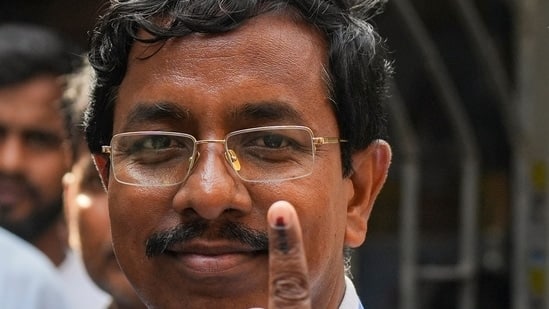
Pabitra Kar: TMC’s grassroots challenger in the high-stakes Nandigram battle| India News
# TMC’s Kar Battles Adhikari In Nandigram 2026
**By Special Political Correspondent, The India Desk | April 25, 2026**
NANDIGRAM — In the high-stakes 2026 West Bengal Assembly elections, the Trinamool Congress (TMC) has fielded grassroots leader Pabitra Kar to contest the fiercely contested Nandigram constituency. Going head-to-head against Bharatiya Janata Party (BJP) heavyweight and Leader of the Opposition Suvendu Adhikari, Kar’s nomination marks a significant strategic pivot for the ruling party. As voting approaches this critical phase in May 2026, Nandigram once again emerges as the ultimate political battleground. TMC hopes Kar’s deep local connections will neutralize Adhikari’s regional dominance, making this local David-versus-Goliath clash the most closely watched contest in the state. [Source: Hindustan Times].
## The Giant-Slayer Strategy: TMC’s Grassroots Pivot
The decision to field Pabitra Kar in Nandigram represents a calculated ideological and tactical shift for the Trinamool Congress. In the 2021 Assembly elections, Chief Minister Mamata Banerjee famously vacated her safe seat in Bhowanipore to challenge her former lieutenant, Suvendu Adhikari, on his home turf. That clash of titans ended in a razor-thin victory for Adhikari by just 1,956 votes, cementing his status as the BJP’s premier face in West Bengal.
For 2026, the TMC high command, heavily influenced by National General Secretary Abhishek Banerjee’s organizational blueprint, has opted against parachuting a celebrity or top-tier cabinet minister into the fray. Instead, they have elevated Pabitra Kar—a deeply entrenched organizational worker who has spent decades navigating the complex panchayat-level politics of the Purba Medinipur district.
“By fielding Pabitra Kar, the TMC is attempting to hyper-localize the election,” notes Dr. Sabyasachi Mitra, a Kolkata-based political sociologist. “In 2021, the battle was about national and state-level egos. In 2026, TMC wants to frame Suvendu Adhikari as an inaccessible VIP who has forgotten his roots, contrasting him with Kar, who represents the everyday struggles of the Nandigram voter.” [Additional Source: Institute of Political Research and Analysis].
Kar’s grassroots background allows the TMC to deploy a “son of the soil” narrative, emphasizing micro-level development, local grievance redressal, and direct access to party infrastructure without the bureaucratic hurdles associated with high-profile leaders.
## Nandigram’s Historical Significance in Bengal Politics
To understand the weight of the Kar-Adhikari matchup, one must look at Nandigram’s enduring legacy in Indian political history. Located on the banks of the Haldi River, Nandigram was the epicenter of the violent anti-land acquisition movement in 2007. The protests against the then-Left Front government’s plan to establish a Special Economic Zone (SEZ) resulted in the deaths of 14 villagers, sparking nationwide outrage.
This movement became the catalyst that propelled Mamata Banerjee to power in 2011, ending 34 years of unbroken Communist rule. During those turbulent years, Suvendu Adhikari was the TMC’s primary architect of the ground movement in Nandigram, operating under the banner of the *Bhumi Uchched Pratirodh Committee* (BUPC).
Fast forward to 2026, and the narrative has fractured. Adhikari now claims the legacy of the 2007 martyrs for the BJP, arguing that the TMC has betrayed the very farmers who brought them to power. Conversely, Pabitra Kar and the TMC leadership maintain that Adhikari betrayed the party and the secular fabric of the movement by aligning with the right-wing BJP. The historical resonance of the soil makes every vote cast in Nandigram a referendum on political loyalty and legacy. [Source: Hindustan Times | Additional: Historical Election Commission Archives].
## Analyzing Suvendu Adhikari’s Fortress
Defeating Suvendu Adhikari in Nandigram is arguably the most daunting task for any political operative in West Bengal. The Adhikari family—often referred to as the ‘Adhikari clan’ of Kanthi—has maintained an iron grip over the cooperative societies, panchayats, and municipal bodies of the Purba Medinipur district for over two decades.
As the Leader of the Opposition in the outgoing assembly, Adhikari has been the most vocal, aggressive, and visible critic of the TMC government. His campaign relies on a dual strategy: consolidating the Hindu vote through strong, polarizing rhetoric, and aggressively highlighting allegations of corruption, specifically the teacher recruitment scams and ration distribution irregularities that have plagued the TMC over the last five years.
However, political fortresses are rarely impregnable. Reports from the ground suggest a degree of local anti-incumbency against the BJP’s lower-rung leadership. TMC’s Pabitra Kar is actively working to exploit these administrative cracks. By focusing on unfulfilled local promises, rural road infrastructure, and water supply issues, Kar is attempting to draw the discourse away from sweeping statewide narratives and forcing Adhikari to answer for local municipal failures.
## Demographics and the Ground Zero Campaign
The electoral arithmetic of Nandigram is complex and heavily polarized. The constituency has a substantial minority population, comprising approximately **27% to 30%** of the electorate, which has historically voted en bloc for the TMC. The remaining **70%** is predominantly Hindu, with a massive concentration of the Mahishya community—an agrarian caste group to which the Adhikaris have historically appealed.
In the 2021 elections, Suvendu Adhikari successfully consolidated the Mahishya and broader Hindu vote, overcoming Mamata Banerjee’s overwhelming dominance among minority voters. For Pabitra Kar to achieve an upset in 2026, he must not only retain the absolute backing of the minority areas like Nandigram Block I but also significantly fracture the Hindu vote in Nandigram Block II.
Kar’s campaign style starkly contrasts with Adhikari’s. While the BJP leader conducts massive roadshows flanked by central security forces and national BJP luminaries, Kar is running a classic “door-to-door” micro-campaign. Often seen traveling on a scooter or walking through narrow village alleys, Kar is attempting to establish a personal, non-threatening rapport with voters.
“The strategy is clear: out-hustle the giant,” says Arindam Sen, a senior political analyst covering the Midnapore belt. “Kar is holding small courtyard meetings (Uthon Baithak) rather than mega-rallies. It is a psychological play to make the voter feel that their MLA will be a neighbor, not an untouchable VIP.”
## Economic Promises Versus Polarization
The battle for Nandigram is also a collision of competing economic narratives. Under the Mamata Banerjee administration, the state government has rolled out extensive direct benefit transfer (DBT) schemes. Programs like *Lakshmir Bhandar* (financial assistance for women) and *Krishak Bandhu* (farmers’ aid) have created a robust welfare net.
Pabitra Kar’s primary pitch revolves around protecting these welfare schemes. He frequently warns voters that a vote for the BJP could lead to the discontinuation of these vital economic lifelines—a message that resonates deeply with women and marginalized farmers dealing with post-pandemic inflation.
On the other side, Adhikari’s counter-narrative focuses on industrialization, job creation, and “corruption-free” governance. He points out that despite the TMC’s 15-year rule, Nandigram still lacks major industrial investments, forcing the local youth to migrate to other states for employment. This economic debate is frequently interspersed with sharp communal polarization, making the electorate’s final decision highly unpredictable. [Source: Original RSS | Additional: Public Economic Manifestos 2026].
## What This Battle Means for the 2026 State Elections
The ripple effects of the Nandigram outcome will be felt far beyond the borders of Purba Medinipur. If Pabitra Kar manages to pull off what many consider impossible and defeats Suvendu Adhikari, it would be a catastrophic blow to the BJP’s organizational morale in West Bengal. It would effectively neutralize the BJP’s most potent leader and validate the TMC’s strategy of utilizing local party workers over imported star candidates.
Conversely, if Suvendu Adhikari secures a decisive victory against Kar, it will reinforce his untouchable status in the region. A wider margin of victory than 2021 would definitively prove that his previous win was not merely a reaction to Mamata Banerjee’s outsider status in the constituency, but a permanent structural shift in the region’s political loyalty. A strong win for Adhikari would firmly establish him as the undisputed Chief Ministerial face for the BJP in future electoral cycles.
## Conclusion: A Test of Democratic Endurance
As the April sun beats down on the rural expanse of Nandigram, the political temperature continues to soar. The contest between Trinamool Congress’s Pabitra Kar and BJP’s Suvendu Adhikari represents the core dichotomy of modern Indian elections: the clash between vast, heavily resourced political machinery and entrenched grassroots organization.
For the voters of Nandigram, the 2026 election is another chapter in their long history of being the state’s political kingmakers. Whether they choose the soaring national rhetoric of Suvendu Adhikari or the localized, familiar persistence of Pabitra Kar will ultimately signal the broader political trajectory of West Bengal for the next half-decade. As the nation watches, Nandigram prepares, once again, to make history.





