# Indian Ships Hit in Hormuz Strait: Full Details
By Maritime Security Desk, April 19, 2026
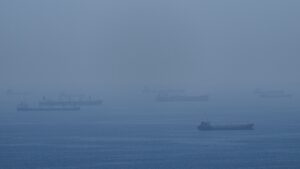
On the morning of April 19, 2026, two Indian-flagged merchant vessels—the *Sanmar Herald* and the *Jag Arnav*—were reportedly attacked by Islamic Revolutionary Guard Corps (IRGC) fast attack craft while transiting the strategically critical Strait of Hormuz. According to preliminary reports, the unprovoked incident involved heavy machine-gun fire and an unidentified airborne projectile, forcing both commercial ships to abort their scheduled passages and retreat to safer waters in the Gulf of Oman. This severe escalation raises immediate global concerns regarding freedom of navigation in one of the world’s most vital maritime energy chokepoints and threatens to further destabilize global supply chains. [Source: Hindustan Times | Additional: Global Maritime Security Reports].
## Anatomy of the Incident in the Strait
The sequence of events began shortly after dawn when the United Kingdom Maritime Trade Operations (UKMTO) agency issued a high-priority alert regarding irregular military activity near the Strait of Hormuz. The *Sanmar Herald* and the *Jag Arnav* were navigating the inbound traffic separation scheme when they were approached by multiple heavily armed speedboats bearing the insignia of the Iranian IRGC Navy (IRGCN).
According to regional maritime security monitoring firms, the gunboats initially attempted to hail the vessels via VHF radio, demanding they alter their course into Iranian territorial waters. When the merchant ships maintained their international transit headings, the situation rapidly deteriorated. The fast attack craft reportedly fired warning shots across the bows of both vessels.
“What distinguishes this event from previous harassments is the deployment of an ‘unknown projectile’ against a commercial hull,” notes Dr. Henrik Salen, a maritime security analyst at the International Institute for Strategic Studies. “Whether this was a loitering munition, a shoulder-fired rocket, or a small drone is yet to be definitively confirmed, but it marks a distinct escalation in kinetic tactics within the Strait.”
Following the impact of the projectile, the master of the *Jag Arnav* issued a distress call. Acting under established emergency protocols, both vessels executed hard maneuvers to reverse course, successfully escaping the immediate threat matrix and moving back into the Gulf of Oman. All crew members are currently reported safe, though the extent of the physical damage to the ship superstructures remains under assessment. [Source: Hindustan Times].
## Profiles of the Targeted Vessels
Understanding the nature of the targeted ships provides insight into the potential economic and logistical fallout of the incident. Both vessels are significant assets in India’s commercial maritime fleet, facilitating the transport of vital commodities.
| Vessel Name | Flag | Operator | Vessel Type | Cargo Capacity (DWT) |
| :— | :— | :— | :— | :— |
| **Sanmar Herald** | India | Sanmar Shipping Ltd | Chemical/Oil Products Tanker | ~45,000 |
| **Jag Arnav** | India | Great Eastern Shipping Co. | Bulk Carrier/Tanker | ~80,000 |
**The Sanmar Herald** is designed for the complex transport of chemical products and refined oil. Any kinetic strike on a vessel carrying highly flammable or toxic cargo carries an extreme risk of environmental catastrophe and mass casualties, a fact that makes the IRGC’s reported use of projectiles particularly alarming to environmental and maritime safety groups.
**The Jag Arnav**, operated by India’s largest private sector shipping company, represents the backbone of India’s raw material and energy import infrastructure. The disruption of its voyage not only delays critical deliveries but also forces operators to reconsider the viability of sending high-value assets into a contested maritime zone. [Source: Public Maritime Registries | Additional: Shipping Industry Databases].
## The IRGC’s Asymmetric Maritime Tactics
The Islamic Revolutionary Guard Corps Navy operates largely independently of the traditional Islamic Republic of Iran Navy (IRIN). While the IRIN handles blue-water operations, the IRGCN is tasked with controlling the Persian Gulf and the Strait of Hormuz using a doctrine of asymmetric warfare.
This doctrine relies heavily on “swarm” tactics—the coordinated use of multiple highly maneuverable, fast attack craft armed with heavy machine guns, anti-ship missiles, and torpedoes. Over the past decade, the IRGCN has increasingly integrated unmanned aerial vehicles (UAVs) into their maritime operations.
“The use of an unidentified projectile is highly indicative of Iran’s shifting maritime strategy,” states Capt. Elias Thorne (Ret.), a former naval intelligence officer. “They are testing the boundaries of deniability. By using cheap, localized loitering munitions or drones alongside traditional gunboats, they can exert maximum psychological pressure on commercial shipping without directly engaging foreign military escorts.”
The targeting of Indian-flagged vessels is particularly perplexing. Historically, New Delhi and Tehran have maintained cordial, if complex, diplomatic relations, cooperating on strategic projects like the Chabahar Port. This unprovoked harassment may signal that the IRGC is adopting an indiscriminate approach to shipping in the Strait, prioritizing geopolitical signaling over bilateral diplomatic ties.
## Strategic Importance of the Hormuz Chokepoint
To understand the gravity of the April 19 attack, one must look at the geography and economics of the Strait of Hormuz. At its narrowest point, the strait is only 21 miles wide, with the navigable shipping lanes restricted to just two miles in either direction.
Despite its narrow width, it is the world’s most important oil chokepoint. Approximately 20% to 30% of total global oil consumption passes through this waterway daily, amounting to roughly 21 million barrels of crude, condensates, and refined petroleum products. Furthermore, it is a crucial artery for liquefied natural gas (LNG), particularly from Qatar to Asian markets, including India, China, and Japan.
Any sustained disruption in the Strait of Hormuz cannot be easily mitigated. Unlike the Red Sea, where vessels can take an alternative (albeit longer and more expensive) route around the Cape of Good Hope, there are practically no viable alternative routes for the sheer volume of hydrocarbons exiting the Persian Gulf. A closure or a severe constriction of the strait due to military threats would cause immediate, catastrophic shocks to global energy markets. [Source: International Energy Agency Context].
## Economic Fallout: Freight Rates and Insurance
The immediate economic impact of the attack on the *Sanmar Herald* and *Jag Arnav* is already rippling through the global shipping industry. Within hours of the incident being verified by the UKMTO, maritime insurance syndicates at Lloyd’s of London reportedly began reviewing the War Risk premiums for vessels transiting the Persian Gulf.
**Key Economic Impacts:**
* **Surging Insurance Premiums:** War risk premiums are expected to jump significantly, potentially reaching 1% to 1.5% of a vessel’s total hull value. For a modern supertanker, this translates to hundreds of thousands of dollars in additional costs per voyage.
* **Freight Rate Hikes:** Shipping companies will inevitably pass these increased insurance and operational costs onto consumers. Freight rates for the Middle East to Asia route are likely to see double-digit percentage increases over the coming weeks.
* **Energy Price Volatility:** Brent Crude futures saw an immediate reactionary spike of 2.4% following the news of the attack. While current stockpiles are robust, energy traders are pricing in a geopolitical risk premium based on the threat to supply lines.
“The shipping industry is already fatigued from navigating the Red Sea crisis over the last two years,” explains Sarah Lin, a maritime freight analyst. “Having another major chokepoint effectively become a live-fire zone places an unbearable strain on the global supply chain.”
## India’s Diplomatic and Naval Response
The attack places the Indian government in a delicate diplomatic and strategic position. India relies on the Middle East for over 60% of its crude oil imports. Ensuring the safe transit of its flagged vessels and energy supplies is a matter of paramount national security.
In recent years, the Indian Navy has significantly bolstered its presence in the Arabian Sea and the Gulf of Oman through *Operation Sankalp*, a maritime security operation specifically designed to protect Indian-flagged merchant vessels. Following this incident, it is highly likely that the Indian Ministry of Defence will deploy additional guided-missile destroyers and maritime patrol aircraft (such as the P-8I Neptune) to the region to provide enhanced overwatch and potential escort duties for Indian ships.
Diplomatically, the Ministry of External Affairs (MEA) in New Delhi is expected to lodge a strong formal protest with Tehran. Because India has historically maintained a policy of strategic autonomy and open channels with Iran, diplomats will likely leverage back-channel communications to demand guarantees for the safety of Indian maritime assets. However, the erratic nature of the IRGC—which often operates independently of Iran’s foreign ministry—complicates these diplomatic efforts. [Source: Hindustan Times | Additional: Geopolitical Strategic Analysis].
## Conclusion: Key Takeaways and Future Outlook
The April 19 attack on the *Sanmar Herald* and the *Jag Arnav* marks a dangerous new chapter in maritime security within the Middle East. By utilizing unknown projectiles alongside traditional gunboat harassment against vessels from a historically neutral trading partner, the IRGC has demonstrated a willingness to indiscriminately escalate tensions in the Strait of Hormuz.
**Key Takeaways:**
1. **Escalating Tactics:** The introduction of airborne projectiles against civilian cargo ships represents a severe physical threat to crews and marine environments.
2. **Economic Vulnerability:** The incident highlights the fragile nature of global energy supply chains. Increased insurance and freight costs will likely contribute to global inflationary pressures.
3. **Strategic Realignment:** India, which has tried to balance its relations in the Middle East, may be forced into a more assertive naval posture in the Persian Gulf to protect its vital economic interests.
Looking ahead, the international maritime community faces a stark reality. If the Strait of Hormuz becomes a sustained zone of conflict, akin to recent disruptions in the Red Sea, the global economy will face unparalleled logistical constraints. Shipping companies, international naval coalitions, and diplomatic bodies must now urgently collaborate to restore deterrence and ensure the fundamental right of freedom of navigation in these vital waters.