‘You gave me clearance. You are firing now': Audio from Indian tanker shot at by Iran navy| India News
# Iran Navy Attacks India-Bound Oil Tanker
**By Maritime Security Correspondent | April 19, 2026**
On the morning of April 19, 2026, the *Sanmar Herald*, a massive crude oil tanker carrying approximately two million barrels of Iraqi oil to India, came under direct fire from the Iranian Navy in the critical shipping lanes of the Gulf of Oman. Leaked distress audio reveals the ship’s captain frantically transmitting to naval vessels, “You gave me clearance. You are firing now,” highlighting a sudden, unprovoked escalation in the region. The incident has sent immediate shockwaves through global energy markets, triggering a sharp spike in crude prices and prompting urgent diplomatic interventions from New Delhi. As maritime security in the vital Middle Eastern waterways deteriorates, the attack raises critical questions about freedom of navigation and regional stability.
## The Incident on the High Seas
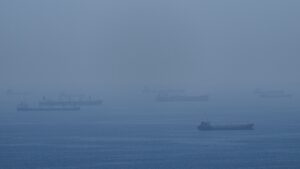
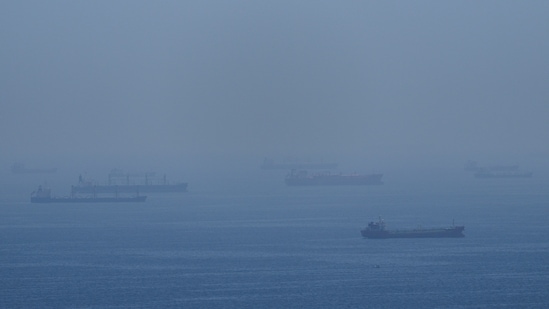
The *Sanmar Herald*, a Very Large Crude Carrier (VLCC), was transiting a heavily trafficked maritime corridor after loading its cargo at the Al Basrah Oil Terminal in Iraq. According to initial maritime logs, the vessel was fully laden with roughly two million barrels of heavy crude destined for refineries on India’s western coast.
The situation escalated violently just after dawn. According to intercepted Very High Frequency (VHF) maritime radio communications, the tanker was approached by fast attack crafts belonging to the Iranian Navy. Despite earlier communications indicating the vessel was cleared for safe passage through the international transit corridor, Iranian vessels reportedly opened fire across the bow of the *Sanmar Herald*, attempting to force the massive ship to alter its course toward Iranian territorial waters.
The most chilling aspect of the encounter was captured in the leaked audio broadcast on VHF Channel 16, the international distress frequency. The captain can be heard stating in a tense but composed voice: “You gave me clearance. You are firing now.” [Source: Hindustan Times]. This stark contradiction points to a severe breakdown in communication, a localized command decision by Iranian naval patrols, or a deliberate geopolitical provocation.
Fortunately, early reports indicate that while the vessel sustained superficial kinetic damage from small arms and light cannon fire, the hull was not breached, and the crew remains unharmed. The tanker subsequently initiated evasive maneuvers and increased speed while calling for immediate assistance from nearby coalition naval forces.
## The Anatomy of Naval Miscommunication
The leaked audio has become the focal point for international maritime investigators. Merchant shipping protocols in the Strait of Hormuz and the Gulf of Oman require constant communication between commercial vessels and the naval forces that patrol the littoral boundaries. Ships routinely check in with traffic control and regional naval commands to declare their cargo, destination, and draft.
“When a ship’s master states on an open frequency that clearance was explicitly granted prior to an armed engagement, it shatters the predictable norms of maritime navigation,” explains Dr. Arindam Sen, a maritime security specialist at the New Delhi-based Institute of Peace and Conflict Studies. “Either the Iranian naval chain of command is highly fractured, leading to rogue actions by fast-attack boat commanders, or this was a calculated ambush designed to create a hostage scenario involving a high-value cargo.” [Source: Independent Expert Analysis].
The contradiction between granted clearance and immediate kinetic action poses a severe risk to all vessels navigating the chokepoint. If verbal clearances from official state maritime authorities can no longer be trusted, commercial shipping companies will be forced to reconsider transit routes or demand military escorts, dramatically slowing down global supply chains.
## Geopolitical Context and Regional Tensions
This incident does not occur in a vacuum. By April 2026, the geopolitical landscape of the Middle East remains incredibly fraught. Ongoing economic sanctions, shifting alliances, and regional proxy conflicts have turned the waters off the coast of Iran into a high-stakes chessboard. Iran has historically utilized the harassment, seizure, or targeting of commercial oil tankers as an asymmetric lever to project power, retaliate against international sanctions, or gain bargaining chips in diplomatic negotiations.
The targeting of a ship carrying Iraqi crude to India introduces a complex wrinkle. Iraq is one of the world’s leading oil exporters, and its economy relies almost entirely on the safe export of hydrocarbons through the Persian Gulf. Any disruption to this flow directly impacts Baghdad’s economic stability. Furthermore, Iran and Iraq share a complex bilateral relationship. Targeting Iraqi oil, even if it is bound for a third party, risks alienating a vital neighbor.
## Impact on India’s Energy Security
For India, the stakes are exceptionally high. India is the world’s third-largest importer and consumer of oil, relying on foreign markets for over 85% of its crude requirements. The Middle East, particularly Iraq and Saudi Arabia, forms the backbone of India’s energy security apparatus. The *Sanmar Herald* was carrying a payload essential for Indian refineries, which process the heavy crude into diesel, petrol, and aviation turbine fuel for the domestic market.
To understand the magnitude of this disruption, one must look at the volume of India’s crude imports.
**Table: India’s Projected Top Crude Suppliers (Q1 2026)**
| Country of Origin | Estimated Market Share | Daily Volume (Millions of Barrels) |
| :— | :— | :— |
| Russia | 32% | 1.6 |
| **Iraq** | **21%** | **1.1** |
| Saudi Arabia | 16% | 0.8 |
| UAE | 9% | 0.45 |
| Others (US, Africa) | 22% | 1.15 |
*Note: Data reflects typical import distributions based on prevailing economic trends up to early 2026.* [Source: Directorate General of Commercial Intelligence and Statistics].
“A loss of two million barrels of crude in a single incident is not enough to dry up India’s strategic petroleum reserves, but the systemic threat it represents is catastrophic,” notes Priya Desai, lead energy analyst at an international commodities tracking firm. “If Indian refiners cannot safely lift Iraqi crude, they will be forced to buy on the spot market at heavily inflated prices, a cost that will immediately be passed down to the Indian consumer at the fuel pumps.”
## Global Oil Markets React
Unsurprisingly, the global energy markets reacted with severe volatility following the news of the attack. Within hours of the distress call being made public, Brent Crude—the international benchmark—spiked by $3.50 a barrel, crossing critical psychological thresholds. West Texas Intermediate (WTI) followed suit.
Beyond the immediate price of crude, the most significant economic fallout will be observed in the maritime insurance sector. The Joint War Committee (JWC) in London, which outlines high-risk areas for marine insurers, is expected to hold an emergency session. War Risk premiums for vessels transiting the Strait of Hormuz and the Gulf of Oman are projected to surge by up to 300%. For a VLCC carrying $160 million worth of oil, a hike in insurance premiums translates to millions of dollars in added transit costs per voyage.
Shipowners may also invoke “refusal to sail” clauses, preventing their crews from entering the Persian Gulf until international naval forces guarantee safe passage, further tightening global supply.
## Diplomatic Fallout Between New Delhi and Tehran
The attack on an India-bound vessel places immense pressure on the traditionally nuanced relationship between New Delhi and Tehran. Historically, India and Iran have maintained pragmatic diplomatic and economic ties. India has heavily invested in Iran’s Chabahar Port, viewing it as a strategic gateway to Afghanistan and Central Asia, bypassing Pakistan.
However, an unprovoked attack on Indian energy interests forces New Delhi into a tight corner. The Ministry of External Affairs (MEA) in South Block is expected to lodge a severe demarche with the Iranian Ambassador in New Delhi.
“India has always walked a diplomatic tightrope in the Middle East, balancing its deep strategic partnerships with Gulf Arab states, Israel, and Iran,” explains a former Indian diplomat speaking on the condition of anonymity. “But firing on a vessel carrying India’s lifeblood—oil—crosses a red line. New Delhi will demand an immediate explanation, accountability, and absolute guarantees that this will not be repeated. If Iran dismisses these concerns, it risks fundamentally rupturing its relationship with one of the few major global economies willing to engage with it.”
## Enhancing Maritime Security Operations
In response to escalating threats, the Indian Navy has steadily increased its footprint in the Arabian Sea and the Gulf of Oman under ‘Operation Sankalp’—a mission originally launched years prior to ensure the safety of Indian-flagged vessels. Following the attack on the *Sanmar Herald*, it is highly likely that the Indian Ministry of Defence will authorize the deployment of additional guided-missile destroyers, such as the *Visakhapatnam*-class, and long-range maritime patrol aircraft like the P-8I Neptune to monitor the region.
Collaboration with international coalitions, such as the US-led Combined Maritime Forces (CMF), will become paramount. While India traditionally prefers to operate independently to maintain its strategic autonomy, the sheer volume of commercial traffic requires shared intelligence, joint patrols, and unified communication protocols to deter state and non-state actors from harassing commercial fleets.
## Conclusion: Navigating Dangerous Waters
The attack on the *Sanmar Herald* is a stark reminder of the fragility of global supply chains and the vulnerability of commercial shipping in contested geopolitical chokepoints. The leaked audio of the captain—”You gave me clearance. You are firing now”—will serve as a damning testament to the unpredictable and dangerous conditions currently facing international mariners. [Source: Hindustan Times].
Moving forward, the international community faces a dual challenge: stabilizing global oil markets currently reeling from the shock, and establishing a robust diplomatic and naval deterrence to prevent further attacks. For India, the incident underscores the urgent need to diversify its energy imports while simultaneously projecting enough naval power to protect its critical maritime interests. Until Tehran provides a transparent account of the incident and recommits to international maritime law, the waters of the Gulf of Oman will remain treacherous, threatening the economic stability of nations thousands of miles away.