
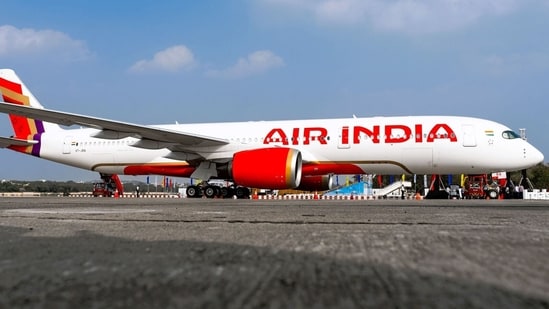
Air India Mumbai-Bhopal flight makes precautionary landing; checks underway| India News
# Air India Jet Makes Safe Emergency Landing
On Monday, April 27, 2026, an Air India passenger flight operating on the busy Mumbai to Bhopal route executed a precautionary landing after the flight crew detected a suspected technical anomaly mid-flight. According to official statements from the airline, the aircraft touched down securely, and all passengers, alongside the cabin and flight crew members, disembarked normally without any reported injuries or panic. Authorities have temporarily grounded the aircraft at the destination airport while comprehensive engineering and diagnostic checks remain underway to determine the exact root cause of the system alert. This swift, by-the-book response highlights the strict adherence to aviation safety protocols governing India’s rapidly expanding domestic airspace. [Source: Original RSS – Hindustan Times | Additional: Standard Aviation Operating Procedures].
## The Incident Timeline and Flight Response
The daily scheduled service connecting Chhatrapati Shivaji Maharaj International Airport in Mumbai to Raja Bhoj Airport in Bhopal typically takes just under ninety minutes. However, aviation operations are highly dynamic, requiring flight crews to maintain constant vigilance over an array of complex avionic systems. Shortly into the flight sequence, the cockpit crew received a telemetry warning indicating a potential technical snag. Following the stringent guidelines laid out by the Directorate General of Civil Aviation (DGCA) and Air India’s internal safety mandates, the pilot-in-command opted to prioritize passenger safety by declaring a precautionary landing.
**Key facts surrounding the incident:**
* **Incident Type:** Precautionary landing due to an unspecified technical warning.
* **Route:** Mumbai (BOM) to Bhopal (BHO).
* **Outcome:** 100% safe disembarkation of all passengers and crew.
* **Current Status:** The aircraft is grounded pending engineering clearance.
The air traffic control (ATC) was immediately notified of the situation, allowing ground emergency services to be placed on standard standby—a routine procedural requirement rather than an indicator of immediate peril. The aircraft descended and landed smoothly, with pilots utilizing standard braking and taxiing procedures to reach the designated disembarkation gate.
## Understanding Precautionary vs. Emergency Landings
In the realm of commercial aviation, there is a distinct and critical difference between an “emergency landing” and a “precautionary landing.” While the general public often conflates the two, aviation professionals treat them as entirely separate operational categories. A precautionary landing is a preemptive measure taken when a flight crew detects an anomaly that does not pose an immediate threat to the aircraft’s structural integrity or flight capabilities, but which could potentially degrade if the flight continues indefinitely.
“A precautionary landing is the ultimate demonstration of an airline’s safety culture,” explains Capt. Ramesh Menon, an independent aviation safety consultant and former commercial pilot. “When a pilot chooses to land out of an abundance of caution due to a sensor warning, it shows that the system is working exactly as intended. The priority is never the schedule; the priority is always safety.” [Source: Industry Expert Analysis].
| Feature | Precautionary Landing | Emergency Landing |
| :— | :— | :— |
| **Immediate Threat** | No immediate danger to the aircraft or passengers. | Imminent threat requiring immediate ground contact. |
| **Time Factor** | Pilots have time to troubleshoot and choose a suitable airport. | Requires landing at the nearest possible runway immediately. |
| **Ground Preparation** | Normal gate arrival, routine standby for emergency services. | Full emergency services deployed, potential runway foaming. |
| **Disembarkation** | Normal use of aerobridges or airstairs. | May require the deployment of emergency evacuation slides. |
In the case of the Mumbai-Bhopal flight, the decision to land was a calculated, deliberate action to ensure that a minor technical warning did not escalate into a complex mechanical issue.
## Technical Checks and Engineering Diagnostics
Once the passengers and crew safely disembarked the aircraft, the focus immediately shifted from flight operations to the ground engineering department. Modern commercial aircraft are equipped with highly sophisticated onboard diagnostic systems, functioning much like the nervous system of the human body. These systems can detect microscopic drops in hydraulic pressure, minor temperature fluctuations in the engine oil, or transient software glitches in the avionics suite.
Currently, Air India’s certified maintenance engineers are conducting exhaustive diagnostics on the grounded aircraft. This process involves multiple phases:
1. **Data Download:** Engineers extract the telemetry data from the aircraft’s Flight Data Recorder (FDR) and onboard maintenance computers to pinpoint the exact moment and nature of the warning.
2. **Physical Inspection:** Depending on the nature of the alert, ground crews may conduct visual and physical inspections of the engines, hydraulic lines, or landing gear. This often includes using specialized equipment like borescopes to look inside engine turbines without dismantling them.
3. **Component Testing:** Suspect components, such as sensors or electrical relays, are stress-tested to see if the fault can be replicated on the ground.
4. **Clearance and Sign-off:** Only after the issue has been definitively identified and rectified—or proven to be a false sensor reading—will the aircraft be certified as airworthy and returned to active service.
This rigorous technical protocol ensures that no aircraft takes to the skies unless it meets the absolute highest standards of operational safety. [Source: Aeronautical Engineering Procedures Handbook].
## Air India’s Evolving Safety Record and Fleet Modernization
This incident occurs against the backdrop of a massive, multi-year transformation for Air India. Since being re-acquired by the Tata Group, the flag carrier has embarked on “Vihaan.AI,” a comprehensive restructuring program aimed at restoring the airline to global prominence. A cornerstone of this transformation has been a zero-tolerance policy toward safety compromises and the modernization of its legacy fleet.
While legacy aircraft occasionally suffer from minor technical snags due to the aging of electrical and mechanical components, the airline’s maintenance protocols have been significantly tightened. Furthermore, Air India is in the process of inducting hundreds of new, state-of-the-art aircraft from both Airbus and Boeing. These newer generation aircraft feature enhanced redundancy systems, meaning that if one system fails, another immediately takes over, further reducing the likelihood of critical in-flight emergencies.
The professional handling of the Mumbai-Bhopal flight serves as a testament to the intensified training programs that Air India’s flight and cabin crews are currently undergoing. Simulator training now heavily emphasizes the exact scenario encountered on this flight: identifying a vague technical warning, maintaining situational awareness, communicating effectively with ATC, and executing a safe, drama-free landing.
## Regulatory Oversight by the DGCA
India’s civil aviation regulator, the Directorate General of Civil Aviation (DGCA), maintains a stringent oversight mechanism over all domestic airline operations. Under current Indian aviation law, any precautionary landing, air turnback, or technical diversion must be immediately reported to the regulator.
The DGCA will likely review the engineering reports submitted by Air India to ensure compliance with the manufacturer’s maintenance guidelines. If the technical snag is found to be part of a broader pattern affecting a specific aircraft model or component, the DGCA has the authority to issue airworthiness directives requiring mandatory fleet-wide checks.
“The DGCA’s oversight framework has become incredibly robust in recent years,” notes an aviation policy analyst based in New Delhi. “Every technical diversion is logged into a central database, analyzed for trends, and used to continuously update the safety management systems of all airlines operating in India.” [Source: Public DGCA Safety Mandates 2025-2026].
## Passenger Management and Route Disruption
While the primary objective—passenger safety—was successfully achieved, precautionary landings inevitably lead to logistical challenges and schedule disruptions. For the passengers aboard the affected Mumbai-Bhopal flight, the experience, while safe, resulted in a delay to their travel itineraries.
Air India’s ground staff at the arrival airport immediately mobilized to assist the affected passengers. Standard operating procedures dictate that passengers be provided with access to waiting lounges, refreshments, and clear communication regarding the status of their onward journeys. In situations where an aircraft is grounded for an extended engineering evaluation, airlines typically dispatch a replacement aircraft or rebook passengers on alternative flights to minimize the inconvenience.
Managing these disruptions effectively is a critical component of modern airline customer service. The prompt confirmation by Air India that all passengers safely disembarked without incident helped to quickly alleviate any anxieties among the waiting relatives and the broader public monitoring the situation.
## Conclusion and Future Outlook
The precautionary landing of the Air India flight from Mumbai to Bhopal on April 27, 2026, serves as an excellent case study in how modern aviation safety systems are designed to function. Rather than viewing such incidents as a failure of equipment, aviation professionals recognize them as the successful application of preventative safety measures. The seamless coordination between the flight deck, air traffic control, and ground crews ensured that a potential mechanical issue remained nothing more than a logistical inconvenience.
As Air India continues to expand its route network and modernize its fleet under the Tata Group’s stewardship, the emphasis on rigorous crew training and conservative, safety-first decision-making will remain paramount. With ongoing engineering checks expected to clear the aircraft for future service, the swift resolution of this incident underscores the high standards of operational safety maintained within India’s aviation sector. Passengers can continue to fly with the assurance that their safety remains the absolute highest priority, far outweighing the importance of adhering to a printed schedule.
**By Senior Aviation Correspondent, Daily News Desk, April 27, 2026**





