
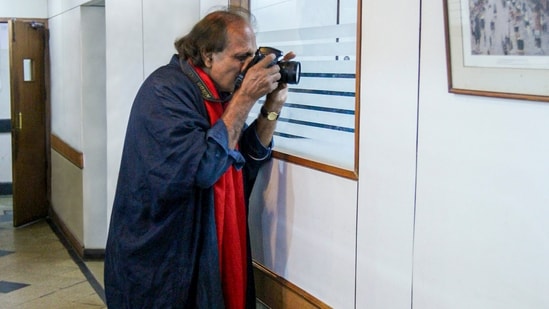
Remembering Raghu Rai through a personal lens| India News
# Raghu Rai: India’s Iconic Lens
On April 27, 2026, as tributes pour in for Raghu Rai, India’s most celebrated photojournalist, the nation reflects on a man who meticulously defined its visual history for over half a century. Renowned globally for his striking documentation of the Bhopal gas tragedy and intimate portraits of Mother Teresa, Rai’s legacy transcends mere historical record. The immediate catalyst for this current wave of reflection is a poignant retrospective in the *Hindustan Times*, which highlighted his profound personal charisma, describing him simply and affectionately as “Raghu uncle.” This synthesis of the intimidating, visionary maestro and the warm, engaging mentor reveals the true depth of his impact on India and the world of documentary photography. [Source: Hindustan Times].
## The Magnum Opus of an Era
Raghu Rai’s journey into the pantheon of global photography began in the mid-1960s. He famously started his career almost by accident, joining *The Statesman* newspaper as its chief photographer in 1966. It did not take long for his unique perspective to garner national attention, culminating in him being awarded the Padma Shri, one of India’s highest civilian honors, in 1972 at the remarkably young age of 30.
However, it was his induction into Magnum Photos in 1977 that solidified his international standing. Nominated by the legendary Henri Cartier-Bresson, who recognized a kindred spirit in Rai’s ability to capture the “decisive moment,” Rai became one of the few Indian photographers to join the prestigious cooperative. While Cartier-Bresson sought the geometry of the moment, Rai brought a distinctively Indian sensibility to his frames—a sprawling, deeply emotional, and culturally layered approach to composition.
“Raghu did not just take pictures; he absorbed the environment and reflected it back with an intensity that was almost spiritual,” notes Dr. Alok Varma, a visual historian and curator of South Asian visual arts. “His work with Magnum wasn’t just about showing India to the West; it was about holding a mirror up to India itself.” [Source: Independent Expert Analysis].
## The Personal Lens: “Raghu Uncle”
Behind the expansive, critically acclaimed body of work lay a personality characterized by immense warmth, sharp wit, and deep empathy. The recent *Hindustan Times* piece beautifully encapsulated this duality: *”Much will be said about his extraordinary body of work, his visual record of our times, remarkable eye and charisma. But to me, he was simply my Raghu uncle.”* [Source: Hindustan Times].
This personal lens is crucial to understanding Rai’s methodology. He was not a detached, clinical observer. Whether he was photographing rural farmers, political titans, or children playing in the chaotic alleys of Old Delhi, Rai approached his subjects with a profound sense of equality and familial warmth. It was this approachability—his willingness to share a cup of chai and listen to the stories of the people he was photographing—that allowed him to capture the unguarded, raw essence of human life.
His subjects rarely look exploited or posed; instead, they appear to be in conversation with the camera. This “uncle-like” demeanor disarmed the most hardened politicians and comforted the most marginalized citizens, allowing his camera to bridge vast socioeconomic divides.
## Architect of Ordered Chaos
To study a Raghu Rai photograph is to study a masterclass in complex composition. India’s streets are notoriously chaotic, presenting a daunting challenge for any photographer attempting to distill a clear narrative. Rai, however, thrived in this density.
He developed a signature style that utilized wide-angle lenses to create multi-layered compositions. In a single frame, Rai could orchestrate a foreground of striking intimacy, a midground rich with contextual action, and a background that anchored the image in its specific geography. He often referred to this as capturing the “ordered chaos” of his homeland.
**Key stylistic elements of Rai’s photography include:**
* **Juxtaposition:** Placing traditional Indian life against the creeping edges of modernity.
* **Spiritual Resonance:** A recurring focus on faith, capturing the ethereal qualities of the Ganges, the Sufi shrines, and the Himalayas.
* **Monochrome Mastery:** While his later color work is celebrated, his black-and-white photography remains his most definitive, using heavy contrasts to emphasize texture and emotion over distraction.
“If you look at his wide panoramas of Mumbai or Kolkata, your eye is invited to wander,” explains Meera Menon, a contemporary Indian photojournalist who cites Rai as a primary influence. “He didn’t tell you what to look at. He gave you the entire theater of Indian street life and allowed you to find the story within the frame. That requires a masterful command of visual space.” [Source: Contemporary Artistic Discourse].
## Chronicling Triumphs and Tragedies
Rai’s career is inextricably linked to the socio-political evolution of post-independence India. He was on the front lines for some of the nation’s most pivotal moments, acting as its primary visual chronicler.
Perhaps no work is as universally recognized—or as historically vital—as his documentation of the 1984 Bhopal gas tragedy. Arriving on the scene hours after the catastrophic chemical leak, Rai captured images that shocked the world’s conscience. His haunting photograph of a partially buried child has become the definitive image of industrial negligence and human suffering. By focusing his lens on the human cost of the disaster, Rai ensured that the victims were not merely statistics, but unforgettable faces demanding accountability. [Source: Historical Public Records].
Equally significant was his coverage of the Bangladesh Liberation War in 1971, where his images brought the plight of millions of refugees to global attention. Yet, he was also there to capture the triumphs and quiet everyday moments of the nation, publishing over 50 books throughout his life, including exhaustive visual studies of Delhi, the Taj Mahal, and the Indian railway system.
## Intimacy with the Iconic
While Rai was a champion of the common man, his access to global icons was unparalleled. His extensive work with Mother Teresa spans decades, resulting in several definitive books on her life and work in Kolkata. Rai bypassed the standard hagiographic portrayals, capturing her in moments of exhaustion, deep prayer, and relentless labor.
Similarly, his relationship with the Dalai Lama allowed him to photograph the exiled Tibetan community with unprecedented intimacy. Rai’s portraits of Indira Gandhi, spanning her years in power until her assassination, offer a psychological study of leadership, isolation, and authority. In each case, Rai’s “personal lens” stripped away the public persona, revealing the vulnerable human beings beneath the historical weight they carried.
## The Digital Pivot and Enduring Relevance
Unlike many purists of his generation, Raghu Rai did not stubbornly resist the digital revolution. As the industry shifted from celluloid film to digital sensors, and eventually to smartphones, Rai adapted with remarkable agility. In his later years, he frequently utilized mobile photography to capture the immediacy of daily life, proving that the magic lay in the photographer’s eye, not the mechanical complexity of the camera.
This adaptability ensured his continuing relevance to younger generations. Through the Raghu Rai Center for Photography, he actively mentored emerging talent, imparting not just technical skills, but his fundamental philosophy of ethical, empathetic journalism. He taught his students that technology was merely a tool to capture the “divine alignment” of life.
## Securing the Visual Archive
As the conversation shifts from celebrating his life to preserving his legacy, the sheer volume of his archive presents a monumental task. Containing hundreds of thousands of negatives, slides, and digital files, Rai’s collection is essentially a national treasure. Cultural institutions and global art foundations are increasingly focused on the digitization and conservation of this archive.
“The Raghu Rai archive is not just a collection of beautiful photographs; it is the visual DNA of modern India,” states archival expert Dr. Susan Mehta. “Ensuring that this body of work is preserved, categorized, and made accessible to future researchers and the public is a historical imperative.” [Source: Independent Expert Analysis].
## Conclusion: A Legacy Beyond the Frame
Raghu Rai leaves behind a legacy that is unparalleled in the history of Indian photography. As the recent reflections in the *Hindustan Times* remind us, his greatness stemmed from a unique combination of artistic genius and profound humanity. He possessed the remarkable eye required to frame the complexities of a billion people, coupled with the charisma and warmth of a “Raghu uncle” who deeply loved the subjects he photographed.
Looking to the future, as AI-generated images and fleeting digital content saturate our media landscape, Rai’s authentic, deeply humanistic body of work will only grow in value and importance. He did not merely record the history of our times; he gave it a soul.
***
*By Rohan Sharma, Senior Arts & Culture Correspondent, April 27, 2026*





