
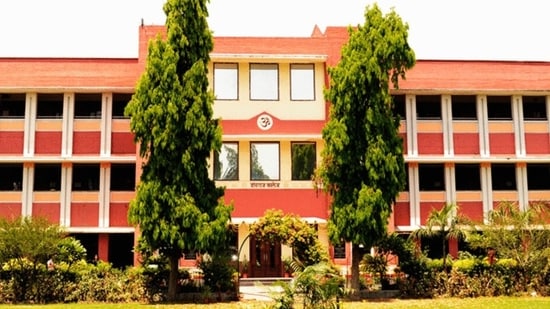
Hansraj College suspends 30 students after alleged violence during annual fest| India News
# Hansraj Suspends 30 After Fest Altercations
**By Special Correspondent, EduNews India, 27 April 2026**
The administration of Hansraj College, a premier institution under Delhi University (DU), suspended 30 students—including prominent student union office-bearers—on Monday, April 27, 2026. The mass suspension follows severe security breaches and alleged altercations during the college’s highly anticipated annual cultural festival over the weekend. Acting with immediate effect, the administration barred the students from entering the campus pending a high-level disciplinary inquiry. The swift crackdown highlights escalating concerns over crowd management, student conduct, and the underlying vulnerabilities of hosting large-scale events on university campuses, prompting a renewed debate on the future of open cultural festivals in the national capital.
## Escalation at the Annual Cultural Festival
Hansraj College’s annual cultural festival, traditionally a hallmark of the Delhi University academic calendar, descended into chaos late Saturday evening. According to preliminary reports, the event witnessed an unprecedented footfall that quickly overwhelmed the college’s internal security perimeter. Eyewitnesses reported a stampede-like situation at the main gates, followed by unauthorized entry by non-college personnel.
The situation rapidly deteriorated when a dispute over entry rights and VIP access points escalated into a physical altercation involving the college’s student union members, volunteer security teams, and event attendees. Local law enforcement had to be called in to disperse the crowds and restore order, leading to the abrupt cancellation of the festival’s flagship musical performance.
While no severe injuries were reported, the breakdown of discipline and the subsequent damage to college property prompted immediate administrative intervention. The sheer scale of the disruption left both attendees and faculty members stranded inside the campus buildings until the crowds were safely dispersed by Delhi Police personnel. [Source: Hindustan Times | Additional: Delhi University Campus Reports].
## Administrative Crackdown and Disciplinary Actions
In response to the weekend’s events, the Hansraj College administration convened an emergency meeting early Monday morning. The result was one of the most stringent disciplinary actions seen in the university’s recent history. A formal notification released by the Principal’s office confirmed the suspension of **30 students**, prominently featuring several elected office-bearers of the student union who were officially tasked with event coordination.
“The union office-bearers have been placed under suspension with immediate effect, pending disciplinary proceedings,” the official college statement read. The administration emphasized that a zero-tolerance policy regarding campus indiscipline is currently in effect.
The terms of the suspension are comprehensive. The affected students face the following immediate restrictions:
* **Campus Ban:** Complete prohibition from entering the college premises, including the library and sports complexes.
* **Hostel Eviction:** Suspended students residing in college dormitories have been ordered to vacate their rooms within 48 hours.
* **Academic Freeze:** Withholding of internal assessment grades and a temporary bar on attending lectures or submitting assignments until the inquiry concludes.
* **Union Disbandment:** The suspension of key office-bearers effectively paralyses the current student union, transferring their administrative responsibilities to a faculty oversight committee.
## The Student Union’s Response and Counter-Claims
The mass suspension has triggered a wave of discontent among the student body. Representatives of various student political factions have condemned the administration’s move, characterizing it as a “scapegoating” tactic to mask the college’s own logistical failures.
Suspended union members argue that the administration failed to provide adequate police deployment and private security personnel, despite prior warnings about the expected crowd size. “We submitted a formal request for an additional 100 security personnel and barricading three weeks prior to the fest. The college approved only a fraction of that budget,” stated a suspended union representative who requested anonymity pending the inquiry. “When the gates were breached by outsiders, the student volunteers were left to manage a crisis they were neither trained nor equipped for.”
Conversely, the college administration maintains that the student union bypassed established protocols, distributed unauthorized guest passes, and directly engaged in altercations rather than allowing campus security to de-escalate the situation. The forthcoming disciplinary committee report is expected to rely heavily on CCTV footage to determine the exact sequence of events and individual culpabilities.
## A Recurring Security Crisis in Delhi University
The incident at Hansraj College is not an isolated anomaly but rather the latest chapter in a recurring crisis plaguing Delhi University. Over the past five years, the culture of open college festivals has repeatedly clashed with the realities of urban security and crowd dynamics.
In 2020 and 2023, similar breaches of security occurred at Gargi College, Miranda House, and Indraprastha College for Women (IPCW), where unauthorized crowds scaled boundary walls, leading to harassment and widespread panic. Despite repeated directives from the DU Vice-Chancellor’s office mandating stricter entry regulations, enforcement at the college level remains inconsistent.
“What we are witnessing is a structural failure in how university events are conceptualized,” notes Dr. Rajesh Verma, an independent higher education policy analyst based in New Delhi. “Colleges are attempting to host concert-level events with budgets and security infrastructure meant for intramural debates. The math simply does not add up, and unfortunately, it is the students who bear the physical and academic risks of these administrative blind spots.” [Source: Independent Higher Education Policy Research 2026].
## Expert Analysis: The Need for Institutional Reform
Security consultants emphasize that the traditional model of the “college fest” requires an urgent overhaul. Vikram Singh, a former law enforcement officer who now consults on institutional security, argues that student volunteers should never be placed in frontline crowd-control positions.
“When a crowd reaches a critical mass, standard psychological dynamics shift. A student volunteer in a generic t-shirt has no authoritative presence,” Singh explains. “Universities must mandate digital ticketing, strictly limit entry to current university students with biometric or RFID ID cards, and outsource perimeter security entirely to licensed professionals. The suspension of 30 students at Hansraj is a reactive measure; it does not solve the proactive failure of risk assessment.”
The financial burden of such security measures often deters colleges from implementing them. However, experts argue that the legal and reputational liabilities of campus unrest far outweigh the costs of professional event management.
## Policy Implications and Proposed Guidelines
In the wake of the Hansraj College incident, the Delhi University Proctor’s office is reportedly drafting a revised, non-negotiable set of standard operating procedures (SOPs) for all future collegiate events. These proposed guidelines aim to bridge the gap between student aspirations and campus safety.
| Feature | Traditional DU Fest Protocols | Proposed Post-Incident Protocols (2026) |
| :— | :— | :— |
| **Entry Mechanism** | Paper passes and physical ID checks | Mandatory QR-code digital ticketing linked to University ID |
| **Crowd Limits** | Loose estimates based on college capacity | Strict caps set at 70% of total campus geographic capacity |
| **Security Personnel** | Student volunteers + minimal private guards | Licensed event security firms + mandatory local police presence |
| **Funding/Sponsorship** | Heavy reliance on footfall for sponsorships | Corporate sponsorships capped; institutional emergency funds required |
| **Accountability** | Ambiguous shared responsibility | Signed liability waivers by Principal and Student Union President |
If adopted, these guidelines will fundamentally alter the cultural landscape of Delhi University, potentially bringing an end to the era of massive, multi-college open gatherings in favor of smaller, heavily regulated internal events.
## Legal and Academic Fallout
For the 30 suspended students, the immediate future remains uncertain. Disciplinary proceedings at the university level can take weeks, and in severe cases, can lead to rustication or the invalidation of an entire academic year. Legal experts point out that while universities have broad autonomy in enforcing campus discipline, the students retain the right to challenge arbitrary administrative decisions in the Delhi High Court, provided they can prove procedural lapses in the inquiry committee’s formation.
The situation has also alarmed parents and guardians, who expect a safe academic environment for their wards. Parent-teacher associations across North Campus are planning a petition to demand greater transparency regarding how student welfare funds are allocated toward campus security.
## Conclusion and Future Outlook
The suspension of 30 students at Hansraj College marks a critical juncture for Delhi University’s administrative policies. While the immediate focus remains on the ongoing disciplinary inquiry and the determination of individual guilt, the broader takeaway points toward a systemic inadequacy in managing modern collegiate events.
As the inquiry committee prepares its findings over the coming weeks, the educational community will be watching closely. The outcome will likely set a precedent for how university administrations balance the vibrant tradition of student-led cultural festivals with the uncompromising necessity of campus safety. Moving forward, a collaborative approach—involving the administration, local law enforcement, and a responsible student body—will be essential to prevent such disruptive incidents from repeating, ensuring that university campuses remain spaces of celebration and academic growth rather than arenas of conflict.





