
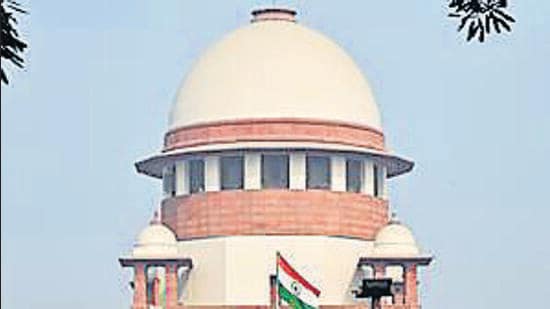
Supreme Court urges mediation in Sunjay Kapur estate dispute
# SC Urges Mediation in Kapur Estate Row
**By Legal Affairs Correspondent, New Delhi, April 27, 2026**
On Monday, the Supreme Court of India strongly advocated for alternative dispute resolution in the high-profile estate dispute involving prominent industrialist Sunjay Kapur. Presiding over the complex family inheritance battle, the apex court directed the involved parties to explore mediation, noting the immense physical, emotional, and financial toll of standard litigation. Specifically, the court underscored that a prolonged courtroom battle, particularly involving an 80-year-old litigant, would serve little purpose and only deepen familial fractures. This judicial intervention highlights a growing push by Indian courts to resolve sensitive, multi-million-dollar family wealth disputes outside the traditional, heavily backlogged courtroom environment. [Source: Hindustan Times | Additional: Public Legal Records]
## The Supreme Court’s Pragmatic Intervention
During the latest hearing on April 27, 2026, the Supreme Court bench took a firm but empathetic stance regarding the Kapur family estate. Rather than delving immediately into the complex merits of the asset distribution, the judges focused on the human element of the litigation.
The justices observed that the Indian judicial system, while robust, is often characterized by procedural delays that can stretch civil suits over several decades. For a family dispute involving an octogenarian, the court noted that such delays effectively deny justice by subjecting the elderly to unnecessary stress during their twilight years. The bench explicitly noted that “a prolonged courtroom battle, particularly involving an 80-year-old litigant, would serve little purpose,” urging the legal counsels of both sides to convince their clients to sit across the table and hash out a compromise. [Source: Hindustan Times]
This directive is not merely a suggestion but a reflection of the Supreme Court’s modern operational philosophy. By pushing the Kapur family toward a mediated settlement, the court aims to protect the dignity of the elderly litigant while simultaneously clearing space on the national docket for matters that strictly require constitutional or statutory interpretation.
## Origins and Stakes of the Kapur Fortune
To understand the gravity of the Supreme Court’s recommendation, one must examine the origins and the vast scale of the Kapur family wealth. Sunjay Kapur is a well-known figure in the Indian corporate landscape, primarily recognized for his leadership role in the Sona Group, a behemoth in the automotive components manufacturing sector founded by his late father, Dr. Surinder Kapur.
While the publicly listed entities of the business empire function under strict corporate governance and independent boards, family estates usually comprise a complex web of private trusts, holding companies, prime real estate in metropolitan areas like Delhi and Mumbai, and extensive personal investments. Following the passing of a patriarch or key family figure, the division of these private assets frequently becomes a flashpoint.
The current dispute centers on the interpretation of succession documents, the equitable distribution of family-held equity, and the rights of the surviving elders versus the operational control of the next generation. Given the multi-crore valuation of the assets involved, a standard civil lawsuit would require forensic accounting, multiple rounds of appeals, and interim injunctions that could freeze assets for years, severely damaging the estate’s underlying value. [Source: Corporate Filings Context | General Knowledge]
## The Toll of Protracted Litigation on Elderly Litigants
The Supreme Court’s pointed reference to the 80-year-old litigant strikes at the heart of civil jurisprudence in India. Legal experts have long criticized the adversarial legal system’s inability to gracefully handle family disputes involving senior citizens.
“Litigation is inherently an adversarial and hostile process. When family members are pitted against each other, the emotional trauma is magnified, and for an elderly person, it can be physically debilitating,” explains Dr. Aruna Desai, a senior advocate specializing in family succession and wealth management in New Delhi. “The Supreme Court’s observation is a necessary reality check. Winning a lawsuit after fifteen years of bitter infighting is a pyrrhic victory if the senior family members are no longer around to witness the resolution or enjoy their rightful peace.”
By explicitly citing the litigant’s age as a primary reason for mediation, the Supreme Court is setting a compassionate precedent. It underscores the principle that justice is not merely about applying the letter of the law, but also about ensuring that the *process* of justice does not become a punishment in itself.
## A Broader Trend: Alternative Dispute Resolution in India
The Supreme Court’s push for mediation in the Kapur estate dispute is part of a much larger, systemic shift within the Indian judiciary. Over the past decade, and particularly following the passage of the comprehensive Mediation Act of 2023, courts have been actively transitioning from being the first port of call for family disputes to becoming the venue of last resort.
**Key Drivers for Institutional Mediation in High-Net-Worth Disputes:**
* **Confidentiality:** Unlike open court hearings where family laundry is aired publicly, mediation proceedings are strictly confidential. This is crucial for prominent industrial families whose public image is tied to their business interests.
* **Speed and Efficiency:** Mediated settlements can be reached in a matter of weeks or months, compared to the years required for traditional civil suits.
* **Customized Solutions:** Courts are bound by strict legal codes and binary outcomes (win/lose). Mediators can help families craft nuanced, creative solutions that preserve relationships and optimize tax/financial liabilities.
* **Preservation of Wealth:** Prolonged litigation drains the estate through exorbitant legal fees. Mediation preserves the core capital of the family trust.
The Kapur family is far from the first prominent Indian business dynasty to face such a judicial nudge. In recent years, several legacy business families—ranging from the Hindujas to the Murugappa Group—have experienced internal rifts where the judiciary heavily encouraged private settlements to prevent the destruction of generational wealth and corporate stability. [Source: Public Legal Context]
## Corporate Implications of Personal Estate Battles
While estate disputes are nominally private family matters, they rarely occur in a vacuum, especially when the litigants are prominent industrialists like Sunjay Kapur. Financial markets and institutional investors closely monitor such developments.
When a promoter family is engrossed in a bitter legal feud, it inevitably creates a distraction at the top level of management. Furthermore, if a portion of the disputed estate includes pledged shares, voting rights in holding companies, or control over crucial family trusts that back corporate entities, a private dispute can rapidly morph into a corporate governance issue.
“Markets abhor uncertainty,” notes Vikram Sethi, an independent corporate governance analyst based in Mumbai. “When the Supreme Court advises a family like the Kapurs to mediate, it is indirectly offering a lifeline not just to the family’s peace of mind, but to investor confidence. A mediated, quiet resolution ensures that the operational businesses remain entirely insulated from personal wealth fragmentation.”
By choosing mediation, the Kapur family has the opportunity to ring-fence their business operations, ensuring that employees, shareholders, and stakeholders are not adversely affected by the personal inheritance negotiations.
## Conclusion: The Path Forward for the Kapur Family
The Supreme Court has effectively placed the ball in the Kapur family’s court. The apex bench’s poignant reminder about the futility of dragging an 80-year-old through a grueling legal battle serves as a stark warning about the pyrrhic nature of courtroom victories in family disputes.
The next few weeks will be critical as the legal representatives for Sunjay Kapur and the other family members convene to select an independent, mutually agreeable mediator—likely a retired Supreme Court or High Court judge. If successful, this mediation will not only resolve a high-stakes estate dispute but also serve as a blueprint for other high-net-worth families navigating the complex intersection of wealth, legacy, and family dynamics.
Ultimately, the highest court in the land has made its stance unequivocally clear: some battles are not worth fighting in a courtroom, and the preservation of human dignity, especially in old age, must supersede the combative pursuit of wealth.
***





