
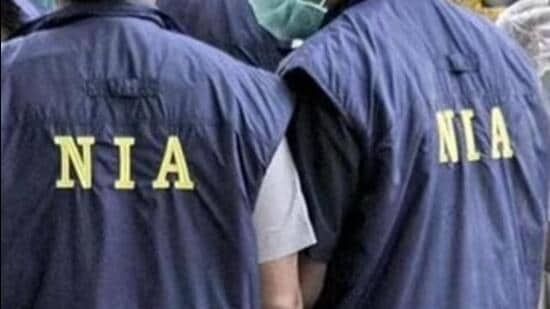
NIA to probe recovery of 79 crude bombs in West Bengal ahead of phase-2 polls
# NIA Probes 79 Bombs Found in Bengal Before Polls
**By Special Investigative Desk, News Wire** | **April 28, 2026**
The National Investigation Agency (NIA) has officially taken over the probe into the recovery of 79 crude bombs in West Bengal’s Bhangar division, just days ahead of the critical second phase of the 2026 elections. Initially registered by the Uttar Kashipur police on Saturday, April 25, 2026, the massive cache of explosives was discovered hidden in a politically sensitive zone on the outskirts of Kolkata. The swift transfer of jurisdiction to federal investigators on Monday underscores mounting national security concerns regarding pre-poll intimidation and organized electoral interference in the politically volatile region. [Source: Hindustan Times].
## The Bhangar Discovery: A Ticking Threat Neutralized
The incident came to light late last week following a tip-off received by the local intelligence network in the Bhangar division, an area historically susceptible to political clashes. According to the initial First Information Report (FIR) filed at the Uttar Kashipur police station, law enforcement officials conducted a sweeping search operation that led to the unearthing of 79 live crude bombs.
These explosive devices, typically manufactured using locally sourced low-grade explosives, shrapnel, and jute wrappings, were reportedly concealed in plastic drums within an abandoned brick kiln structure. The sheer volume of the explosives recovered strongly indicates a coordinated effort to stockpile weapons ahead of the second phase of polling. Local bomb disposal squads were immediately dispatched to the scene, successfully defusing the devices without any casualties or property damage.
The recovery has sent shockwaves through the local community, prompting an immediate reassessment of the security apparatus deployed in the South 24 Parganas district. While the local police initiated the preliminary investigation, the scale of the recovery quickly drew the attention of the Ministry of Home Affairs (MHA) in New Delhi.
## Federal Intervention: Why the NIA Stepped In
Under the National Investigation Agency Act of 2008, the central agency is mandated to take over cases involving scheduled offenses, particularly those falling under the Explosive Substances Act of 1908. On Monday, April 27, the MHA formally directed the NIA to assume control of the Bhangar case, citing the potential interstate ramifications and the obvious threat to the democratic electoral process.
The NIA’s involvement shifts the focus from a localized law-and-order issue to a broader counter-terrorism and organized crime investigation. Federal investigators are now tasked with tracing the supply chain of the explosive materials. Key questions the NIA seeks to answer include the source of the funds used to procure the raw materials, the identities of the bomb-makers, and the political or anti-social networks orchestrating the stockpiling.
[Source: Original RSS | Additional: Public records on NIA Jurisdictional Guidelines].
“The mandate of the NIA in such scenarios is to look beyond the immediate recovery,” notes Dr. Samir Ranjan, a New Delhi-based internal security analyst. “They are analyzing call detail records (CDRs), financial transactions, and inter-state smuggling routes to dismantle the entire ecosystem that enables such political violence.”
## The Volatile Political Landscape of Bhangar
To understand the significance of this recovery, one must examine the socio-political fabric of Bhangar. Situated on the eastern fringes of Kolkata, Bhangar has long been a flashpoint for intense, often violent, political rivalries. Over the past decade, the constituency has witnessed a multi-cornered struggle for dominance involving the ruling state establishment, resurgent opposition forces, and local sectarian groups.
During the 2026 election cycle, the stakes in Bhangar and its adjoining constituencies have reached a fever pitch. Phase 2 of the elections covers several hyper-sensitive booths where margins of victory are expected to be razor-thin. In such highly contested environments, the stockpiling of crude bombs is a traditional, albeit illegal, tactic used to enforce localized dominance, capture voting booths, and actively deter rival supporters from stepping out to cast their ballots.
The demographic makeup of the region, combined with rapid urbanization and land acquisition disputes, has created a fertile ground for localized turf wars. The discovery of 79 crude bombs is seen by political commentators not as an isolated criminal act, but as a symptom of this deeply entrenched culture of territorial political control.
## Historical Precedents: The Menace of Crude Bombs
West Bengal has a documented history of electoral violence characterized by the use of crude explosives. Unlike high-grade military explosives designed for mass casualties, these crude bombs are primarily tools of psychological warfare and area domination.
During the 2021 Assembly elections and the 2023 Panchayat polls, the state witnessed multiple incidents where crude bombs were hurled to scatter queues of voters or to attack rival political convoys. The loud, concussive nature of these devices is engineered to create panic, forcing citizens indoors and allowing organized cadres to manipulate the voting process in isolated booths.
The recovery in Uttar Kashipur, however, stands out due to its sheer volume. Finding nearly 80 bombs in a single location suggests a high level of premeditation and logistical coordination. Law enforcement agencies fear that this cache may have been just one of several distributed across the district, prompting sweeping preemptive raids across neighboring divisions.
## Unprecedented Security Deployment by the Election Commission
In response to the recovery and the escalating tensions ahead of Phase 2, the Election Commission of India (ECI) has activated a stringent, multi-tiered security protocol. The goal is to establish an unbreachable security blanket that reassures the voting public and deters anti-social elements.
**Key Security Enhancements Ahead of Phase-2:**
| Security Measure | Description | Objective |
| :— | :— | :— |
| **CAPF Deployment** | Deployment of over 150 additional companies of Central Armed Police Forces (CAPF) in sensitive zones. | Area domination, building voter confidence, and securing polling premises. |
| **Drone Surveillance** | Continuous aerial monitoring using high-resolution drones equipped with thermal imaging. | Identifying illegal gatherings, hidden stockpiles, and rooftop ambushes in congested areas. |
| **Inter-State Border Sealing** | Setting up heavily armed checkpoints at borders to restrict vehicular movement. | Preventing the influx of illegal arms, explosives, and outside political operatives. |
| **QRT Activation** | Stationing Quick Response Teams (QRTs) within a 5-kilometer radius of hyper-sensitive booths. | Guaranteeing a response time of under 10 minutes to any report of electoral violence. |
The Election Commission has also mandated 100% webcasting from all polling stations in the Bhangar division, ensuring that election observers in New Delhi and Kolkata have real-time visual access to the voting process.
## Expert Perspectives: Intelligence Gathering and Deterrence
Security experts view the April 25 recovery as a double-edged sword. On one hand, it highlights the persistent threat of electoral violence; on the other, it represents a significant intelligence victory for local law enforcement.
“The proactive recovery of 79 explosive devices before they could be deployed is a testament to effective human intelligence on the ground,” explains retired IPS officer and security consultant Prakash Sen. “However, the fact that such a large quantity of explosive material could be manufactured and assembled under the radar points to systemic vulnerabilities. The NIA’s takeover will likely bridge the gap between local policing and central intelligence, ensuring that the ringleaders, not just the foot soldiers, face justice.”
Electoral watchdogs emphasize that true deterrence requires swift judicial action. Historically, cases involving crude bombs have suffered from low conviction rates due to witness intimidation and lack of forensic chain-of-custody. The entry of the NIA, equipped with advanced forensic capabilities and federal authority, is expected to bring a higher standard of evidence collection to the Uttar Kashipur case.
## Implications for the Democratic Process
The overarching implication of the Bhangar bomb recovery touches the very core of India’s democratic framework. Free and fair elections rely entirely on the ability of citizens to exercise their franchise without fear of physical harm. When political syndicates resort to explosive stockpiling, they attempt to disenfranchise entire communities through terror.
Civic rights organizations in West Bengal have expressed deep concern over the psychological impact on the electorate. While the bombs were safely neutralized, the news of their discovery can inherently suppress voter turnout, particularly among vulnerable demographics such as the elderly and first-time voters.
Consequently, the ECI and state administration have launched extensive voter awareness and reassurance campaigns. Flag marches by the central forces are currently being conducted twice daily through the narrow lanes of Bhangar, serving as a visible reminder of the state’s commitment to voter safety.
## Conclusion: The Road Ahead for Phase-2 and Beyond
The NIA’s investigation into the recovery of 79 crude bombs in West Bengal’s Uttar Kashipur is a critical intervention at a delicate democratic juncture. As Phase 2 of the 2026 elections approaches, the coordinated efforts of the ECI, the CAPF, and federal investigators are being put to the ultimate test.
The successful neutralization of this threat demonstrates the effectiveness of preemptive intelligence, yet it serves as a stark reminder of the persistent challenges plaguing the region’s electoral landscape. The outcome of the NIA probe will not only determine the fate of those attempting to subvert the elections in Bhangar but will also set a crucial precedent for maintaining law, order, and democratic integrity in the subsequent phases of the electoral process. Ensuring a safe environment where ballots decisively overpower bombs remains the paramount objective for India’s electoral custodians.





