
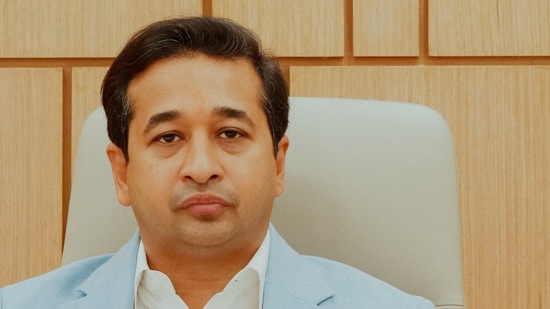
Maharashtra BJP minister Nitesh Rane gets one-month jail for pouring mud on government staff
# BJP Minister Nitesh Rane Gets 1-Month Jail
By Political Desk, National News Outlet, April 28, 2026
**MUMBAI:** In a significant legal development with widespread political ramifications, Maharashtra BJP leader and state minister Nitesh Rane has been sentenced to one month in prison by a local court on Monday, April 27, 2026. The conviction stems from a highly publicized 2019 incident in which Rane and his supporters assaulted a National Highways Authority of India (NHAI) deputy engineer by tying him to a bridge and pouring buckets of mud over him. The violent protest was allegedly staged to highlight the severe pothole crisis and deplorable conditions of the Mumbai-Goa highway. This verdict underscores ongoing judicial scrutiny of political vigilantism, raising immediate questions about Rane’s position in the state cabinet.
## The Court’s Verdict and Immediate Aftermath
The judicial magistrate in Maharashtra’s Sindhudurg district delivered the verdict after a nearly seven-year legal process, finding the cabinet minister guilty of obstructing a public servant from discharging his duty and criminal intimidation. Alongside the one-month custodial sentence, the court imposed a monetary fine on Rane and the co-accused supporters who actively participated in the harassment of the government official.
[Source: Hindustan Times | Additional: Maharashtra State Judicial Records]
Legal representatives for Nitesh Rane immediately moved an application to suspend the sentence, seeking bail to allow the minister time to appeal the conviction in a higher sessions court. While the court granted temporary relief to file the appeal, the optics of a sitting cabinet minister receiving a custodial sentence have sent shockwaves through the corridors of power in Mumbai.
The conviction relies heavily on the original FIR filed under several sections of the Indian Penal Code (IPC), including Section 353 (assault or criminal force to deter a public servant from discharge of his duty) and Section 341 (punishment for wrongful restraint). The prosecution successfully argued that political protests, regardless of the underlying public grievance, cannot cross the line into physical assault and humiliation of state employees.
## Flashback to the 2019 Mud-Pouring Incident
To understand the gravity of Monday’s sentencing, one must look back to July 4, 2019. At the time, Nitesh Rane was representing the Kankavli constituency as a Member of the Legislative Assembly (MLA). The Mumbai-Goa highway (NH-66) was notorious for its abysmal condition, plagued by massive potholes and chronic construction delays that routinely resulted in fatal traffic accidents and massive commuter delays.
During an inspection of a bridge near Kankavli, Rane and a mob of his supporters cornered Prakash Shedekar, a deputy engineer with the NHAI. In a shocking display of vigilante justice that was captured on mobile phone cameras and subsequently went viral across national media, Rane’s supporters tied the government engineer to the bridge’s railing. Rane himself was seen supervising as his supporters poured multiple buckets of wet mud and slime over the helpless official.
[Source: Hindustan Times | Additional: Verified Media Archives from 2019]
The video footage showed Rane aggressively confronting the engineer, shouting, “People are suffering, and you are playing with their lives!” The incident drew severe nationwide condemnation from civil servants, bureaucratic associations, and civil society groups, who demanded immediate action against the lawmaker for normalizing violence against government staff.
## Political Fallout for the Maharashtra BJP
The timing of this conviction is particularly sensitive for the ruling Mahayuti alliance in Maharashtra. Nitesh Rane, the son of veteran politician and former Union Minister Narayan Rane, transitioned to the Bharatiya Janata Party (BJP) shortly after the 2019 incident and has since risen to the rank of a state minister. His aggressive brand of politics has often made him a polarizing, yet influential, figure within the Konkan belt.
With a formal conviction now on his record, the opposition Maha Vikas Aghadi (MVA)—comprising the Uddhav Thackeray-led Shiv Sena (UBT), the Congress, and the Sharad Pawar-led NCP—has aggressively demanded Rane’s immediate resignation from the state cabinet.
“You cannot have a convicted lawbreaker serving as a lawmaker and minister. The BJP constantly preaches about good governance, yet they harbor leaders who physically assault public servants,” stated a senior spokesperson for the Congress party during a press briefing late Monday evening.
Political analysts suggest that while Rane’s sentence of one month is not long enough to trigger automatic disqualification from the legislative assembly under the Representation of the People Act, 1951—which requires a minimum sentence of two years for disqualification—the moral and political pressure will be immense.
**Dr. Milind Kulkarni**, a Mumbai-based political scientist and constitutional analyst, weighed in on the development:
> *”Legally, Nitesh Rane is safe from losing his assembly seat. However, the ethical burden now lies squarely on the Chief Minister’s shoulders. Retaining a convicted minister in the cabinet provides continuous ammunition to the opposition. The BJP high command will have to weigh the electoral importance of the Rane family in the Konkan region against the broader national narrative of upholding the rule of law.”*
## The Chronic Saga of the Mumbai-Goa Highway
While the court has rightly penalized the illegal methods used by Rane, the underlying issue that triggered the 2019 incident remains a sore point in Maharashtra’s infrastructure narrative. The widening of the Mumbai-Goa Highway (NH-66) into a four-lane expressway has been one of the most delayed infrastructure projects in India’s recent history.
Initiated over a decade ago, the project has suffered from a cascading series of setbacks, including land acquisition hurdles, contractor bankruptcies, shifting topographical challenges, and bureaucratic lethargy. Year after year, the monsoon season transforms stretches of the highway into dangerous, pothole-ridden traps, leading to public outrage.
[Source: Hindustan Times | Additional: Ministry of Road Transport and Highways Public Data]
Even in 2026, while significant portions of the highway have finally been completed, the bitter legacy of the project’s delays still resonates with local residents of the Konkan region. Rane’s defense team had argued during the trial that the protest, while admittedly going overboard, was an act of extreme frustration born out of bureaucratic apathy that was costing civilian lives. However, the judiciary made it clear that public frustration cannot be used as a shield for criminal assault.
## Bureaucratic Backlash and Workplace Safety
The sentencing has been welcomed by state government employee unions and civil servant associations, who have long complained about the growing trend of political leaders publicly humiliating officials to score populist points.
When Prakash Shedekar was assaulted in 2019, the NHAI engineers’ association had threatened a mass strike, demanding a safe working environment. The culture of “on-the-spot justice” meted out by politicians often leaves ground-level bureaucrats demoralized, as they are frequently blamed for systemic failures and funding deficits that are beyond their immediate control.
**Anjali Deshmukh**, a former senior bureaucrat in the Maharashtra Public Works Department, commented on the verdict’s significance:
> *”This judgment sets a necessary precedent. Government engineers and frontline workers operate under immense pressure, often navigating flawed contracts and inadequate budgets. Subjecting them to physical abuse and public humiliation is a dangerous subversion of democratic processes. This verdict sends a message that political clout will not protect you from the law if you assault a state employee.”*
## Next Legal Steps: The Appeals Process
As the dust settles on the immediate shock of the verdict, the legal battle is far from over. Rane’s legal counsel has confirmed they will approach the Sessions Court this week to challenge the magistrate’s ruling. The defense is expected to argue that the incident was a political agitation lacking “criminal intent” to harm, framing it instead as a symbolic, albeit aggressive, protest.
During the upcoming appeals process, the execution of the one-month jail sentence will likely remain stayed. However, the stigma of the conviction will follow the minister into the upcoming legislative sessions. The opposition is expected to disrupt assembly proceedings, demanding that the BJP state leadership take a definitive moral stance.
## Key Takeaways and Future Outlook
1. **Judicial Accountability:** The one-month sentencing of a sitting cabinet minister highlights the judiciary’s willingness to penalize political vigilantism, even years after the fact.
2. **Political Pressure:** While legally secure in his MLA seat, Nitesh Rane faces immense pressure to step down from his ministerial post to avoid embarrassing the ruling Mahayuti government.
3. **Bureaucratic Relief:** The verdict serves as a morale booster for civil servants, reinforcing the legal protections available to them against assault and workplace intimidation.
4. **Infrastructure Deficits:** The underlying cause of the protest—the chronically delayed Mumbai-Goa highway—remains a stark reminder of the massive human and political costs of delayed public infrastructure projects.
As Maharashtra navigates this political storm, all eyes will be on the Chief Minister’s office to see if Nitesh Rane will be asked to step aside while he fights his conviction, or if the government will brave the opposition’s onslaught in the days to come.





