‘Cowardly’, ‘betrayed women’: Mamata vs Modi takes over Bengal ahead of state assembly polls| India News
# Mamata vs Modi: Bengal Poll Battle Heats Up
By Senior Political Correspondent, National News Desk | April 19, 2026
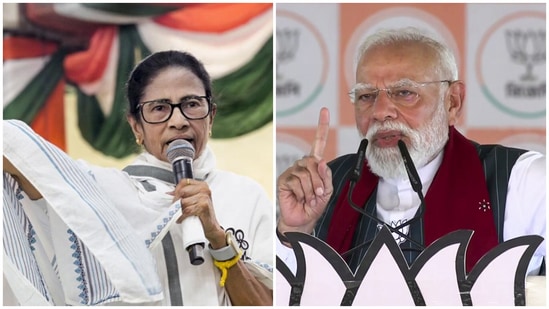
West Bengal Chief Minister Mamata Banerjee launched a blistering attack on Prime Minister Narendra Modi on Sunday, April 19, 2026, setting a fiery and confrontational tone for the upcoming state assembly elections. Reacting to the Prime Minister’s national address on Saturday, the Trinamool Congress (TMC) supremo labeled his remarks as “cowardly, hypocritical and fork-tongued,” accusing the central leadership of actively betraying women and presiding over a nationwide “maha jungle raj” (great rule of the jungle). As both the TMC and the Bharatiya Janata Party (BJP) gear up for what promises to be a fiercely contested electoral showdown in West Bengal, this escalating war of words underscores the intense political polarization defining the 2026 campaign trail. [Source: Hindustan Times].
## The War of Words Escalates
The political temperature in West Bengal has reached a boiling point following Prime Minister Modi’s weekend address. While the Prime Minister’s speech focused broadly on national development initiatives and implicitly critiqued regional governance models, Mamata Banerjee interpreted the remarks as a direct affront to her administration in Bengal.
Addressing a massive rally on Sunday afternoon, Banerjee did not mince her words. “The address to the nation yesterday was cowardly, hypocritical and fork-tongued,” she declared to a roaring crowd of supporters. Her use of the phrase **”maha jungle raj”** represents a calculated rhetorical reversal. Historically, the BJP has utilized the term “jungle raj” to criticize law and order under TMC rule in West Bengal. By redirecting the phrase at the central government, Banerjee is attempting to shift the narrative, pointing to national economic disparities, alleged misuse of central investigative agencies, and broader social unrest across BJP-ruled states.
This exchange is not occurring in a vacuum. It represents the opening salvos of the **2026 West Bengal Legislative Assembly election campaign**, a contest that will test the endurance of Banerjee’s 15-year incumbency against the formidable electoral machinery of the BJP, which has long sought to capture power in the eastern state. [Additional Source: Public Political Campaign Data 2026].
## The Battle for Women Voters
A central pillar of Banerjee’s Sunday rebuttal was her assertion that the central government has **”betrayed women.”** This specific accusation highlights what is undeniably the most critical demographic battleground in the upcoming elections: the female electorate.
In recent electoral cycles in West Bengal, female voter turnout has frequently surpassed male turnout, making women the decisive demographic in the state. The TMC has heavily relied on an expansive network of welfare schemes tailored specifically for women. The flagship **Lakshmir Bhandar** scheme, which provides direct monthly cash transfers to female heads of households, has been widely credited by political analysts as a cornerstone of the TMC’s electoral resilience.
Conversely, the BJP has aggressively contested the TMC’s record on women’s safety. Pointing to past controversies and localized incidents of political violence, the BJP leadership has consistently argued that welfare handouts cannot compensate for alleged systemic failures in law and order. The Prime Minister’s rallies in the state have frequently highlighted promises of improved security and economic empowerment for women under a prospective “Double Engine Sarkar” (alignment of state and central governments).
By accusing the Prime Minister of betraying women, Banerjee is actively defending her most crucial voter base, attempting to frame the BJP as fundamentally disconnected from the everyday socio-economic realities of women in rural and semi-urban Bengal.
## Political Stakes in West Bengal 2026
To understand the intensity of the current rhetoric, one must look at the historical trajectory of the TMC-BJP rivalry. West Bengal has transitioned into a highly polarized bipolar polity, marginalizing traditional forces like the Left Front and the Indian National Congress.
The upcoming 2026 elections carry existential weight for both primary contenders. For Mamata Banerjee, securing a fourth consecutive term would cement her legacy as one of India’s most formidable regional leaders and definitively halt the BJP’s eastern expansion. For the BJP, winning West Bengal remains a premier ideological and political objective, one that has eluded them despite massive investments of political capital.
**Historical Electoral Context (West Bengal Assembly):**
| Election Year | TMC Seats | BJP Seats | Key Narrative |
| :— | :— | :— | :— |
| **2016** | 211 | 3 | TMC dominance, Left-Congress alliance fails. |
| **2021** | 215 | 77 | High-stakes battle; TMC retains power via welfare and sub-nationalism; BJP emerges as principal opposition. |
| **2026 (Upcoming)**| TBD | TBD | Incumbency fatigue vs. Welfare consolidation; “Double Engine” vs. Federalism. |
*Data reflects official Election Commission of India results up to 2021.*
The data illustrates the rapid ascent of the BJP from a marginal player in 2016 to the primary opposition in 2021. The 2026 campaign is essentially a continuation of the unresolved ideological conflict of 2021, with both sides refining their strategies and amplifying their rhetoric.
## Expert Analysis on Campaign Strategies
Political analysts observing the early stages of the 2026 campaign note that the aggressive posturing is a deliberate tactic to energize party cadres and solidify core voter bases.
“The use of highly emotive language like ‘cowardly’ and ‘jungle raj’ is a calculated move to dominate the daily news cycle,” explains Dr. Anirban Chatterjee, an independent political scientist based in Kolkata. “Mamata Banerjee’s strength has always been her image as a street-fighter who is unafraid to take on the political hegemony of New Delhi. By directly attacking the Prime Minister, she reinforces her brand of Bengali sub-nationalism and projects strength to her supporters.”
On the other hand, experts point out that the BJP’s strategy relies heavily on highlighting anti-incumbency sentiments after 15 years of TMC rule. “The BJP’s focus is on alleged corruption scandals and administrative fatigue within the state government,” notes social researcher Malini Sen. “When the Prime Minister speaks to the nation, the underlying message to states like Bengal is that regional governance has reached its limits, and central integration is required for the next leap in development. The battle over who truly champions women—through welfare or through security—will ultimately decide this election.”
## National Implications of the State Polls
While the immediate focus is on the 294 seats of the West Bengal Legislative Assembly, the ripple effects of this election will be felt across the national political landscape. The TMC vs. BJP clash is widely viewed as a microcosm of the broader struggle between India’s regional satraps and the centralized power of the national ruling party.
A victory for the TMC would provide a massive morale boost to opposition parties nationwide, proving that strong regional leadership, coupled with effective ground-level welfare delivery, can successfully counter the BJP’s national narratives. It would reinforce the viability of federalist political arguments in the face of centralized electoral machinery.
Conversely, a BJP victory in West Bengal would be a historic milestone for the party. It would validate their long-term strategy of regional expansion, prove that their “Double Engine” development pitch resonates even in states with deep-rooted regional identities, and deal a severe blow to the broader opposition bloc’s hopes of containing the BJP’s political footprint.
## Managing Law and Order During Campaigns
As rhetoric escalates, concerns regarding the maintenance of law and order during the election cycle are inevitably rising. West Bengal has a complex history of political violence during elections, regardless of which party has been in power. The Election Commission of India (ECI) typically deploys a massive contingent of Central Armed Police Forces (CAPF) to ensure free and fair polling in the state.
The framing of “maha jungle raj” by the Chief Minister, matched by the BJP’s frequent petitions to the ECI regarding the safety of their workers, suggests that the administrative control of the election process will be just as contested as the ideological narrative. Both parties are meticulously documenting alleged infractions by their opponents, setting the stage for a legally and politically fraught campaign season.
## Conclusion: A High-Stakes Electoral Showdown
Mamata Banerjee’s fiery characterization of Prime Minister Modi’s address as “cowardly, hypocritical and fork-tongued” is a clear indicator that the gloves have come off in West Bengal. The 2026 assembly election is not merely a contest over state governance; it is a profound clash of political cultures, ideologies, and welfare models.
**Key Takeaways as the Campaign Progresses:**
* **The Rhetoric Will Intensify:** Expect both Mamata Banerjee and BJP central leaders to double down on aggressive, highly personalized political attacks.
* **Women Remain the Deciding Factor:** The competing narratives of “welfare empowerment” (TMC) versus “security and systemic development” (BJP) targeting female voters will dominate the manifestos.
* **Anti-Incumbency vs. Sub-Nationalism:** The election will test whether 15 years of incumbency fatigue can be overcome by appeals to Bengali identity and defensive federalism.
As April progresses and the actual polling dates loom closer, the citizens of West Bengal find themselves at the epicenter of India’s most compelling political theater. How the electorate responds to the accusations of “betrayal” and “jungle raj” will ultimately shape not just the future of the state, but the strategic direction of Indian politics for years to come.