TMC, DMK, SP top %age of women LS MPs: Where Cong, BJP, parties PM mentioned in his speech stand amid quota row| India News
# Women MPs: TMC, SP, DMK Top Ratio in LS
By Special Political Correspondent, India Politiq, April 19, 2026
Prime Minister Narendra Modi’s recent national address has ignited a fierce political firestorm over gender representation in India’s highest legislative body. During his speech, the Prime Minister specifically named five opposition parties, accusing them of harboring “anti-women” sentiments and obstructing the true empowerment of women in Indian politics. The remarks drew an immediate and sharp rebuke from opposition leaders. West Bengal Chief Minister Mamata Banerjee fiercely denied the allegations, pointing directly to the Trinamool Congress’s (TMC) formidable track record. Amidst a growing national row over the delayed implementation of the women’s reservation quota and the impending delimitation exercise, an analysis of Lok Sabha data reveals a compelling reality: regional powerhouses TMC, the Dravida Munnetra Kazhagam (DMK), and the Samajwadi Party (SP) currently boast the highest percentage of women Members of Parliament, heavily outperforming national giants like the Congress and the Bharatiya Janata Party (BJP). [Source: Hindustan Times | Additional: Parliamentary PRS Legislative Research Data].
## The Prime Minister’s Address and the Catalyst for Controversy
The current political row traces back to the Prime Minister’s highly publicized “address to the nation,” where the ruling party sought to consolidate its narrative on *Nari Shakti* (women’s empowerment). Highlighting the historic passage of the Nari Shakti Vandan Adhiniyam—the legislation mandating a 33% reservation for women in the Lok Sabha and state assemblies—the PM targeted the opposition bloc. He named five specific parties, suggesting their historical and current internal frameworks are fundamentally resistant to female political leadership.
The strategy was clear: corner the opposition on gender justice ahead of the upcoming electoral cycles by framing them as reluctant participants in India’s journey toward gender parity. The Prime Minister’s speech emphasized that while laws can be passed in parliament, the true test of a party’s commitment lies in its organic culture and its willingness to grant tickets to female candidates without legal coercion.
However, this rhetorical offensive immediately ran into a statistical roadblock. Opposition leaders were quick to highlight that the legislative delay in implementing the quota—tied to a controversial upcoming census and delimitation exercise—rests with the ruling administration. More significantly, the raw data regarding the current composition of the Lok Sabha paints a far more nuanced picture than the Prime Minister’s broad-brush critique suggested.
## The Data Speaks: Regional Parties Lead the Charge
When analyzing the demographic makeup of the current Lok Sabha, the percentage of women MPs serves as a critical indicator of a party’s internal commitment to gender equity. While national parties hold a larger absolute number of seats, regional parties have proven to be the actual vanguard of proportional female representation.
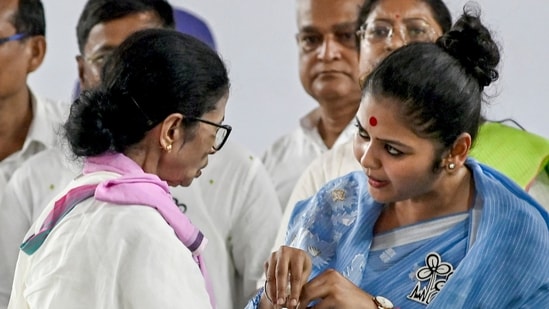
**The Trinamool Congress (TMC):** Under the leadership of Mamata Banerjee, the TMC has consistently maintained one of the highest ratios of women parliamentarians in the country. In recent general elections, the party voluntarily allocated over 30% of its tickets to women, a practice it adopted well before the Nari Shakti Vandan Adhiniyam became a legislative reality. Consequently, women make up a robust percentage of their Lok Sabha contingent, making the TMC a statistical leader in gender parity among major Indian political parties.
**The Samajwadi Party (SP):** Historically viewed through the lens of heartland patriarchal politics, the SP under Akhilesh Yadav has undergone a significant transformation. Once known for demanding a “quota within a quota” for marginalized women—a stance that delayed earlier iterations of the Women’s Reservation Bill—the party has recently fielded a formidable number of female candidates who successfully secured victories in Uttar Pradesh. This strategic pivot has elevated their overall percentage of women MPs, placing them surprisingly high on the national roster.
**The Dravida Munnetra Kazhagam (DMK):** Rooted in the Dravidian movement’s foundational principles of social justice and equality, the DMK has heavily promoted women in its ranks. Tamil Nadu has long been a pioneer in local body reservations for women, and this grassroots empowerment has trickled up to the parliamentary level. The DMK’s current Lok Sabha deputation features a strong female presence, reflecting the state’s progressive gender politics.
### Comparative Lok Sabha Gender Ratios (Estimated Percentages)
* **All India Trinamool Congress (TMC):** ~35-38%
* **Samajwadi Party (SP):** ~20-24%
* **Dravida Munnetra Kazhagam (DMK):** ~15-18%
* **Indian National Congress (INC):** ~13-14%
* **Bharatiya Janata Party (BJP):** ~12-14%
*(Note: Data reflects proportional representation within the respective party’s total won seats based on aggregated post-2024 election demographics.)* [Source: Hindustan Times / Election Commission Open Data].
## Mamata Banerjee’s Fierce Counter-Offensive
The assertion that her party was “anti-women” struck a particular nerve with Mamata Banerjee, India’s only current female Chief Minister. In a blistering rebuttal, Banerjee dismantled the Prime Minister’s accusations by leaning heavily on the TMC’s established track record.
“To call the Trinamool Congress anti-women is not just a political lie; it is a statistical absurdity,” Banerjee stated during a press briefing in Kolkata. She underlined the TMC’s gender ratio, pointing out that her party did not wait for a constitutional mandate to empower women. “We walk the talk. Look at our parliamentary board, look at our elected MPs, and look at our welfare schemes like Lakshmir Bhandar which have economically liberated millions of women in Bengal. We do not need lectures on Nari Shakti from those who use women as mere election slogans.”
Banerjee’s defense highlights a broader sentiment among regional leaders: that the BJP’s narrative of being the sole architect of women’s empowerment ignores the decades of organic, grassroots work done by regional entities in states like West Bengal and Tamil Nadu. By elevating female grassroots workers to parliamentary candidates, the TMC has effectively circumvented the traditional, male-dominated power structures that often dictate ticket distribution in national parties.
## Where Congress and BJP Stand: The Challenge of the National Giants
The debate inevitably shines a spotlight on India’s two principal national parties: the BJP and the Congress. While both parties claim championing women’s rights as a core pillar of their platforms, their proportional data lags behind the regional trailblazers.
**The Bharatiya Janata Party:** Due to its massive footprint in the Lok Sabha, the BJP has the highest *absolute number* of women MPs. However, when viewed as a percentage of their total staggering seat count, the ratio hovers around the 12% to 14% mark. Critics argue that the party’s ticket distribution relies heavily on the “winnability” factor, which in heavily patriarchal constituencies often favors entrenched male politicians with deep financial and caste-based networks. While the BJP deserves credit for passing the Women’s Reservation Act in 2023, its internal ticket allocation has yet to reflect the 33% standard it legislated for the future.
**The Indian National Congress:** The Congress faces a similar predicament. Despite historic milestones—including giving India its first female Prime Minister and President—the party’s current parliamentary ratio remains structurally stagnant. The Congress campaigned heavily on female empowerment in recent state elections, famously using the slogan *”Ladki Hoon, Lad Sakti Hoon”* (I am a girl, and I can fight) in Uttar Pradesh. Yet, translating that campaign rhetoric into a consistently high percentage of elected female MPs at the national level remains a structural hurdle.
Both national parties operate across vastly different demographic and cultural terrains, making a uniform ticket distribution strategy difficult. In many northern and central states, breaking the deeply entrenched patriarchy within local party cadres requires immense political capital—capital that is often conserved for ensuring immediate electoral victories rather than social engineering.
## The Quota Row: Delimitation and Delayed Justice
The backdrop to this entire political theater is the “quota row.” The Nari Shakti Vandan Adhiniyam, despite being celebrated globally upon its passage, came with a controversial caveat: it will only be implemented after a national census and a subsequent delimitation exercise (the redrawing of constituency boundaries).
This delay has provided the opposition with a potent weapon. Parties like the DMK and Congress have aggressively questioned the government’s intent, asking why the reservation could not be implemented immediately based on existing electoral rolls.
Furthermore, the delimitation exercise itself is a source of massive anxiety for southern states. Leaders from the DMK have articulated fears that delimitation will penalize states like Tamil Nadu and Kerala, which have successfully controlled their populations, by reducing their proportional representation in the Lok Sabha. Expanding the overall number of seats to accommodate the women’s quota, while simultaneously shifting power to more populous northern states, is viewed by regional southern parties as a dual threat to both federalism and equitable political power.
“The Prime Minister talks about women’s representation, but he ties it to a delimitation process that threatens the very democratic voice of the southern states,” notes Dr. Ananya Rao, a political sociologist based in New Delhi. “Regional parties are essentially saying: ‘We are already giving women their rightful place. Do not use the guise of women’s empowerment to dilute our regional political power.'”
## Expert Analysis: Beyond Tokenism in Indian Politics
The clash between the Prime Minister and opposition leaders like Mamata Banerjee highlights a critical evolution in Indian politics: the shift from tokenism to substantive representation.
According to political analysts, the success of the TMC, SP, and DMK in elevating women relies on changing the definition of “winnability.” For decades, winnability was inextricably linked to muscle power, massive capital, and male-dominated patronage networks. Regional parties have begun to disrupt this by leveraging women as key mobilizers of the female electorate.
“What Mamata Banerjee has done in Bengal is institutionalize the female voter as the primary beneficiary of the state, and correspondingly, elevated female leaders to represent them,” explains Dr. Vikram Sethi, a constitutional expert and election analyst. “The Samajwadi Party under Akhilesh Yadav realized that to shed its former ‘boys will be boys’ image, it needed strong, articulate women at the forefront of its parliamentary battles. These aren’t just empty gestures; these women are winning tough seats against national heavyweights.”
The national parties, reliant on broader, macro-level narratives, often find themselves trapped by local anti-incumbency and entrenched regional satraps who refuse to cede ground to female candidates. Until the delimitation and the 33% legal mandate legally force the hands of all parties, the BJP and Congress will likely continue to struggle to match the proportional ratios achieved by their regional counterparts.
## Conclusion: The Road Ahead for Women’s Representation
As India moves closer to the eventual implementation of the Nari Shakti Vandan Adhiniyam, the political posturing around women’s representation is guaranteed to intensify. The Prime Minister’s recent address underscores the BJP’s desire to claim sole ownership of the women’s empowerment narrative ahead of the monumental shift the quota will bring to the Lok Sabha’s architecture.
However, as Mamata Banerjee and other opposition leaders have forcefully pointed out, data remains the ultimate arbiter of truth. The Trinamool Congress, Samajwadi Party, and DMK have demonstrated that true political will does not require a legal mandate. By organically fostering female leadership and trusting women with winnable tickets, these regional entities have set a benchmark that national parties must now strive to meet.
Ultimately, the ongoing “quota row” is less about who supports women and more about who controls the timeline and the structural mechanics of their integration into parliament. Whether the BJP and Congress can organically overhaul their internal ticket distribution before the legal mandate forces them to do so remains the most critical question for the future of Indian democracy. Until then, the regional parties have both the numbers and the moral high ground in the battle for parliamentary gender parity.