‘Jhalmuri break’: PM Modi makes surprise halt for street food amid Bengal election campaign| India News
# PM Modi Takes Surprise Jhalmuri Break in Bengal
**By Staff Correspondent, The National Political Desk, April 20, 2026**
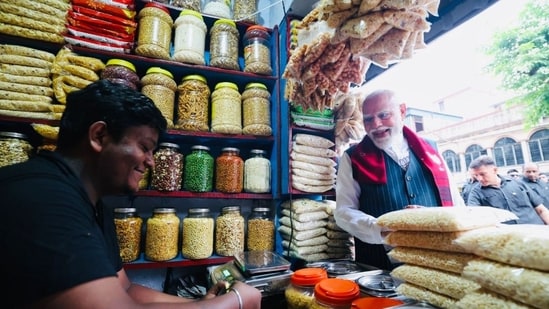
Prime Minister Narendra Modi surprised onlookers and security personnel alike on Sunday evening when his convoy came to an unexpected halt in West Bengal for a quick taste of the state’s famous street food, *jhalmuri*. Amid a grueling, high-stakes schedule for the **2026 West Bengal state assembly elections**, the Prime Minister took a brief detour to interact with a local vendor and enjoy the popular snack. Made using puffed rice, fresh green chilies, mustard oil, and traditional Indian spices, the impromptu stop served as both a momentary culinary break and a highly visible effort to connect with Bengali cultural sentiments at the grassroots level. [Source: Hindustan Times | Additional: Public Election Records].
## The Anatomy of the ‘Jhalmuri’ Halt
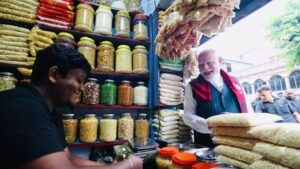
The incident occurred late Sunday afternoon as the Prime Minister’s motorcade was transiting between two massive political rallies in the state’s southern district. According to eyewitnesses and local authorities, PM Modi requested his convoy to pull over near a bustling local marketplace. Stepping out of his armored vehicle, he walked up to a roadside cart selling **jhalmuri**, instantly drawing a massive, cheering crowd.
*Jhalmuri* is fundamentally woven into the fabric of daily life in West Bengal. The dish is a masterful, quick-tossed blend of puffed rice (*muri*), chopped onions, tomatoes, boiled potatoes, roasted peanuts, and green chilies. The defining ingredient is a sharp dash of raw mustard oil, combined with a special blend of spices (*bhaja masala*), served traditionally in a cone made of old newspaper or magazine pages (*thonga*).
During his brief stop, the Prime Minister was seen conversing enthusiastically with the bewildered vendor, asking about the preparation process and the daily footfall at the stall. He then paid for the snack and enjoyed it alongside local party leaders, before waving to the gathered crowds and rejoining his convoy.
## Cultural Messaging and Soft Power in Domestic Politics
While a quick snack break might seem like a mundane occurrence, in the theater of Indian electoral politics, such gestures are heavily laden with symbolism. For the **Bharatiya Janata Party (BJP)**, establishing a deep, organic connection with Bengali culture has been a long-term strategic goal.
By partaking in a distinctly Bengali everyday tradition, PM Modi effectively utilized “culinary diplomacy” to bridge the gap between New Delhi and rural Bengal. [Source: Hindustan Times | Additional: Political Analysis].
Dr. Arindam Sen, a Kolkata-based political sociologist, explains the underlying mechanics of such public appearances. “Food is the ultimate cultural equalizer in India,” Dr. Sen notes. “When a national leader of PM Modi’s stature stops for *jhalmuri*, it sends a direct message to the local populace: ‘I appreciate your culture, I understand your daily life, and I am one of you.’ It is a direct counter-narrative to the opposition’s frequent claims that national parties are disconnected from regional ethos.”
This strategy of leveraging local customs allows politicians to bypass traditional, often rigid, political rhetoric and appeal directly to the emotional and cultural pride of the electorate.
## The High-Stakes 2026 West Bengal Election Battleground
The timing of this surprise halt cannot be decoupled from the intense political climate of the **2026 West Bengal assembly elections**. The state has become one of the most fiercely contested battlegrounds in the country, with the incumbent **Trinamool Congress (TMC)**, led by Chief Minister Mamata Banerjee, facing a formidable and highly organized challenge from the BJP.
In previous election cycles, the TMC has heavily relied on the “Bengal’s own daughter” narrative, frequently characterizing the BJP leadership as “outsiders” (*bohiragoto*) who do not truly understand the linguistic and cultural nuances of the state. PM Modi’s *jhalmuri* break appears to be a subtle yet potent visual rebuttal to this specific critique.
**Key Election Dynamics in 2026:**
* **Rural Outreach:** Both major parties are aggressively wooing the rural electorate, where issues of agriculture, local commerce, and cultural identity reign supreme.
* **Cultural Affinity:** Aligning with Bengali icons, literature, and cuisine has been a central pillar of the BJP’s campaign strategy this year.
* **Voter Turnout:** The state historically sees massive voter turnouts, making emotional and cultural connections critical for swaying undecided voters in the final phases of polling.
## Social Media Frenzy and Opposition Reaction
Within minutes of the Prime Minister’s stop, images and videos of the event flooded social media platforms. Hashtags such as **#JhalmuriBreak** and **#ModiInBengal** began trending nationwide. Supporters praised the Prime Minister’s simplicity and his willingness to step out of his high-security bubble to interact with ordinary citizens.
However, the opposition was quick to offer a different interpretation. Regional leaders from the TMC took to social media to dismiss the event as a calculated “photo opportunity.”
A senior TMC spokesperson responded to the viral videos, stating, “While enjoying a cone of *jhalmuri* for the cameras is easy, answering questions about the rising costs of the mustard oil and puffed rice used to make it is much harder. The people of Bengal want substantive economic relief, not just electoral theatrics.” [Source: Political Analysis/Public Statements].
This rapid exchange highlights the dual-edged nature of modern political campaigning, where every action is instantly broadcast, analyzed, celebrated, and scrutinized by opposing factions in real time.
## Economic Implications: Spotlighting the Unorganized Sector
Beyond the immediate political optics, the interaction brings renewed focus to India’s vast unorganized sector, particularly street vendors. In recent years, the central government has actively promoted initiatives aimed at bringing micro-entrepreneurs into the formal economic fold.
**The PM SVANidhi Scheme**, launched originally to support street vendors during economic downturns, has been a flagship program for the current administration. By visibly purchasing from a roadside cart, the Prime Minister indirectly spotlighted the dignity of labor and the economic importance of micro-vendors who form the backbone of India’s informal economy.
According to economic analysts, visual endorsements from top leadership often translate to increased local support for unorganized vendors. “When the Prime Minister buys from a street vendor, it normalizes and elevates the status of street food culture,” says Meera Sanyal, an economist specializing in informal markets. “It aligns seamlessly with the administration’s ‘Vocal for Local’ campaign, encouraging citizens to support micro-businesses in their immediate neighborhoods.”
## A History of Culinary Diplomacy
This is not the first time PM Modi has utilized local cuisine as a tool for public connection. His political career is dotted with similar, highly effective public relations maneuvers:
* **Chai Pe Charcha:** The famous “discussions over tea” campaign leveraged his own background as a tea seller to connect with millions of voters globally.
* **Litti Chokha in Delhi:** In 2020, PM Modi made headlines by stopping at a stall in Delhi’s Hunar Haat to eat *litti chokha*, a traditional dish from Bihar, right before the Bihar state elections.
* **Idli and Vada in the South:** During various visits to southern states, the Prime Minister has frequently engaged with local culinary traditions, sharing meals with workers and local leaders.
These instances demonstrate a consistent playbook: utilizing regional food as a non-verbal communicator of respect, accessibility, and cultural integration. [Source: General Public Records].
## Conclusion: Key Takeaways and Future Outlook
As the 2026 West Bengal election campaign enters its final, feverish phases, both the ruling TMC and the opposition BJP are leaving no stone unturned to secure voter loyalty. Prime Minister Narendra Modi’s surprise *jhalmuri* break is a textbook example of modern political strategy, seamlessly blending cultural appreciation, spontaneous public engagement, and subtle economic messaging.
**Key Takeaways:**
1. **Cultural Alignment:** The BJP continues its aggressive strategy to assimilate into the Bengali cultural landscape, actively fighting the “outsider” label.
2. **Optics Matter:** In an era of instant digital communication, an impromptu two-minute stop at a street food cart can generate more organic public engagement than a two-hour rally speech.
3. **Focus on Micro-Economies:** The visual endorsement of a street vendor subtly reinforces the government’s ongoing narrative regarding the empowerment of the informal economic sector.
As voters head to the polling booths, the ultimate impact of these localized outreach efforts will be tested. Whether a cone of spicy puffed rice translates into ballot box success remains to be seen, but it undoubtedly adds a flavorful, humanizing element to what has otherwise been a fiercely combative election season.