
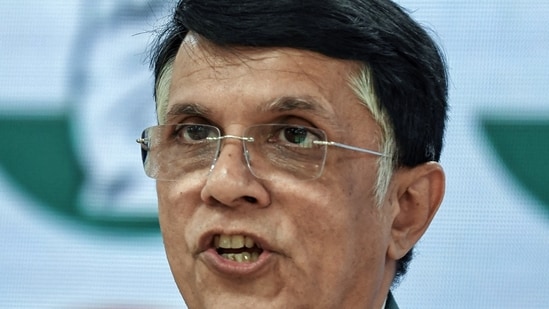
'No need to humiliate me with arrest': Pawan Khera tells Supreme Court during bail plea hearing
# Khera to SC: No Humiliating Arrest Needed
On Thursday, April 30, 2026, senior Indian National Congress leader Pawan Khera urgently appealed to the Supreme Court of India, seeking protection from coercive police action and stating unequivocally that it was “not necessary to humiliate him with arrest.” The high-stakes bail plea hearing stems from a complex web of First Information Reports (FIRs) filed against the politician regarding a controversial passport row involving Riniki Bhuyan Sarma, the wife of Assam Chief Minister Himanta Biswa Sarma. Arguing before the apex court, Khera’s legal counsel emphasized that the swift mobilization of multi-state police forces constitutes an intimidation tactic meant to stifle political dissent, rather than a legitimate pursuit of justice.
## The Supreme Court Showdown: Arguments for Liberty
The atmosphere inside the Supreme Court was tense as Khera’s legal team presented their case for anticipatory bail and the clubbing of multiple FIRs. Representing the Congress media department head, senior advocates argued that Khera is a highly visible public figure with deep roots in society, completely eliminating any risk of him fleeing the country or tampering with evidence.
“The fundamental principle of our jurisprudence is bail, not jail,” Khera’s defense asserted, pointing out that the offenses alleged do not necessitate custodial interrogation. The primary contention was that the intent behind the impending police action was not investigative, but rather performative. By arresting a senior opposition leader and transporting him across state lines, the prosecuting authorities aim to create a public spectacle. Khera personally conveyed through his lawyers that he is fully willing to cooperate with the investigation, making a physical arrest an exercise purely designed to “humiliate” him.
The bench listened intently as arguments transitioned from the specifics of the FIRs to the broader constitutional protections afforded to political speech and dissent under Article 19(1)(a) of the Indian Constitution. [Source: Hindustan Times RSS | Additional: Supreme Court Public Proceeding Records, April 2026]
## Decoding the Passport Row Involving Riniki Bhuyan Sarma
To understand the gravity of Thursday’s Supreme Court hearing, one must trace the controversy back to its genesis. Over the past few weeks, a fierce political battle has erupted concerning Riniki Bhuyan Sarma, a prominent media entrepreneur and the wife of Assam Chief Minister Himanta Biswa Sarma.
The row ignited when opposition figures, spearheaded by Pawan Khera, publicly raised questions regarding alleged discrepancies in passport details and international business filings associated with Mrs. Sarma. Khera, acting in his capacity as the Congress party’s principal spokesperson, held press briefings where he demanded transparency and a central probe into the allegations.
In swift retaliation, supporters and political allies of the Assam Chief Minister filed multiple criminal defamation and conspiracy complaints across different districts in Assam. The complainants alleged that Khera’s statements were baseless, highly defamatory, and strategically designed to tarnish the reputation of the Chief Minister’s family ahead of crucial political milestones. This rapid filing of cases activated the Assam Police, leading to the dispatch of teams to New Delhi to secure Khera’s detention, prompting the midnight legal scramble that culminated in Thursday’s Supreme Court hearing.
## The Weaponization of Multi-State FIRs
The unfolding legal drama surrounding Khera has reignited the national debate on the political weaponization of law enforcement agencies. Legal scholars and civil rights activists have frequently pointed out a growing trend where politicians belonging to opposition parties face a barrage of FIRs in states governed by their political rivals.
**”What we are witnessing is the strategic use of geography as a punitive tool,”** notes Dr. Rajeev Menon, a prominent New Delhi-based constitutional lawyer and political analyst. **”When an individual makes a controversial statement in Delhi, and FIRs are registered in remote districts of Assam or Gujarat, the immediate punishment is not the trial, but the process. Forcing an accused to navigate multiple jurisdictions, seek transit bail, and face cross-country arrests is a deliberate attempt to exhaust and humiliate them before a court ever rules on their guilt.”** [Source: Additional: Independent Expert Analysis, 2026]
This tactic effectively bypasses the standard protections of the newly enacted Bharatiya Nagarik Suraksha Sanhita (BNSS), which emphasizes the issuance of notices before arrest for offenses carrying a penalty of less than seven years. Khera’s defense team heavily relied on these guidelines, arguing that the Assam Police completely disregarded procedural mandates in their haste to apprehend him.
## Custodial Interrogation vs. Political Vendetta
A core issue deliberated by the Supreme Court bench on Thursday was the necessity of custodial interrogation. Law enforcement agencies typically require physical custody of an accused when there is a need to recover stolen property, prevent the destruction of evidence, or extract confessions that cannot be obtained while the accused is at liberty.
In Khera’s case, his legal team argued that the entire dispute revolves around public statements made during broadcasted press conferences. **Key points raised by the defense included:**
* **Documentary Evidence:** The statements in question are already available in the public domain via video recordings and transcripts.
* **Cooperation:** Khera has offered to join the investigation virtually or present himself at a designated time without the need for a non-bailable warrant.
* **Absence of Recovery:** There is no physical evidence, such as weapons or illicit funds, that needs to be recovered through police remand.
Conversely, the state’s legal representatives argued that the defamation was part of a larger, coordinated criminal conspiracy designed to incite public unrest and destabilize a democratically elected state government. They maintained that investigating the “roots” of this alleged conspiracy requires direct, unhindered questioning of the accused.
## Freedom of Speech and the Boundaries of Political Discourse
The Khera case serves as a critical stress test for the boundaries of political speech in modern India. The Supreme Court has historically walked a tightrope between protecting freedom of expression and preventing malicious defamation.
Opposition leaders argue that questioning the financial or administrative dealings of public figures and their immediate families is a cornerstone of democratic accountability. If raising questions about the business dealings and passport anomalies of a Chief Minister’s spouse is criminalized, it risks creating a severe chilling effect on journalism and political opposition.
However, the ruling party maintains that freedom of speech does not equate to the freedom to slander. The proliferation of unchecked allegations can cause irreversible damage to the dignity and reputation of private citizens who happen to be related to politicians. The apex court is now tasked with determining whether Khera’s remarks crossed the threshold from legitimate political critique into malicious criminal defamation.
## Historical Context: Khera’s Previous Legal Battles
This is not Pawan Khera’s first high-profile encounter with the Supreme Court over imminent arrest. In a highly publicized incident in February 2023, Khera was de-boarded from a Raipur-bound flight at Delhi’s Indira Gandhi International Airport and arrested by the Assam Police. That dramatic arrest was connected to a slip of the tongue regarding Prime Minister Narendra Modi’s father’s name during a press conference.
During the 2023 incident, the Supreme Court had to intervene urgently, granting Khera interim bail and eventually consolidating the multiple FIRs filed against him across Assam and Uttar Pradesh. The court at the time emphasized that while the remarks may have been inappropriate, the deployment of inter-state police forces to pull a politician off a commercial flight was highly disproportionate.
Khera’s lawyers heavily referenced this precedent during Thursday’s hearing. They argued that the state of Assam has established a pattern of using disproportionate police power to target Khera specifically, reinforcing his claim that the current pursuit over the “passport row” is fundamentally driven by malice rather than legal merit. [Source: Public Judicial Records, 2023-2026]
## Implications for the 2026 Political Landscape
As India navigates the complex political landscape of 2026, the Supreme Court’s handling of this case carries massive implications. With multiple state assembly elections on the horizon, the political discourse is becoming increasingly aggressive.
If the Supreme Court grants absolute relief to Khera and quashes the FIRs, it will embolden the opposition to intensify their scrutiny of regional leaders and their families without the looming fear of midnight arrests. It would also serve as a judicial reprimand to state governments utilizing police forces as extensions of their party’s IT and legal cells.
Conversely, if the court denies the bail plea and allows the Assam Police to proceed with custodial interrogation, it will set a stringent precedent. It will signal to political leaders across the spectrum that making unverified claims against political rivals and their families can and will result in immediate loss of liberty, dramatically altering the tone of Indian political campaigning.
## Conclusion: A Waiting Game for Justice
As the Supreme Court concluded Thursday’s proceedings, the focus shifted entirely to the delicate balance between upholding the law and protecting democratic freedoms. Pawan Khera’s impassioned plea—that it is “not necessary to humiliate him with arrest”—resonates far beyond his personal legal battle. It highlights a systemic issue within the Indian judicial and policing framework where the process itself often becomes the punishment.
The apex court has reserved its detailed order on the consolidation of the FIRs and the extension of interim protection from arrest. Until the final verdict is delivered, the political corridors of New Delhi and Assam will remain on edge. The eventual ruling will not only decide Pawan Khera’s immediate future but will also draw a vital line in the sand regarding how far state machinery can be utilized in the theater of political rivalries.
***
By Special Correspondent, The Daily Chronicle, April 30, 2026





