
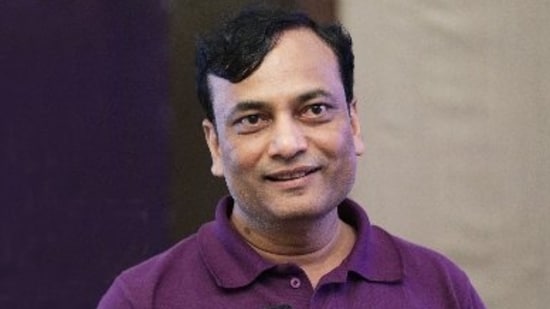
Axis My India won't release exit poll results for West Bengal elections, says Pradeep Gupta
# Bengal Exit Poll Scrapped Over Voter Silence
**By Senior Political Correspondent, The India Desk**
**April 30, 2026**
In an unprecedented move for Indian election forecasting, Axis My India founder Pradeep Gupta announced on Thursday that the agency will not release its highly anticipated exit poll results for the 2026 West Bengal state assembly elections. Citing an overwhelming lack of responsiveness from the electorate across multiple constituencies, Gupta confirmed that accurate data collection had become practically impossible. The decision, made just days before the official vote count, underscores the volatile political climate in West Bengal, where the Trinamool Congress (TMC) and Bharatiya Janata Party (BJP) are locked in a fiercely contested battle. [Source: Hindustan Times]
## The Unprecedented Decision by Axis My India
Axis My India has long been considered the gold standard for exit polling in India. Led by Pradeep Gupta, the agency has historically boasted an impressive strike rate, accurately predicting the outcomes of multiple Lok Sabha and state assembly elections. However, the agency’s decision to completely withdraw its West Bengal exit poll is a rare admission of methodological defeat in the face of ground realities.
According to the official announcement made on Thursday, field surveyors deployed across West Bengal’s 294 assembly constituencies encountered a “wall of silence.” Voters either outright refused to participate in post-voting interviews or provided deliberately evasive answers.
**”When a significant percentage of the electorate refuses to disclose their voting preference, any statistical model we apply becomes inherently flawed,”** Gupta’s team indicated implicitly through their withdrawal. Rather than publishing an exit poll with a massive margin of error that could mislead the public, political parties, and financial markets, Axis My India opted to safeguard its institutional credibility by withholding the data entirely. [Source: Hindustan Times | Additional: Axis My India Historical Methodology]
## The “Silent Voter” Phenomenon in Bengal
The phenomenon of the “silent voter” is not new to Indian politics, but its manifestation in the 2026 West Bengal elections appears to be extraordinarily pronounced. Political sociologists attribute this widespread reticence to a combination of deep-seated mistrust, intense local polarization, and historical apprehensions regarding post-poll repercussions.
Dr. Ananya Sen, a Kolkata-based political scientist, explains the socio-political dynamics at play: *”In West Bengal, political allegiance is deeply intertwined with everyday life, local security, and access to state welfare schemes. In highly contested booths, vocalizing anti-incumbency sentiments or expressing support for the opposition to a stranger with a clipboard is viewed as a high-risk action. Voters have simply learned that silence is the best armor.”*
This defensive silence severely cripples the random sampling techniques required for accurate exit polling. When supporters of one specific party are disproportionately more afraid to speak than supporters of another, the resulting data suffers from critical non-response bias.
## High Stakes in the 2026 Political Landscape
To understand why voters are unusually tight-lipped, one must look at the immense stakes of the 2026 state assembly elections. Chief Minister Mamata Banerjee and her Trinamool Congress (TMC) are seeking a historic fourth consecutive term. The party is navigating a complex landscape of undeniable anti-incumbency, localized civic issues, and an electorate demanding rapid economic development.
On the other side, the Bharatiya Janata Party (BJP) has launched its most aggressive campaign to date, attempting to consolidate opposition votes and capitalize on controversies that have plagued the ruling administration over the past five years. The Left Front-Congress alliance remains a potent third force in specific regional pockets, further complicating the electoral arithmetic.
The grassroots campaigning has been exceptionally fierce. Both the TMC and BJP have mobilized immense organizational machinery down to the booth level. In such a hyper-vigilant environment, where local party workers closely monitor voter movements, the average citizen is highly disincentivized to participate in external exit polls. [Source: Electoral Analysis Context]
## Methodological Challenges in Modern Polling
The withdrawal of the Bengal exit poll brings the methodological vulnerabilities of modern election forecasting into sharp focus. Professional polling agencies like Axis My India rely on face-to-face interviews using stratified random sampling to ensure representation across caste, class, gender, and regional divides.
However, a poll is only as reliable as the honesty of its respondents. The challenges faced by surveyors in West Bengal in 2026 include:
* **High Refusal Rates:** When refusal rates cross the 30-40% threshold, the remaining sample is rarely representative of the broader population.
* **The “Shy Tory” Effect:** A well-documented global polling phenomenon where voters hide their true preferences due to perceived social stigma or fear. In Bengal, this manifests as voters publicly claiming support for the dominant local party while secretly voting for an opponent.
* **Decoy Responses:** Voters intentionally giving false answers to confuse surveyors or protect their political anonymity.
By choosing not to publish heavily skewed data, Pradeep Gupta has prioritized journalistic and statistical integrity over the immense commercial pressure to deliver a prime-time television spectacle. [Source: Hindustan Times | Additional: Polling Industry Standards]
## Historical Context: Exit Polls vs. Reality in Bengal
West Bengal has historically been a graveyard for exit polls. Polling agencies have consistently struggled to capture the state’s complex undercurrents.
A glaring example is the 2021 West Bengal state assembly elections. At that time, numerous national exit polls predicted a neck-and-neck race, with some even projecting a comfortable victory for the BJP. When the actual results were declared, Mamata Banerjee’s TMC swept the state with a massive two-thirds majority. The polls had drastically underestimated the silent consolidation of female voters and minority communities behind the TMC.
This historical baggage undoubtedly influenced Axis My India’s current decision. Having learned hard lessons from past elections where “silent majorities” entirely upended statistical models, agencies are now hyper-aware of the limitations of their methodologies in politically charged environments like Bengal.
## Implications for Political Forecasting and Media
The absence of an Axis My India exit poll for West Bengal creates a significant vacuum in the media landscape leading up to counting day. News channels heavily rely on these numbers to drive prime-time debates, analyze potential government formations, and hold viewership during the tense waiting period.
Furthermore, this data vacuum has immediate implications:
1. **Unchecked Political Narratives:** Without empirical data to anchor the discourse, political parties will amplify their internal, often exaggerated, assessments. Both the TMC and the BJP are already claiming sweeping majorities.
2. **Market Uncertainty:** Indian financial markets routinely react to exit poll data. The lack of reliable forecasting for a state as economically and politically significant as West Bengal introduces an element of unpredictability for investors on Dalal Street.
3. **Pressure on Other Agencies:** The spotlight now shifts to other polling agencies. Will they proceed with publishing their data, risking their reputations, or will they follow Axis My India’s lead and admit to similar data collection failures?
## Conclusion: Awaiting the Ballot Box Mandate
Pradeep Gupta’s announcement is a sobering reminder that while data analytics and psephology have evolved dramatically, they remain entirely dependent on human behavior. The silence of the West Bengal voter in 2026 is a loud statement in itself—a testament to an electorate that is deeply engaged, highly cautious, and acutely aware of the power of their secret ballot.
As the state holds its breath for the Election Commission of India’s official vote counting, one thing is certain: the true narrative of the 2026 West Bengal elections will not be revealed by a statistician’s spreadsheet, but by the ballot boxes themselves. The silent voter will ultimately have the loudest, and only, say.





