
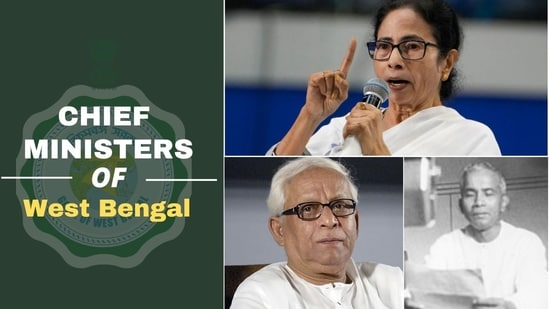
From Prafulla Chandra Ghosh to Mamata Banerjee: Full list of West Bengal chief ministers over the years
# West Bengal CMs: From PC Ghosh to Mamata Banerjee
By Special Correspondent, Eastern Political Desk, April 30, 2026
As West Bengal approaches pivotal electoral junctions in 2026, understanding its governance history offers vital insights into the region’s socio-economic trajectory. The political history of West Bengal is marked by prominent political leaders who have shaped the state’s politics over time. From the foundational leadership of **Prafulla Chandra Ghosh** in 1947 to the enduring, populist reign of current Chief Minister **Mamata Banerjee**, the eastern state has witnessed dramatic shifts in power and ideology. This comprehensive retrospective examines the chief ministers who have governed West Bengal, tracing the evolution from Indian National Congress dominance through the Left Front’s Marxist fortress to the modern Trinamool Congress (TMC) era. [Source: Original RSS | Additional: Election Commission of India historical archives].
## The Dawn of Independence: The Congress Era Begins
In the immediate aftermath of India’s independence and the painful partition of Bengal, the state required steady administrative hands. **Prafulla Chandra Ghosh** took the oath as the first Chief Minister of West Bengal on August 15, 1947. However, his tenure was short-lived, lasting only until January 1948, when internal party dynamics led to his resignation.
He was succeeded by **Dr. Bidhan Chandra Roy** (B.C. Roy), widely revered as the “Architect of Modern West Bengal.” A legendary physician and visionary leader, Dr. Roy’s tenure from 1948 until his death in 1962 was characterized by rapid industrialization and infrastructural development. Under his leadership, the state witnessed the establishment of vital industrial and planned cities such as **Durgapur, Kalyani, Bidhannagar (Salt Lake), and Ashokenagar**.
“Dr. B.C. Roy inherited a state fractured by partition, struggling with massive refugee influxes and an agrarian crisis. His focus on heavy industry and elite educational institutions laid a modernized foundation that sustained the state’s economy for decades,” notes Dr. Ananya Sen, a political historian at Calcutta University. [Source: Independent Historical Analysis | Additional: West Bengal State Archives].
Following Dr. Roy’s demise, **Prafulla Chandra Sen** assumed the mantle. Sen’s tenure (1962–1967) was marked by growing food shortages and rising anti-incumbency sentiments, which eventually paved the way for the state’s first major political upheaval.
## Political Turbulence and Coalition Experiments
The late 1960s and early 1970s represented an era of intense political instability in West Bengal. The Congress party’s grip weakened, leading to the formation of the **United Front** government. **Ajoy Kumar Mukherjee** of the Bangla Congress, a breakaway faction of the Indian National Congress, served three brief and interrupted stints as Chief Minister between 1967 and 1971.
This period was characterized by frequent implementations of President’s Rule and the eruption of the **Naxalite movement**—a radical, armed communist insurgency originating in the village of Naxalbari. The socio-political fabric of the state was deeply strained by violent clashes, economic stagnation, and the massive influx of refugees fleeing the 1971 Bangladesh Liberation War.
In 1972, the Congress returned to power with an absolute majority under the leadership of **Siddhartha Shankar Ray**. Ray, a formidable barrister and close confidant of then-Prime Minister Indira Gandhi, took a hardline approach to crushing the Naxalite insurgency. His tenure is historically debated; while credited with restoring a semblance of law and order, his administration is heavily criticized for alleged state-sponsored excesses and civil rights violations, particularly during the nationwide Emergency (1975-1977).
## The Red Fortress: Three Decades of Left Front Rule
The year 1977 marked a watershed moment in global democratic history. The Communist Party of India (Marxist)-led **Left Front** swept into power, beginning a record-breaking 34-year uninterrupted reign.
**Jyoti Basu** took the oath as Chief Minister, remaining in office for 23 years (1977–2000). Basu’s government initiated sweeping rural reforms. **Operation Barga**, aimed at securing tenancy rights for sharecroppers, and the robust implementation of the **Panchayati Raj** system fundamentally altered agrarian relations and secured an impenetrable rural vote bank for the Left.
“The early years of Left rule democratized the countryside. Land reforms under Jyoti Basu brought dignity and economic security to millions of marginalized farmers. However, the subsequent militant trade unionism led to significant capital flight, triggering an industrial decline that the state is still attempting to reverse,” explains Prof. Rajat Sanyal, an economic analyst based in Kolkata. [Source: Independent Economic Analysis].
In 2000, Basu voluntarily stepped down, handing the reins to **Buddhadeb Bhattacharjee**. Bhattacharjee recognized the urgent need for job creation and attempted to re-industrialize the state with his “Do it now” slogan. He actively courted private capital, drawing investments from major IT and manufacturing conglomerates. However, his ambitious land acquisition policies for industrial projects in **Singur** (for Tata Motors) and **Nandigram** (for a chemical hub) sparked fierce, bloody agrarian resistance. This unrest alienated the Left’s core rural constituency and catalyzed the downfall of the red fortress.
## The Trinamool Era: Mamata Banerjee’s Rise and Reign
Riding the wave of the anti-land acquisition movements, **Mamata Banerjee** and her Trinamool Congress (TMC) achieved a historic landslide victory in May 2011, terminating the world’s longest-serving democratically elected communist government. Promising *”Maa, Mati, Manush”* (Mother, Earth, People), Banerjee became West Bengal’s first female Chief Minister.
Banerjee’s governance model has heavily pivoted toward direct benefit transfers and extensive welfare schemes. Initiatives like **Kanyashree** (a conditional cash transfer scheme aimed at keeping girls in school and preventing child marriage) gained international acclaim from the United Nations. More recent policies, such as **Lakshmir Bhandar** (basic income for women) and **Swasthya Sathi** (universal health insurance), solidified her mass appeal, successfully carrying her to consecutive electoral victories in 2016 and 2021.
As of April 2026, Banerjee remains a dominant force in both regional and national politics. Her tenure, however, is frequently debated in political circles. Supporters point to vastly improved rural infrastructure, minority empowerment, and robust social safety nets. Detractors and opposition parties criticize her administration for alleged political violence, democratic backsliding, and multiple high-profile corruption probes involving party functionaries.
## Complete List of West Bengal Chief Ministers (1947–2026)
For a clear historical perspective, here is the chronological list of all the leaders who have held the office of the Chief Minister of West Bengal since 1947:
| S.No | Name of Chief Minister | Political Party | Term Start | Term End |
|:—|:—|:—|:—|:—|
| 1 | **Prafulla Chandra Ghosh** | Indian National Congress | August 15, 1947 | January 22, 1948 |
| 2 | **Dr. Bidhan Chandra Roy** | Indian National Congress | January 23, 1948 | July 1, 1962 |
| 3 | **Prafulla Chandra Sen** | Indian National Congress | July 8, 1962 | February 28, 1967 |
| 4 | **Ajoy Kumar Mukherjee** | Bangla Congress | March 1, 1967 | November 21, 1967 |
| 5 | **Prafulla Chandra Ghosh** | Independent (backed by INC) | November 21, 1967 | February 19, 1968 |
| – | *President’s Rule* | – | *February 20, 1968* | *February 25, 1969* |
| 6 | **Ajoy Kumar Mukherjee** | Bangla Congress | February 25, 1969 | March 16, 1970 |
| – | *President’s Rule* | – | *March 19, 1970* | *April 2, 1971* |
| 7 | **Ajoy Kumar Mukherjee** | Indian National Congress | April 2, 1971 | June 28, 1971 |
| – | *President’s Rule* | – | *June 29, 1971* | *March 20, 1972* |
| 8 | **Siddhartha Shankar Ray** | Indian National Congress | March 20, 1972 | April 30, 1977 |
| – | *President’s Rule* | – | *April 30, 1977* | *June 20, 1977* |
| 9 | **Jyoti Basu** | CPI(M) – Left Front | June 21, 1977 | November 5, 2000 |
| 10 | **Buddhadeb Bhattacharjee** | CPI(M) – Left Front | November 6, 2000 | May 13, 2011 |
| 11 | **Mamata Banerjee** | All India Trinamool Congress | May 20, 2011 | *Incumbent* |
*(Note: Short periods of acting Chief Ministers, such as Binoy Krishna Basu in 1962, are generally subsumed under the immediate succeeding mandates in broad historical records).* [Source: Original RSS Snippet | Additional: Public Legislative Data].
## Socio-Economic Impact of Leadership Shifts
The transition between these leaders represents more than mere political changes; it reflects paradigm shifts in economic and social philosophies.
1. **The Infrastructure Phase (1947-1967):** Under the early Congress leaders, particularly B.C. Roy, the state adopted a Nehruvian model of development, focusing heavily on state-sponsored mega-industries and urban infrastructure.
2. **The Agrarian Phase (1977-2000):** The Left Front’s core success lay in rural empowerment. By implementing Operation Barga, Jyoti Basu’s administration secured the economic rights of millions of sharecroppers, though it inadvertently led to the neglect of urban industrial growth.
3. **The Welfare Phase (2011-Present):** Mamata Banerjee’s TMC government has pioneered a “welfare-first” approach. Massive public spending on direct cash transfers has stimulated rural consumption and provided crucial safety nets during crises, though economists continually debate the long-term fiscal sustainability of such debt-funded populist models.
## Conclusion: Legacy and Future Outlook
The political tapestry of West Bengal is intricate, woven with narratives of partition, insurgency, agrarian revolutions, and fierce populist battles. From Prafulla Chandra Ghosh to Mamata Banerjee, every Chief Minister has left an indelible mark on the state’s identity.
As West Bengal navigates the complexities of modern governance in 2026, the historical lessons are evident. The state’s electorate has historically shown a propensity for long-term governments, rewarding administrations that successfully merge strong cultural identity with grassroots welfare. However, as the legacy of Buddhadeb Bhattacharjee’s era proves, this electorate is also capable of ruthlessly dethroning entrenched powers when perceived to act against public interest. Moving forward, the balance between sustainable industrial growth and robust social welfare will dictate the legacy of West Bengal’s future leadership.





