
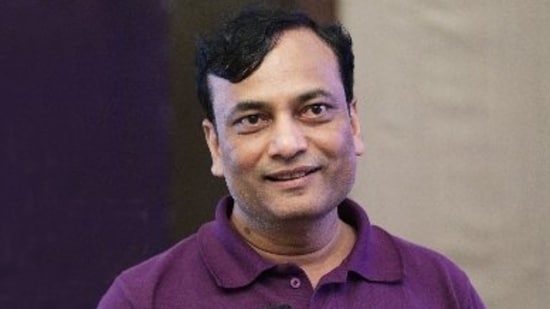
Axis My India won't release exit poll results for West Bengal elections, says Pradeep Gupta
# Axis My India Halts Bengal Exit Polls
**By Siddharth Sharma, National Political Desk** | **April 30, 2026**
In an unprecedented move for Indian election forecasting, Axis My India founder Pradeep Gupta announced on Thursday that his agency will not release exit poll results for the fiercely contested West Bengal Assembly elections. Speaking from New Delhi, Gupta revealed that on-ground surveyors faced insurmountable hurdles as West Bengal voters were deliberately refusing to respond to questionnaires or obscuring their voting intentions. This sudden withdrawal by India’s most prominent polling agency on April 30, 2026, highlights the extreme polarization, widespread voter anxiety, and volatile grassroots political climate currently dominating the high-stakes battle between the ruling Trinamool Congress (TMC), the Bharatiya Janata Party (BJP), and the Left-Congress alliance. [Source: Hindustan Times].
## The Unprecedented Announcement
Axis My India has established itself as the gold standard in Indian psephology over the past decade, correctly predicting the outcomes of dozens of state and general elections with remarkable precision. Known for its extensive on-ground networks and robust statistical modeling, the agency’s decision to completely scrap a state-wide exit poll is incredibly rare and signals a deeper structural issue in the 2026 electoral landscape of West Bengal.
According to the original statement, Pradeep Gupta clearly articulated that the primary reason for pulling the plug was **voter silence and non-cooperation**. Survey enumerators, who usually rely on post-voting interviews outside polling booths, reported massive non-response rates. [Source: Hindustan Times].
When a critical mass of the electorate refuses to disclose their preference, statistical models collapse. The data becomes skewed, heavily favoring the vocal minority and completely missing the true undercurrents of the silent majority. By choosing to withhold the exit poll entirely, Axis My India has prioritized data integrity over the intense commercial pressure from television news networks desperate for election night content.
“This is a bold and scientifically sound decision by Pradeep Gupta,” says Dr. Rajesh Iyer, an independent data scientist and former researcher at the Centre for Electoral Analytics. “When your non-response rate crosses a certain threshold, any extrapolation is just guesswork. Publishing a compromised exit poll in a politically sensitive state like West Bengal would not only ruin the agency’s credibility but could also inadvertently spark civil unrest if the actual results vastly differ.” [Additional: Academic insights on polling methodologies].
## Decoding the ‘Silent Voter’ Phenomenon
The refusal of West Bengal voters to engage with pollsters is not merely a matter of apathy; it is deeply rooted in the state’s complex and often violent political sociology. Historically, West Bengal has witnessed intense partisan territoriality, where political allegiance is closely monitored by neighborhood and village-level cadres.
In the 2026 Assembly elections, this culture of surveillance has seemingly reached a fever pitch. Voters are acutely aware that their political preferences, if revealed to a stranger with a clipboard or tablet, could have real-world consequences. The memories of post-poll violence following previous election cycles remain fresh in the minds of the electorate, particularly in rural and semi-urban constituencies.
Dr. Ananya Sen, a Kolkata-based political sociologist, explains the dynamic: “In West Bengal, the concept of the ‘secret ballot’ is highly guarded by the voter precisely because the environment outside the booth is so hyper-partisan. Voters fear that participating in exit polls could lead to retributive violence, social boycotts, or the sudden loss of state welfare benefits. Therefore, they adopt the strategy of silence. They will listen to every political party, accept campaign materials from everyone, but keep their final decision locked away until they press the EVM button.” [Additional: Expert Analysis on Bengal Electoral Behavior].
## A History of Polling Nightmares in West Bengal
West Bengal has long been a graveyard for pollsters’ reputations. The state’s unique demography, encompassing a massive minority vote bank, a diverse tribal population in the Junglemahal region, and stark urban-rural divides, makes stratified sampling incredibly difficult.
During the 2021 Assembly elections, several prominent polling agencies predicted a tight race, with some even forecasting a victory for the BJP. Instead, Mamata Banerjee’s Trinamool Congress swept the election with a massive two-thirds majority. While Axis My India was one of the few agencies to accurately sense the TMC’s enduring strength during that cycle, the 2026 landscape presents entirely new variables that have compounded the difficulty of accurate forecasting.
**Key factors complicating the 2026 polling data include:**
* **Anti-Incumbency vs. Welfare Schemes:** The TMC is battling a natural 15-year anti-incumbency sentiment, yet their direct cash transfer schemes (like Lakshmir Bhandar) continue to command immense loyalty, particularly among women.
* **Tripolar Contests:** Unlike the binary TMC vs. BJP battle of 2021, the Left Front and Indian National Congress have mounted a more organized campaign in specific pockets of North Bengal and Murshidabad, splitting votes in unpredictable ways.
* **The “Fear Factor”:** Both the ruling party and the opposition have accused each other of voter intimidation, creating an atmosphere where voters feel their responses to pollsters might be recorded or leaked.
When voters lie to or hide from pollsters—a phenomenon akin to the ‘Bradley Effect’ in Western political science—the resulting data suffers from severe non-sampling errors. Axis My India’s internal quality checks clearly flagged these anomalies, leading to Thursday’s cancellation.
## Strategic Implications for Rival Parties
The absence of a definitive exit poll from a highly credible agency like Axis My India has thrown political war rooms into a frenzy. Exit polls do more than just entertain news audiences; they set the narrative heading into counting day. They influence the morale of party workers and dictate how political leaders position themselves in the crucial 48 hours before official results are declared.
Without Gupta’s numbers to rely on, spin doctors from all major camps are already moving to contextualize the “silent voter.”
The **Trinamool Congress** leadership is likely to interpret this silence as a quiet endorsement of their governance. TMC spokespersons have consistently argued that the mainstream media and Delhi-based pollsters fail to understand the silent, steadfast support of rural women who benefit from state welfare.
Conversely, the **Bharatiya Janata Party** interprets the unresponsiveness as a sign of deep-seated fear of TMC reprisal. BJP strategists argue that when voters are terrified to speak, it usually indicates an anti-establishment wave that cannot express itself publicly until the EVMs are opened.
The **Left-Congress** combine, meanwhile, views the polling breakdown as evidence that their grassroots resurgence is flying under the radar, disrupting the traditional statistical models that only look for a two-way fight. [Additional: Regional Political Discourse 2026].
## Industry Ripple Effects: Will Other Pollsters Follow Suit?
Pradeep Gupta’s announcement has cast a long shadow over the entire Indian polling industry. News networks have invested millions of rupees in election programming, banking heavily on the drama of exit poll day. Axis My India’s withdrawal raises an uncomfortable question: **If the most resourced agency cannot gather reliable data in West Bengal, can the results of other pollsters be trusted?**
Agencies like CVoter, Chanakya, and MATRIZE will now face intense scrutiny. If they choose to publish their West Bengal numbers, they will be forced to defend their methodology against Axis My India’s claim that voters are fundamentally unresponsive.
“This is a watershed moment for election coverage in India,” states veteran political journalist and media critic Vikram Sahay. “For too long, television channels have treated exit polls as gospel, ignoring the massive margins of error in states plagued by political violence. Axis My India just said the quiet part out loud: sometimes, the data is simply too corrupted by fear to be broadcast. Other agencies should take note, rather than publishing fabricated numbers just to satisfy TRP demands.” [Additional: Media Industry Analysis].
The situation also highlights a growing need for methodological innovation in psephology. Traditional face-to-face intercepts outside polling booths may no longer be viable in hyper-polarized environments. Polling agencies may need to invest heavily in deep demographic analytics, anonymized digital surveying, and proxy-indicator tracking to understand voter behavior in states where silence is the primary mode of self-preservation.
## Conclusion: Waiting for the Real Verdict
The decision by Axis My India and Pradeep Gupta to abstain from releasing West Bengal exit poll results is a stark reminder of the complexities of Indian democracy. It underscores a harsh reality: in regions where political violence and polarization run high, the electorate’s trust in institutions—even independent surveyors—is severely compromised.
**Key Takeaways:**
1. **Data Integrity Prioritized:** Axis My India scrapped its Bengal exit poll due to massive voter non-response, preserving its credibility over media demands.
2. **The Silent Voter Speaks Volumes:** Voter silence in Bengal is driven by a fear of political retribution, highlighting a tense and volatile grassroots environment.
3. **Industry Reckoning:** The cancellation casts doubt on any other exit polls attempting to forecast the 2026 West Bengal elections.
As the state waits for the Election Commission to officially tabulate the votes, the suspense has only deepened. Without the guiding light of exit polls, political pundits, party cadres, and the citizens of West Bengal find themselves in the dark. The ultimate truth of the 2026 Assembly elections remains locked inside the Electronic Voting Machines, guarded by the very silence that broke the polling industry’s predictive models. Until counting day arrives, the silent voter of West Bengal holds all the cards.





