
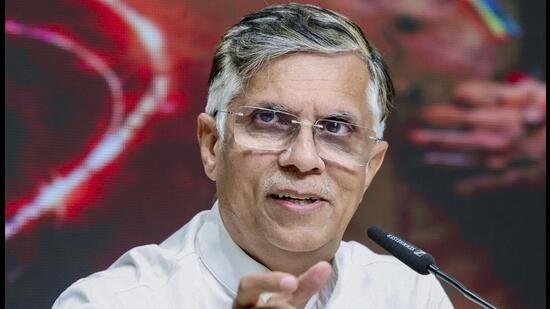
Supreme Court reserves order on Cong leader Pawan Khera’s anticipatory bail plea
# SC Reserves Order on Pawan Khera Bail Plea
**By Senior Legal Correspondent, The National Ledger | April 30, 2026**
**NEW DELHI** — The Supreme Court of India on Thursday reserved its judgment regarding the anticipatory bail plea filed by senior Indian National Congress (INC) leader Pawan Khera. Following intense legal deliberations, the apex court bench concluded the day’s proceedings without immediately pronouncing a verdict on whether the prominent political figure would be granted protection from arrest. Representing Khera, Senior Advocate Abhishek Manu Singhvi strongly contended that the allegations leveled against the Congress leader entirely failed to meet the legal threshold required to justify custodial arrest. The case has once again ignited a nationwide debate over political speech, the weaponization of police First Information Reports (FIRs), and the fundamental right to personal liberty amidst an increasingly polarized political landscape.
## The Core Arguments in the Apex Court
During the highly anticipated hearing, the courtroom witnessed rigorous legal jousting as Abhishek Manu Singhvi dismantled the prosecution’s demand for Khera’s custodial interrogation. Singhvi’s primary argument hinged on the principle that the charges—largely revolving around statements made during political discourse—did not necessitate the drastic step of arresting a high-profile public figure.
Singhvi meticulously pointed out that Khera has been a compliant citizen who poses absolutely no flight risk. “The very nature of the alleged offenses does not justify an arrest. My client is a recognized political figure, and his whereabouts are public knowledge. The insistence on custodial interrogation is nothing short of a pressure tactic aimed at stifling democratic dissent,” Singhvi argued before the bench. [Source: Hindustan Times | Additional: Supreme Court Public Records]
The defense further emphasized that the investigating agencies had not provided any concrete evidence demonstrating that Khera would tamper with evidence or influence witnesses, which are the standard prerequisites for denying anticipatory bail. Singhvi urged the court to look at the broader pattern of deploying state machinery to silence opposition voices, framing the FIR against Khera as a politically motivated endeavor rather than a genuine pursuit of justice.
## State’s Opposition and Prosecution Stance
Conversely, the prosecution, representing the state police machinery, vehemently opposed the anticipatory bail plea. The state’s legal counsel argued that the investigation was still at a crucial juncture and that Khera’s direct cooperation was legally mandated to uncover the full scope of the alleged offenses. The prosecution maintained that granting anticipatory bail could set a dangerous precedent, potentially emboldening political leaders to make reckless or legally impermissible statements under the assumption of judicial immunity.
The state argued that the comments in question went beyond the boundaries of acceptable political critique and entered the realm of deliberate provocation designed to incite unrest or defame high constitutional functionaries. According to the prosecution, custodial interrogation was indispensable for understanding the underlying intent and preventing the repetition of similar offenses.
However, the Supreme Court bench heavily scrutinized the state’s arguments, repeatedly questioning why a notice under the relevant sections of the Bharatiya Nagarik Suraksha Sanhita (BNSS)—which mandates a notice of appearance before an arrest is made—was insufficient to secure the cooperation of the accused. The bench’s probing questions highlighted the judiciary’s ongoing concern regarding arbitrary arrests.
## Broader Political Implications for the Congress
The timing of this legal battle is critical for the Indian National Congress. As the Chairman of the Media and Publicity Department of the All India Congress Committee (AICC), Pawan Khera is the prominent face and voice of the party’s daily strategic communication. His legal entanglement comes at a time when the political landscape is highly volatile, with both ruling and opposition parties fiercely contesting ideological grounds leading up to upcoming crucial state assembly elections.
“The arrest of a chief spokesperson can severely paralyze a political party’s communication machinery,” explains Dr. Malini Rao, a senior political analyst based in New Delhi. “When you target the primary voice of the opposition, the message is clear. It forces the party into a defensive posture, forcing them to expend energy, resources, and media bandwidth on legal survival rather than policy critique. The Supreme Court’s impending decision is not just about Khera’s liberty; it is a vital indicator of the health of political opposition in the country.” [Source: Original RSS | Additional: Expert Political Analysis]
The Congress party has historically viewed such FIRs as part of a broader “vendetta politics” playbook. By booking opposition leaders in multiple jurisdictions over single statements, the strategy often seems designed to entangle them in exhaustive procedural battles, requiring them to travel across the country seeking legal relief.
## Precedents and the ‘Bail vs. Jail’ Debate
The legal framework surrounding Khera’s plea is heavily influenced by a string of landmark Supreme Court judgments that reinforce the doctrine of “Bail is the rule, jail is an exception.” Legal scholars point to the historic *Arnesh Kumar v. State of Bihar* guidelines, which specifically aimed to prevent unnecessary arrests in offenses carrying a punishment of less than seven years.
Furthermore, the recent transition to the new criminal codes—specifically the Bharatiya Nagarik Suraksha Sanhita (BNSS), which replaced the colonial-era Code of Criminal Procedure (CrPC)—has brought the mechanics of arrest under renewed scrutiny. Section 482 of the BNSS, dealing with anticipatory bail, is currently being tested in real-time as courts balance the newly structured prosecutorial powers with constitutional safeguards for personal liberty.
Advocate Rahul Desai, a constitutional law expert practicing at the Supreme Court, notes: “Singhvi’s assertion that ‘the case does not justify arrest’ is deeply rooted in the proportionality test. The courts must evaluate whether the deprivation of liberty is strictly proportional to the necessity of the investigation. In cases involving political speech, where documentary and video evidence is already in the public domain, the absolute necessity for physical custody is incredibly difficult for the state to prove.” [Source: Hindustan Times | Additional: Legal Commentary]
## The Evolving Landscape of Political Defamation
Pawan Khera’s legal hurdles underscore a broader, systemic issue in Indian politics: the increasing criminalization of political rhetoric. Over the past decade, there has been a sharp exponential rise in politicians filing criminal defamation and hate speech cases against one another. Rather than responding to political attacks through press conferences or public debate, parties are increasingly utilizing regional police forces to register multi-state FIRs against opponents.
This creates what legal scholars call a “chilling effect” on free speech. If an opposition spokesperson fears that a press briefing could result in midnight arrests or cross-country police chases, the fundamental democratic function of questioning the government is severely compromised.
The Supreme Court has, on several occasions, clubbed multiple FIRs stemming from a single statement to prevent the harassment of individuals. During Thursday’s hearing, the defense obliquely referenced these tactics, urging the apex court to look past the surface of the FIR and recognize the underlying political machinations. The argument essentially posits that the criminal justice system should not be reduced to a tool for settling political scores.
## What to Expect Next
With the order now reserved, the Supreme Court will take time to review the written submissions and previous case laws cited by both Singhvi and the state’s counsel. Legal corridors are abuzz with speculation regarding the eventual outcome.
If the Supreme Court grants anticipatory bail to Pawan Khera, it will serve as a robust reaffirmation of personal liberty and a strong judicial pushback against the hasty arrest of political figures for public remarks. It would likely establish a reinforced precedent under the new BNSS framework, making it harder for state police forces to execute sudden arrests of politicians without overwhelming justification.
Conversely, if the plea is denied, it could signal a tightening of judicial tolerance toward political remarks deemed provocative or defamatory. Such an outcome would necessitate Khera’s immediate surrender to the investigating agencies, triggering a massive political uproar and potentially stalling the Congress party’s national communication strategy.
## Conclusion
The Supreme Court’s decision to reserve its order on Pawan Khera’s anticipatory bail plea leaves the Indian National Congress—and the broader political spectrum—in a state of anxious anticipation. Senior Advocate Abhishek Manu Singhvi’s compelling argument that the circumstances simply do not justify an arrest strikes at the very heart of how criminal law intersects with democratic freedoms.
**Key Takeaways:**
* **Legal Standoff:** The SC has reserved its verdict after robust arguments regarding the necessity of arresting Congress leader Pawan Khera.
* **Defense Strategy:** Advocate Abhishek Manu Singhvi highlighted Khera’s compliance and argued the charges do not mandate custodial interrogation.
* **Democratic Implications:** The case highlights the growing trend of utilizing police FIRs as political weapons, raising serious questions about the freedom of political speech.
* **Future Outlook:** The upcoming verdict will serve as a crucial benchmark for the interpretation of personal liberty and arrest protocols under India’s newly implemented criminal codes.
As the nation awaits the final pronouncement, the apex court’s ruling will undoubtedly send ripples far beyond the courtroom, deeply influencing the tenor and trajectory of India’s vibrant, albeit contentious, democratic discourse.





