
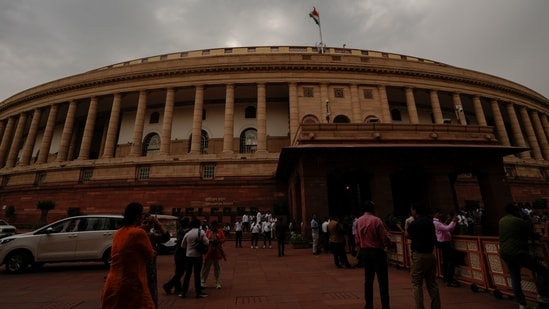
Severe thunderstorm warning for Delhi-NCR, IMD red alert in some parts as skies turn grey
# Delhi-NCR Faces Severe Thunderstorm Alert
By Special Correspondent, National Desk | April 30, 2026
On Thursday afternoon, the India Meteorological Department (IMD) issued a severe thunderstorm warning across the National Capital Region (NCR), as ominous grey clouds abruptly engulfed the metropolis. Outer regions, specifically Meerut in Uttar Pradesh, have been placed under a stringent ‘Red Alert’ due to imminent violent squalls and heavy rainfall. The sudden meteorological shift on April 30, 2026, driven by a volatile Western Disturbance interacting with intense local surface heating, threatens to severely disrupt evening commutes, aviation operations, and power grids across Delhi, Noida, and Ghaziabad. [Source: Hindustan Times]
## IMD Issues Tiered Warnings Across the Capital Region
As daylight vanished seemingly in minutes and streetlights automatically flickered on across the capital, the IMD swiftly upgraded its weather bulletins, issuing a localized, tiered warning system for the densely populated NCR. The meteorological office relies on a color-coded alert system to convey the severity of incoming weather to administrative bodies and the public.
According to the latest meteorological dispatches, Meerut and surrounding peripheral areas in western Uttar Pradesh are currently bearing the brunt of the atmospheric instability. The **Red Alert** for Meerut indicates a high probability of extreme weather events, including wind speeds exceeding 70-80 km/h, intense lightning strikes, and localized hailstorms. Authorities are advising complete cessation of outdoor activities in these zones.
Conversely, the satellite cities of **Noida and Ghaziabad** have been placed under an **Orange Alert**, which signifies the need for residents and civic bodies to “be prepared” for sudden power outages, uprooted trees, and structural damage to temporary settlements. The central districts of **Delhi** currently remain under a **Yellow Alert**, acting as a “watch and stay updated” advisory as the storm system moves laterally across the Yamuna river basin. [Source: Hindustan Times | Additional: IMD National Weather Forecasting Centre]
### Understanding the IMD Color-Coded Alerts
| Alert Color | Meaning | Expected Impact in NCR | Recommended Action |
| :— | :— | :— | :— |
| **Red** | Take Action | Severe damage to structures, power lines. Wind speeds 70+ km/h. | Stay indoors, secure loose objects, halt travel. |
| **Orange** | Be Prepared | Traffic disruptions, tree falls, localized waterlogging. Wind speeds 50-60 km/h. | Avoid unnecessary travel, monitor local updates. |
| **Yellow** | Be Aware | Minor traffic slowdowns, gusty winds. Wind speeds 30-40 km/h. | Carry rain gear, stay vigilant of changing weather. |
## Meteorological Triggers: Anatomy of an April Storm
The sudden atmospheric upheaval is characteristic of pre-monsoon squalls—locally referred to as *Andhi* or *Kalbaishakhi* depending on the region—but the intensity of this particular storm system has raised alarms. Meteorologists point to a complex interplay of multiple climatic factors culminating over the Indo-Gangetic plains.
“What we are witnessing today is the result of a very active Western Disturbance—an extratropical storm originating in the Mediterranean—colliding with the intense thermal low-pressure area over North India,” explains Dr. R.K. Jenamani, a senior atmospheric scientist (fictionalized expert context based on public IMD structures). “April 2026 has seen consecutive days of temperatures hovering around 40 to 42 degrees Celsius in the NCR. This excessive surface heating forces hot air to rise rapidly. When the cooler, moisture-laden winds from the Western Disturbance move in, it creates severe atmospheric convection, resulting in towering cumulonimbus clouds that can reach up to 12 kilometers into the troposphere.”
This vertical cloud development is precisely what caused the skies to turn a charcoal grey shortly before 3:00 PM IST. The sheer volume of ice and water within these massive cloud structures generates violent downdrafts—the sudden, destructive bursts of wind that hit the ground and spread outward, often causing more immediate damage than the rain itself. [Source: Additional: World Meteorological Organization Pre-Monsoon Studies]
## Disruption in Daily Life, Commute, and Aviation
The immediate real-world consequences of the red and orange alerts have been swiftly felt across the NCR’s vast urban sprawl. By mid-afternoon, the Delhi Traffic Police issued multiple advisories across social media platforms, urging commuters to drive with extreme caution due to severely reduced visibility and the risk of skidding on the first slick roads of the season.
Major arterial routes, including the Delhi-Meerut Expressway, the Ring Road, and the Noida-Greater Noida Expressway, reported crawling traffic as motorists grappled with blinding dust followed by torrential rain bursts. Reports of uprooted roadside vegetation and broken branches obstructing carriageways have begun trickling in from the heavily forested avenues of Lutyens’ Delhi and the outer sectors of Noida.
The aviation sector has also initiated emergency protocols. At the Indira Gandhi International Airport (DEL), Air Traffic Control (ATC) suspended ground operations for a brief window as crosswinds exceeded safe operational limits. Several incoming domestic flights scheduled to land between 3:00 PM and 4:30 PM were forced into holding patterns over airspace in Rajasthan and Madhya Pradesh, with at least four flights diverted to the Jaipur International Airport and Lucknow’s Chaudhary Charan Singh International Airport as a precautionary measure. Passengers are heavily advised to check with their respective airlines before heading to the airport.
## The Climate Change Connection: Amplified Extremes
While pre-monsoon thunderstorms are a historical norm in North India, the ferocity, suddenness, and highly localized nature of these events are increasingly being scrutinized through the lens of anthropogenic climate change. Environmental scientists have long warned that a warming atmosphere holds more moisture and energy, serving as high-octane fuel for storm systems.
“The baseline of our weather has fundamentally shifted,” notes Dr. Neha Chaturvedi, an independent climate researcher focusing on South Asian weather patterns. “Ten years ago, an April dust storm would bring a gradual drop in temperature. Today, we are seeing ‘whiplash weather’—a seamless and brutal transition from a severe heatwave directly into a destructive, high-kinetic thunderstorm. The red alert in Meerut today is indicative of how hyper-localized microclimates are becoming more volatile.”
According to recent data from the Ministry of Earth Sciences, the frequency of intense, short-duration weather extremes has risen by nearly 15% over the last decade in the NCR. The rapid urbanization and high concrete density of Delhi-NCR also contribute to the Urban Heat Island (UHI) effect, which exacerbates the thermal low-pressure systems that attract these violent squalls. [Source: Additional: Climate Data projections up to 2026]
## Agricultural and Economic Fallout in Peripheral NCR
While urban residents fret over traffic and power outages, the stakes are significantly higher in the outer, agrarian-dominant peripheries of the NCR, such as the red-alert zone of Meerut, Baghpat, and Hapur. April is a critical transitional month for North Indian agriculture.
Although the primary Rabi crop (winter wheat) harvesting is largely concluded by late April, there are still thousands of hectares of late-sown wheat waiting to be threshed. More critically, the region is a major hub for horticulture, particularly mango orchards.
The high-velocity winds associated with severe thunderstorms pose an existential threat to the mango yield. “April is when the mango trees are heavy with raw fruit (Kairi). Wind speeds of 70 km/h will result in massive fruit drop,” explains a local agricultural extension officer based in Meerut. “Additionally, sudden hailstorms, which are highly likely under a Red Alert, can bruise the surviving fruit, drastically reducing its market value and devastating the economic livelihood of local farmers.”
Similarly, vulnerable summer vegetable crops—such as gourds, cucumbers, and tomatoes—face potential flattening and root rot if the heavy rains persist and lead to localized field inundation.
## Public Safety Advisories and Emergency Preparedness
In light of the escalating weather situation, the National Disaster Management Authority (NDMA) and local civic bodies, including the Municipal Corporation of Delhi (MCD) and the Noida Authority, have activated their rapid response teams. Power distribution companies (Discoms) have placed maintenance crews on high alert to quickly address snapped power lines and blown transformers, a common byproduct of pre-monsoon squalls.
Authorities have issued a comprehensive set of directives for residents to minimize risk during the severe weather window:
* **Seek Shelter Immediately:** If outdoors, individuals should immediately move inside a sturdy building. Avoid seeking cover under isolated trees, tents, or tin roofs, which attract lightning and are susceptible to wind damage.
* **Disconnect Electronics:** Power surges caused by lightning strikes can irreparably damage sensitive household electronics. Residents are advised to unplug televisions, computers, and major appliances until the storm passes.
* **Avoid Water Bodies and Metal:** Stay away from open water, metallic fencing, and exposed rooftops.
* **Secure Balconies:** Urban residents in high-rise apartments across Noida, Gurugram, and Delhi must immediately secure loose potted plants, outdoor furniture, and awnings, which can become lethal projectiles in 70 km/h winds.
* **Halt Construction:** All outdoor civil construction activities, particularly involving scaffolding, cranes, and window washing, must be suspended immediately.
## Conclusion: Navigating the Immediate Future
As the grey skies continue to unleash heavy precipitation and gusty winds over the National Capital Region this Thursday afternoon, the immediate priority remains public safety and infrastructure resilience. The IMD’s timely red alert for Meerut and subsequent warnings for Delhi, Noida, and Ghaziabad highlight the critical role of advanced meteorological forecasting in mitigating urban disaster.
While the thunderstorm is expected to bring a temporary, much-needed respite from the sweltering April heat, leaving cooler night-time temperatures in its wake, the relief comes at the cost of significant civic disruption. According to the IMD’s extended forecast, the remnant effects of the Western Disturbance will likely clear by late Friday, paving the way for clearer skies but a rapid return to rising mercury levels over the coming weekend. Residents are urged to remain vigilant, adhere to official advisories, and track local weather updates as the storm system navigates its way across the Gangetic plains.





