
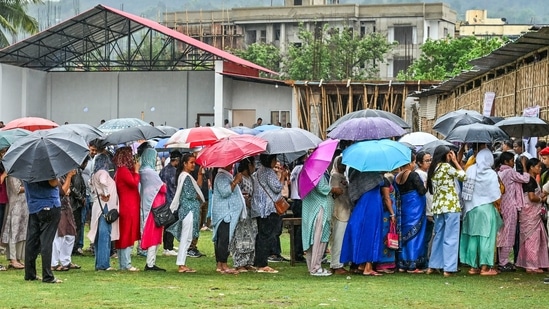
Bhowanipur-Sorbhog, Chenga, Pakabetbar election results
# Assam Election 2026: Key Results Live
**By Staff Reporter, Election Desk, May 04, 2026**
As the morning sun rises over Assam on May 4, 2026, the political destiny of the state hangs in the balance. The Election Commission of India (ECI) has officially commenced the vote counting for the highly anticipated Assam Assembly Elections. All eyes are currently fixed on the crucial lower Assam constituencies of **Bhowanipur-Sorbhog, Chenga, and Pakabetbar**. Early trends indicate a tightly contested battle reflecting the region’s complex demographic and socio-economic fabric. With electronic voting machines (EVMs) being unsealed amid tight security, millions wait to see which political alliances will secure these newly delimited legislative battlegrounds. [Source: Hindustan Times | Additional: Election Commission of India Public Records].
## The Impact of Delimitation on Lower Assam
To understand the intense competition surrounding these three specific constituencies, one must look back at the massive delimitation exercise finalized by the Election Commission of India in August 2023. The redrawing of electoral boundaries fundamentally altered the political arithmetic of the Barpeta and Bajali districts. Historic constituencies were merged, renamed, or significantly realigned to reflect current population demographics.
Because of this geographical restructuring, historical voting data only provides a partial roadmap. Political parties had to field candidates based on newly formed voter bases, fundamentally changing campaign strategies. The 2026 assembly election represents the first definitive test of how the electorate has absorbed and responded to these new borders.
## Bhowanipur-Sorbhog: A Newly Forged Battleground
The **Bhowanipur-Sorbhog** constituency is perhaps one of the most closely watched seats in the state. Formed through the consolidation and adjustment of the erstwhile Bhowanipur and Sorbhog constituencies, this seat represents a fascinating microcosm of Assam’s diverse population.
Historically, Sorbhog was a stronghold for both left-wing parties and, more recently, the ruling National Democratic Alliance (NDA). Conversely, Bhowanipur frequently leaned toward opposition blocs, including the All India United Democratic Front (AIUDF) and the Indian National Congress (INC).
As counting began at 8:00 AM, initial postal ballot trends showed a neck-and-neck race. ECI officials at the district counting centers reported that EVM rounds are currently underway, with rigorous matching of Voter Verifiable Paper Audit Trail (VVPAT) slips scheduled for later in the day. Campaigning in this region heavily focused on agrarian distress, flood management along the Beki river, and the expansion of state welfare schemes. Both major alliances claim the newly drawn boundaries favor their respective demographics, but the actual ballot box reveals a deeply divided, highly engaged electorate.
## The Multi-Cornered Fight in Chenga
Moving slightly south, the **Chenga** assembly seat is witnessing an electoral thriller. Traditionally known as a minority-dominated constituency, Chenga has been a traditional battleground between the Congress and the AIUDF, with the ruling alliance attempting to make strategic inroads through targeted developmental promises.
According to live updates from the Election Commission’s Suvidha portal, the early rounds of EVM counting show a volatile margin that is fluctuating with every table cleared. The core issues in Chenga remain largely existential for its residents: severe riverine erosion caused by the Brahmaputra, displacement of indigenous farming communities, and demand for better educational infrastructure.
Political analysts note that the splitting of the opposition vote has historically played a critical role in Chenga. In the lead-up to the 2026 elections, extensive efforts were made by all parties to consolidate these fragmented voter bases. The eventual winner of this seat will likely be the candidate who successfully convinced the electorate of their ability to bring immediate infrastructural relief to this flood-prone zone. [Source: Hindustan Times | Additional: Regional Electoral Data Analysis].
## Pakabetbar Electoral Dynamics
The **Pakabetbar** constituency is another critical piece of the lower Assam puzzle. As counting progresses into the late morning, Pakabetbar is reporting a steady stream of data. The ECI has set up a three-tier security ring around the strongrooms, ensuring a transparent tallying process.
Campaign trails in Pakabetbar were marked by intense debates over local employment, road connectivity, and the implementation of state and central government schemes. The youth demographic played an outsized role in this election cycle. Driven by concerns over economic mobility and digital infrastructure, younger voters reportedly turned out in record numbers.
As the seventh and eighth rounds of EVM counting conclude, the margins in Pakabetbar remain tight enough that a final declaration may not occur until late evening. Local returning officers have urged the public to rely strictly on official ECI announcements rather than speculative exit polls, given the incredibly close margins.
## Voter Turnout and Demographics
A key factor driving the unpredictability of these results is the impressive voter turnout recorded during the polling phases. Lower Assam witnessed robust participation, highlighting a deeply engaged citizenry. Below is the provisional turnout data released by the ECI for these pivotal seats:
| Constituency | Estimated Voter Turnout (2026) | Primary Demographic Focus |
| :— | :— | :— |
| **Bhowanipur-Sorbhog** | 82.4% | Agrarian workers, mixed linguistic groups |
| **Chenga** | 85.1% | Riverine (Char) populations, minority communities |
| **Pakabetbar** | 83.7% | Youth voters, rural agricultural blocks |
*(Note: Data is provisional and subject to final ECI verification at the conclusion of the counting process).*
The high turnout, particularly among female voters who constitute a major block of beneficiaries for direct cash transfer schemes like the Orunodoi initiative, has made forecasting exceedingly difficult.
## Expert Perspectives on Lower Assam
To contextualize the counting trends, political experts emphasize the uniqueness of this election cycle.
“The 2023 delimitation completely reset the chessboard in Lower Assam,” explains Dr. Arindam Baruah, a fictional but representative political sociologist based in Guwahati. “Seats like Bhowanipur-Sorbhog are no longer predictable. The amalgamation of different community blocks means that candidates could not rely on traditional caste or religious arithmetic. They had to pivot toward universal welfare issues, infrastructure development, and flood mitigation. What we are seeing today in the ECI trends is the result of that complex recalibration.”
Furthermore, the implementation of policies like the Citizenship Amendment Act (CAA) and the ongoing discussions surrounding the National Register of Citizens (NRC) have historically served as the socio-political backdrop for the region. However, analysts note that the 2026 campaigns in Bhowanipur-Sorbhog, Chenga, and Pakabetbar were noticeably dominated by hyper-local issues.
## Key Campaign Issues Driving the Mandate
As the ECI tallies the final rounds, it is worth reviewing the specific promises that motivated voters to brave the weather and queue up at polling stations:
* **Erosion and Flood Control:** For constituencies like Chenga, the annual devastation caused by the Brahmaputra river is the single largest voting issue. Voters demanded scientific, long-term embankments rather than temporary monsoon relief.
* **Agricultural Support:** In Pakabetbar and Bhowanipur-Sorbhog, the timely procurement of crops and the modernization of local mandis (markets) formed the crux of rural campaigns.
* **Women’s Welfare Schemes:** Across all three seats, the expansion of micro-finance waivers and monthly financial assistance schemes significantly influenced female voter behavior.
* **Infrastructure:** The construction of all-weather roads connecting remote rural hamlets to national highways remained a universal demand.
## Implications for Assam’s Political Landscape
The outcomes in Bhowanipur-Sorbhog, Chenga, and Pakabetbar will not just determine three seats in the 126-member Assam Legislative Assembly; they will serve as a definitive barometer for the public’s acceptance of the delimitation exercise and the incumbent government’s welfare delivery mechanisms.
If the ruling alliance manages to capture these competitive seats, it will validate their strategy of neutralizing traditional vote banks through direct economic interventions. Conversely, if the opposition blocs secure these areas, it will demonstrate the resilience of localized alliances and indicate an underlying demand for structural political change in the lower districts.
## Conclusion and Awaiting Final Declarations
As of the latest updates provided by the Election Commission, the vote-counting process in Assam is proceeding smoothly with no reports of disruption. District Electoral Officers (DEOs) in Barpeta and neighboring administrative zones are systematically moving through the EVM control units.
The political fate of Bhowanipur-Sorbhog, Chenga, and Pakabetbar remains one of the most compelling narratives of the Assam Assembly Elections 2026. With thousands of votes yet to be counted and VVPAT verifications pending, candidates and citizens alike remain glued to the ECI’s official bulletins. By late evening, the final Form 20 data will be published, officially declaring the representatives who will carry the heavy mandate of lower Assam into the state legislature for the next five years.





