
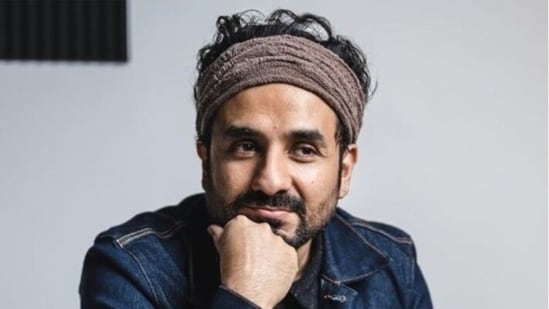
Vir Das clarifies his identity amid Bengal elections: ‘My name is Das, but…'
# Vir Das Clarifies Roots Amid Bengal Polls
**By Senior Correspondent, National News Desk | May 04, 2026**
Emmy-winning stand-up comedian and actor Vir Das took to the social media platform X (formerly Twitter) on Monday, May 4, 2026, to publicly clarify his ethnic background amidst the deeply polarized atmosphere of the ongoing West Bengal Legislative Assembly elections. Responding to widespread internet assumptions regarding his surname, Das explicitly stated that he is not Bengali, but rather of mixed Uttar Pradesh and Bihar descent. This clarification comes at a time when regional identity, linguistic heritage, and the “insider versus outsider” narrative are dominating the political discourse in West Bengal, inadvertently dragging public figures into fierce partisan crossfires. [Source: Original RSS – Hindustan Times]
## The Social Media Clarification
The intersection of celebrity culture and political assumptions often plays out in real-time on social media. For Vir Das, the necessity to clarify his roots was prompted by growing online chatter regarding his identity.
Taking to X, Das posted a brief but pointed clarification: “My name is Das, but…” he began, before confirming that despite the strong association of his last name with the eastern state of West Bengal, his heritage traces back to the northern and eastern-central belts of India. Specifically, he noted that he is “half UP and half Bihari.”
The comedian, who frequently uses his platform to comment on Indian socio-political dynamics, found himself boxed into a regional identity that he does not claim. In India, where surnames are deeply tethered to caste, region, and linguistic community, the name “Das” (translating to servant or devotee) is ubiquitous. While it is predominantly associated with Bengalis and Odias, it is also widely used across Assam, Punjab, Uttar Pradesh, and Bihar. [Additional: Indian Sociological and Demographic Records].
The rush to label Das as a Bengali intellectual or commentator reflects a broader tendency on social media to categorize public voices into convenient regional silos, especially during high-stakes electoral seasons.
## The Backdrop of the 2026 West Bengal Elections
To understand why a comedian’s surname has become a topic of discussion, one must look at the charged political climate of West Bengal in May 2026. The state is currently undergoing its critical Assembly elections, a fiercely contested battle primarily between the incumbent Trinamool Congress (TMC) and the opposition Bharatiya Janata Party (BJP).
Since the dramatic 2021 elections, the political narrative in West Bengal has heavily relied on the concept of *Bohiragoto* (outsider). The ruling party has frequently deployed this rhetoric to frame the opposition as a party of “outsiders” who do not understand Bengali culture, language, or sub-nationalism. Conversely, the opposition has consistently pushed back against this narrative, emphasizing a unified national identity.
In this hyper-sensitive environment, the ethnic and linguistic identities of celebrities, influencers, and commentators are heavily scrutinized. A public figure with a perceived Bengali surname speaking on national or regional issues is often quickly co-opted or attacked by political IT cells. By clarifying his UP and Bihar roots, Das effectively distanced himself from the localized Bengali identity politics, preemptively disarming trolls or political actors who might have weaponized his perceived heritage.
## Sociology of Surnames in Indian Politics
The fascination with Das’s surname highlights a unique facet of Indian political sociology. Surnames in the subcontinent are rarely just family names; they function as instant signifiers of geographical origin, social standing, and historical context.
“In the digital age, we see an aggressive acceleration of identity politics where a surname becomes a proxy for a person’s political allegiance,” explains Dr. Ananya Sen, a sociologist and visiting professor at Jawaharlal Nehru University (JNU). “When the Bengal elections are dominating the news cycle, a public figure named ‘Das’ is automatically assumed to have a stake in the Bengali cultural discourse. Vir Das’s clarification is a symptom of how exhaustively politicized regional identities have become. He is actively refusing to be an unwitting pawn in a regional narrative.” [Additional: Sociological Expert Analysis]
For Das, whose comedy often transcends regional boundaries to focus on national and international issues, this hyper-localization is counterproductive to his public persona. Born in Dehradun, raised in Nigeria and India, and educated in the United States, Das’s lived experience is distinctly cosmopolitan. Yet, the internet’s tribalism frequently demands rigid regional categorizations.
## Celebrities in the Political Crossfire
This incident also sheds light on the precarious position of comedians and entertainers in India’s current socio-political climate. Stand-up comedy in India has evolved from observational humor to sharp political satire. Comedians like Das, who made international headlines with his polarizing “Two Indias” monologue in 2021, are under constant microscopic surveillance by various political factions.
Rajat Deshmukh, an independent political analyst based in New Delhi, notes that social media has blurred the lines between entertainment and political commentary. “Today, a comedian’s tweet is analyzed with the same rigor as a politician’s press release,” Deshmukh states. “During election seasons, IT cells from across the spectrum actively look for endorsements or targets. If a prominent voice with a ‘Das’ surname critiques the establishment, the immediate counter-attack would involve questioning their ‘Bengali’ credentials or accusing them of bias. Vir Das stepping in to say he is half UP and half Bihari effectively neutralizes that specific line of regional attack.” [Additional: Expert Political Commentary]
Furthermore, the declaration of being from Uttar Pradesh and Bihar carries its own political weight. Both states represent the Hindi heartland, a region with a vastly different political ecosystem compared to West Bengal. The migration of workers from UP and Bihar to Bengal, and the subsequent political rhetoric surrounding Hindi-speaking populations in the state, has been a major flashpoint in the 2026 election campaigns. By proudly claiming this heritage, Das navigates a complex web of regional pride and prejudice.
## The Burden of Digital Literacy
The necessity of Das’s clarification also points to a glaring lack of digital literacy and nuance in online public squares. The algorithmic nature of platforms like X thrives on outrage and quick assumptions. A surname acts as a trigger, prompting a cascade of automated and manual responses that rarely pause for factual verification.
Das’s approach—using humor and straightforward communication to dismantle assumptions—has become a necessary survival tool for public intellectuals and entertainers. Rather than engaging in prolonged arguments with internet trolls regarding his right to speak on certain issues, redefining his identity parameters allows him to reclaim the narrative.
As the West Bengal elections progress through their final phases in May 2026, the volume of online misinformation and targeted identity politics is expected to peak. Election watchdogs have already noted a significant increase in the use of regional identity markers to manipulate voter sentiment on social media platforms.
## Key Takeaways and Future Outlook
1. **The Weaponization of Identity:** Vir Das’s clarification underscores how deeply ingrained and politicized regional surnames are in India, serving as immediate markers for digital tribalism during election cycles.
2. **The Bengal Political Climate:** The 2026 West Bengal Assembly elections continue to heavily feature the “insider vs. outsider” debate, making the ethnic backgrounds of commentators a sensitive and volatile subject.
3. **Celebrity Scrutiny:** Entertainers, particularly political satirists, are increasingly forced to manage their public identities meticulously to avoid being dragged into localized political disputes that they have no organic connection to.
4. **Cosmopolitan Reality vs. Digital Tribalism:** Despite the globalized, cosmopolitan lives of many Indian public figures, the domestic internet landscape frequently attempts to force them back into rigid, traditional boxes of caste and region.
As India navigates the complex intersection of social media, celebrity influence, and deeply entrenched regional politics, incidents like this serve as a microcosm of the larger national discourse. Vir Das’s simple statement—”My name is Das, but…”—is more than just a personal correction. It is a reflection of a society where identity is constantly contested, and where stating who you are is often the only way to prevent others from deciding it for you.
As the election results approach, the intense focus on who belongs to Bengal—and who does not—will likely continue to shape the political and cultural destiny of the state, leaving public figures to carefully tread the linguistic and regional fault lines of the world’s largest democracy.





