
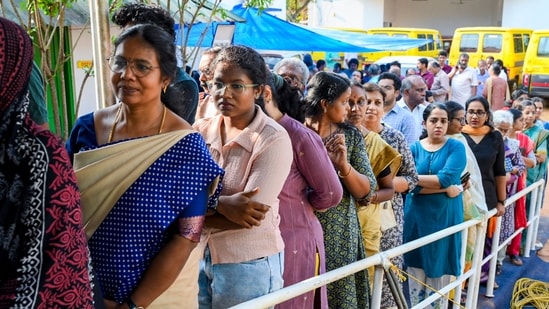
Kozhikode South, Kunnamangalam, Perambra, Thiruvambady election results
# Kozhikode Election Results 2026: Live Vote Counts
**By Rajesh Nair, Senior Political Correspondent | May 4, 2026**
On Monday, May 4, 2026, the Election Commission of India commenced the critical vote-counting process for the fiercely contested Kerala Legislative Assembly elections. In the northern district of Kozhikode, all eyes are locked on four pivotal constituencies: Kozhikode South, Kunnamangalam, Perambra, and Thiruvambady. Early counting trends indicate a neck-and-neck battle between the ruling Left Democratic Front (LDF) and the opposition United Democratic Front (UDF), with the National Democratic Alliance (NDA) attempting to increase its local vote share. As electronic voting machines (EVMs) are unsealed under tight security across designated counting centers, the electoral outcomes in these crucial Malabar seats will significantly shape Kerala’s next government. [Source: Hindustan Times | Additional: Election Commission of India Official Portal].
## Kozhikode South: A High-Stakes Urban Prestige Battle
Kozhikode South has long been considered a prestige seat for both major political fronts in Kerala. Historically a stronghold for the Indian Union Muslim League (IUML), which is a major constituent of the UDF, the constituency witnessed a dramatic shift in recent election cycles when the LDF managed to breach the fortress through strategic alliances with the Indian National League (INL).
As the initial rounds of postal ballots and early EVM counts are tallied this morning, trends show fluctuating margins. The core issues dominating the 2026 campaign in Kozhikode South revolved heavily around urban infrastructure, coastal development, and the rehabilitation of marginalized urban communities. The UDF campaigned aggressively on a platform of “reclaiming the city’s heritage,” while the LDF highlighted the massive public works and healthcare infrastructure upgrades completed over the past five years.
“The urban electorate in Kozhikode South is highly politically literate,” notes a preliminary analysis report from the Center for Electoral Studies. “Voters here are balancing local civic issues with broader state-level political narratives, making the early margins razor-thin.”
## Kunnamangalam: The Expanding Suburban Frontier
Located on the outskirts of Kozhikode city, Kunnamangalam represents the rapid suburbanization of the Malabar region. Home to prestigious national institutions like the National Institute of Technology Calicut (NITC) and the Indian Institute of Management Kozhikode (IIMK), the constituency has a unique blend of traditional agrarian voters and a rapidly growing professional class.
For the past few election cycles, Kunnamangalam has leaned heavily toward the LDF, often electing LDF-backed independents who successfully bridged the gap between the Left cadre and neutral voters. However, live updates from the 2026 counting centers indicate that the UDF has mounted a formidable challenge. The UDF’s strategy focused on traffic congestion, the need for better satellite township planning, and the growing demand for local employment opportunities.
Early trends from the Election Commission suggest that the rural panchayats within the constituency are holding steady for the LDF, while the urbanizing wards closer to the city center are showing a noticeable swing toward the UDF. The NDA has also registered a slight uptick in its vote share in these urban pockets, reflecting changing demographic preferences. [Source: Hindustan Times Live Desk].
## Perambra: Agrarian Distress and Political Loyalties
Perambra, nestled in the eastern, more agrarian part of the Kozhikode district, has historically been considered an impregnable fortress for the Communist Party of India (Marxist) [CPI(M)]. The constituency is predominantly agricultural, with a heavy reliance on cash crops such as rubber, coconut, and spices.
As counting progresses, Perambra remains a focal point for political analysts tracking the impact of agrarian distress on voter behavior. Over the past two years, fluctuating rubber prices, wildlife incursions into farmlands, and changing climate patterns have severely impacted the local economy. The UDF capitalized on these grievances during their 2026 campaign, promising robust agricultural subsidies and better wildlife management policies.
Conversely, the LDF relied on its extensive grassroots network, cooperative societies, and the legacy of welfare pension distributions to secure its base. “Perambra is testing the resilience of the Left’s core organizational strength against the tangible economic frustrations of the farming community,” says Dr. Meena Varghese, a professor of political science at Calicut University. Initial EVM trends show the LDF maintaining a lead, though the margins appear narrower than those recorded in the 2021 assembly elections.
## Thiruvambady: The Battleground of the Western Ghats
Perhaps the most volatile and unpredictable seat among the four is Thiruvambady. Located at the foothills of the Western Ghats, this constituency has a significant population of settler farmers and is heavily influenced by the social and political stances of the local Catholic Church.
Thiruvambady frequently oscillates between the UDF and the LDF. The defining issue of the 2026 election cycle here has been the controversy surrounding Eco-Sensitive Zones (ESZ) and forest buffer zones. Farmers living near the forest fringes have lived under the persistent fear of eviction and restrictive land-use regulations. Both fronts spent the entirety of their campaigns attempting to assure voters that their livelihoods would be protected from stringent environmental regulations.
According to live updates announced by the Election Commission, the counting in Thiruvambady is witnessing a see-saw battle. The postal ballots initially favored the LDF, but as the EVMs from the hill panchayats are being opened, the UDF is making rapid gains. The influence of independent, church-backed agricultural community groups is highly visible in these early numbers, making it one of the most closely watched seats in the state today.
## Expert Analysis: The Malabar Mandate
Political analysts have long maintained that to form a government in Kerala, a coalition must dominate the Malabar region. Kozhikode district, with its complex mix of minority populations, urban centers, and agricultural belts, acts as a perfect microcosm of northern Kerala’s political sentiment.
“What we are seeing in Kozhikode South, Kunnamangalam, Perambra, and Thiruvambady is a reflection of a highly mature electorate,” explains political commentator and former journalist K.P. Sethunath. “Voters are no longer swayed solely by traditional party symbols. In urban seats like Kozhikode South, infrastructure delivery is key. In Thiruvambady and Perambra, the agrarian crisis and the state’s response to human-animal conflicts are dictating the button pressed on the EVM.”
If the LDF manages to retain its grip on these constituencies, it will signal a historic validation of their governance model. On the other hand, if the UDF reclaims seats like Thiruvambady and Kunnamangalam, it could indicate a broader anti-incumbency wave sweeping across the state, potentially paving the way for a change in government in Thiruvananthapuram.
## Voter Turnout and Demographic Shifts
A critical factor influencing today’s counting trends is the voter turnout recorded during the polling phase. Kerala traditionally boasts high political participation, and the 2026 elections were no exception. However, slight variations in specific demographics often decide the fate of these tightly contested seats.
**Estimated Voter Turnout Comparison (2021 vs. 2026):**
| Constituency | 2021 Turnout (%) | 2026 Turnout (%) | Trend |
| :— | :— | :— | :— |
| **Kozhikode South** | 73.4% | 75.1% | Moderate Increase |
| **Kunnamangalam** | 78.8% | 79.5% | Slight Increase |
| **Perambra** | 80.4% | 81.2% | High Turnout Maintained |
| **Thiruvambady** | 79.2% | 82.3% | Significant Surge |
*Data Source: Election Commission of India (Provisional Data 2026)*
The significant surge in Thiruvambady’s voter turnout is particularly noteworthy. High turnouts in agrarian belts are often interpreted by political scientists as an indicator of a “protest vote” or a highly mobilized community responding to specific local distress, such as the aforementioned buffer zone crisis. Meanwhile, the steady turnout in Kozhikode South suggests that traditional vote banks remained loyal to their respective fronts.
## State-Wide Implications for the 140-Seat Assembly
Kerala’s Legislative Assembly comprises 140 seats, requiring a minimum of 71 seats for a coalition to form a majority government. The four seats in question—Kozhikode South, Kunnamangalam, Perambra, and Thiruvambady—are crucial pieces of this complex mathematical puzzle.
Historically, sweeping the Kozhikode district has provided the winning coalition with the momentum needed to secure a comfortable majority. The NDA, while traditionally not a primary contender for victory in these specific seats, plays the critical role of a “vote-spoiler.” Even a slight fluctuation of 2,000 to 3,000 votes shifting toward the NDA can drastically alter the final outcome between the LDF and UDF in constituencies where the margin of victory is historically under 5,000 votes.
As the Election Commission continues to update the live tally round by round, party workers from both the CPI(M) and the Indian National Congress (INC) have begun gathering outside counting centers in Kozhikode. Police have imposed strict Section 144 protocols around the immediate vicinity of the centers to ensure the counting process proceeds without disruption.
## Conclusion and Future Outlook
The election results from Kozhikode South, Kunnamangalam, Perambra, and Thiruvambady will ultimately serve as a definitive barometer for Kerala’s political future over the next five years. Whether it is the urban voter demanding better infrastructure or the hill-tract farmer seeking protection for their land, the mandate delivered today will force the incoming administration to recalibrate its regional development priorities.
As of late morning, the trends remain dynamic. While initial leads have been established, political history in Kerala has repeatedly shown that early morning margins can vanish rapidly as counting moves from urban wards to rural panchayats. Citizens, political analysts, and stakeholders are urged to continue tracking the Election Commission’s official announcements. The final, verified results are expected to be officially declared by the Returning Officers by late afternoon, officially drawing the curtain on one of the most fiercely fought democratic exercises in the Malabar region.





