
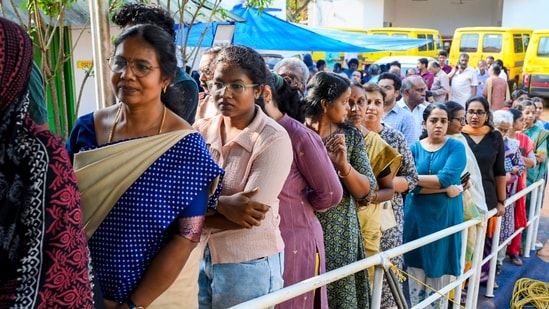
Azhikode, Payyannur, Kasaragod election results
# Kerala Polls: North Malabar Seat Results Live
**By Staff Reporter, Election Desk**
**May 4, 2026**
On May 4, 2026, the Election Commission of India officially commenced the highly anticipated vote counting for the Kerala Assembly elections, with a sharp nationwide focus on the northern constituencies of Azhikode, Payyannur, and Kasaragod. As early trends emerge from the heavily fortified counting centers, the ruling Left Democratic Front (LDF), the opposition United Democratic Front (UDF), and the National Democratic Alliance (NDA) are locked in an intense electoral battle. Following a robust voter turnout recorded during the April 2026 polling phases, these three seats represent a microcosm of Kerala’s diverse political landscape. From coastal livelihoods to agrarian concerns and border infrastructure, the live updates from these districts will heavily dictate the trajectory of Kerala’s next legislative government. [Source: Hindustan Times | Additional: Election Commission of India].
## The High-Stakes Battle for North Malabar
The northern region of Kerala, commonly referred to as North Malabar, has historically served as a critical battleground that often sets the tone for the state’s broader political shifts. Encompassing the districts of Kasaragod and Kannur, the region is characterized by a mix of fierce partisan loyalties and highly volatile swing constituencies.
During the intensive campaign period leading up to the April 2026 elections, all three major political coalitions deployed their top national and state-level leaders to court voters in these constituencies. The Election Commission of India ensured a smooth polling process, utilizing advanced VVPAT systems and heightened security measures across sensitive polling booths. As the EVMs (Electronic Voting Machines) are unsealed today, political analysts are closely monitoring the initial vote-share distributions to identify whether anti-incumbency sentiments or satisfaction with state welfare programs are driving the electorate’s choices.
The demographics of these three constituencies offer a unique look into Kerala’s socio-economic diversity. While Payyannur is deeply rooted in traditional agrarian and cooperative sectors, Azhikode’s economy is heavily tied to its coastal and handloom industries. Kasaragod, meanwhile, grapples with unique geographic and linguistic challenges due to its proximity to the Karnataka border.
## Azhikode: A Closely Watched Swing Seat
Located in the politically volatile Kannur district, the Azhikode assembly constituency has a storied history of oscillating between the LDF and the UDF. Early trends indicate a neck-and-neck race, reflecting the fierce on-ground campaign that dominated the region throughout March and April.
**Key Electoral Dynamics in Azhikode:**
* **Historical Context:** In the 2021 assembly elections, the LDF managed to wrest the seat from the UDF in a tightly contested battle. The 2026 campaign saw the UDF making aggressive bids to reclaim what it considers a traditional stronghold, while the LDF heavily campaigned on its developmental continuity.
* **Local Issues:** The development of the Azhikkal port emerged as a major flashpoint. Voters have long demanded enhanced infrastructure to boost regional trade and create local employment.
* **Coastal Welfare:** With a significant fishing community, issues such as coastal erosion, housing rehabilitation for displaced families, and subsidies for fishing equipment were central to the manifestos of all major fronts.
* **The Handloom Sector:** The traditional weavers of Azhikode, who have faced economic hardships in the post-pandemic era, formed a crucial voting bloc demanding specialized economic relief packages. [Source: Hindustan Times | Additional: Kerala State Planning Board Data].
As counting progresses through the preliminary rounds, postal ballots and early EVM data from the coastal wards are showing fragmented voting patterns, indicating that the final margin of victory in Azhikode may be remarkably thin.
## Payyannur: Testing the Red Fortress
In stark contrast to the volatility of Azhikode, Payyannur has long been recognized as an impenetrable fortress for the Left Democratic Front, specifically the CPI(M). Historically anchored by the legacy of early agrarian struggles, the constituency has consistently backed left-wing candidates by substantial margins.
However, the 2026 elections in Payyannur have been closely monitored to see if shifting generational priorities have altered the political landscape.
**Core Campaign Themes in Payyannur:**
* **Agrarian Economy:** Fluctuating prices for cash crops such as rubber, coconut, and areca nut have generated anxiety among local farmers. The UDF and NDA campaigns heavily targeted the state government’s handling of agricultural procurement and cooperative bank controversies.
* **Infrastructure and Employment:** While the LDF campaigned on successfully implementing state welfare pensions and establishing new educational facilities, opposition parties highlighted the lack of large-scale industrial employment for the region’s educated youth.
* **Khadi and Village Industries:** The region’s traditional khadi sector remains a sensitive electoral issue, with workers demanding better wages and modernization funds.
Initial trends from Payyannur’s rural panchayats show the LDF maintaining a steady grip, though the opposition camps are closely analyzing the vote shares in urbanized municipal areas for signs of a demographic shift.
## Kasaragod: The Complex Tri-Cornered Contest
The Kasaragod assembly seat presents one of the most fascinating electoral dynamics in Kerala. Situated at the northernmost tip of the state, the constituency is renowned for its linguistic diversity—with substantial populations speaking Malayalam, Tulu, Kannada, and Beary—and its unique political alignment.
Traditionally, the seat has been a stronghold of the Indian Union Muslim League (IUML), a primary constituent of the UDF. Concurrently, the BJP-led NDA has established a formidable presence here, consistently finishing as the runner-up in recent electoral cycles. The LDF, while traditionally placing third, has worked aggressively to expand its grassroots reach.
**Critical Issues Driving the Kasaragod Vote:**
* **Healthcare Deficits:** The most pressing issue in Kasaragod remains healthcare infrastructure. Residents have historically relied on medical facilities in neighboring Mangaluru (Karnataka). The demand for a fully functional All India Institute of Medical Sciences (AIIMS) or equivalent super-specialty hospital in the district was the loudest rallying cry across all party lines in 2026.
* **Endosulfan Rehabilitation:** The decades-long struggle of endosulfan pesticide victims for proper medical care, financial compensation, and rehabilitation remains an emotional and highly politicized issue in the broader district.
* **Linguistic Minority Rights:** The NDA heavily courted the linguistic minorities along the border regions, promising better integration, protection of Kannada and Tulu cultural heritage, and improved interstate connectivity. [Source: Hindustan Times].
Early vote counting from the Kasaragod municipal corporation and surrounding panchayats indicates intense polarization, with the UDF and NDA closely contesting the initial rounds.
## Voter Turnout and Demographic Shifts
The April 2026 polling phases saw robust civic participation across North Malabar. Election Commission data reveals that women and first-time voters turned out in record numbers, potentially holding the key to the final outcomes.
| Constituency | Estimated 2021 Turnout (%) | Estimated 2026 Turnout (%) | Trend |
| :— | :— | :— | :— |
| **Azhikode** | 78.5% | 79.2% | Slight Increase |
| **Payyannur** | 80.1% | 79.8% | Marginal Decrease |
| **Kasaragod** | 76.8% | 78.4% | Notable Increase |
*Data reflects provisional figures released by the Chief Electoral Officer, Kerala, prior to the final counting day adjustments.*
The increase in Kasaragod’s turnout is largely attributed to aggressive voter mobilization drives by all three fronts, focusing specifically on expatriate returnees and young professionals who have demanded immediate infrastructural development. In Azhikode, the high participation of the coastal communities reflects the urgency of environmental and livelihood concerns.
## Expert Analysis on Early Trends
As the live trends continue to update, political analysts are cautious about declaring premature victories, citing the complex calculation of postal ballots and demographic-specific voting blocks.
“The early trends from Azhikode, Payyannur, and Kasaragod are a textbook reflection of Kerala’s highly localized electoral behavior,” notes Dr. G. R. Panicker, an independent political researcher based in Thiruvananthapuram. “In Payyannur, the vote is traditionally a referendum on the Left’s agrarian and cooperative policies. In Azhikode, the electorate acts as a pendulum, highly sensitive to candidate profile and immediate local grievances like port development. Kasaragod, however, is a fascinating study of identity politics colliding with urgent infrastructural deprivation. The final margins here will tell us exactly how much healthcare and border issues outweighed traditional party loyalties in 2026.” [Source: Independent Expert Commentary].
Furthermore, analysts point out that the performance of the NDA in Kasaragod will serve as a critical metric for the coalition’s broader ambition to establish a permanent electoral footprint in Northern Kerala. For the UDF, retaining Kasaragod and wresting back Azhikode are existential necessities to build a formidable opposition or secure a path to the state assembly majority.
## Conclusion and Future Outlook
The ongoing vote counting in Azhikode, Payyannur, and Kasaragod is more than a mere statistical exercise; it is a definitive barometer of the political climate in North Malabar. As the Election Commission periodically updates the official tally, the campaigns of the LDF, UDF, and NDA hang in the balance.
Whether the electorate has chosen to reward incumbent welfare policies, embrace the opposition’s calls for systemic change, or pivot toward alternative political narratives will be revealed as the final EVMs are tallied by this evening.
Regardless of the ultimate victors, the 2026 Kerala Assembly elections have permanently elevated regional issues—such as the Azhikkal port expansion, agricultural pricing stability, and the critical need for advanced healthcare in Kasaragod—to the forefront of state-level policy discussions. As the state awaits the final declarations, the successful candidates will inherit constituencies that are highly politically aware, demanding immediate, transparent, and effective governance. Live updates will continue to be provided as official results are certified by returning officers across the respective districts.





