
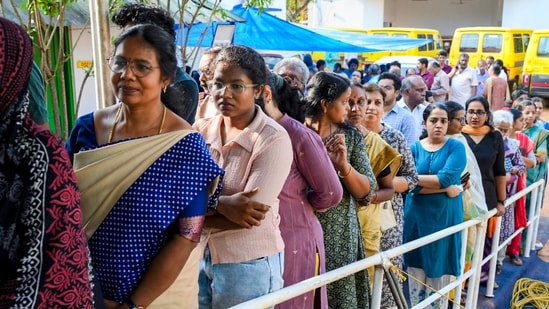
Eranad, Tanur, Vallikkunnu, Wandoor election results
# Kerala Results: Eranad, Tanur & Wandoor Live
**By Special Correspondent, India Election Desk | May 4, 2026**
On May 4, 2026, the Election Commission of India officially commenced the highly anticipated vote counting for the Kerala Assembly Elections, drawing an intense national spotlight onto the Malappuram district constituencies of Eranad, Tanur, Vallikkunnu, and Wandoor. Starting at 8:00 AM with the processing of postal ballots, early trends quickly began shaping the political narrative for both the United Democratic Front (UDF) and the Left Democratic Front (LDF). As candidates eagerly track the electronic voting machine (EVM) data emerging from heavily guarded counting centers, these initial tallies will serve as crucial bellwethers for the broader 140-seat state assembly. The final outcome across these four distinct demographic belts will determine whether traditional political strongholds have weathered anti-incumbency sentiments or if evolving voter priorities have redrawn Kerala’s electoral map.
[Source: Hindustan Times | Additional: Election Commission of India Live Dashboard]
## The High-Stakes Battleground of Malappuram District
The Malappuram district has historically served as a formidable fortress for the United Democratic Front, largely propelled by the grassroots strength of the Indian Union Muslim League (IUML) and the Indian National Congress. However, recent election cycles have demonstrated that the Left Democratic Front can effectively breach these bastions through targeted welfare campaigning and strategic alliances.
In the 2026 assembly elections, the overarching narrative in these four constituencies—Eranad, Tanur, Vallikkunnu, and Wandoor—revolves around localized infrastructure development, agrarian economic stability, coastal livelihood protection, and youth employment. The Election Commission reported a robust voter turnout across the district during polling day, indicating high voter engagement. As the counting progresses through the mandated rounds, political analysts are closely monitoring how the shift in demographic voting patterns and the influx of first-time voters will influence the final margins.
## Eranad Constituency Early Trends
Eranad, characterized by its agrarian economy and rural demographics, has traditionally leaned heavily toward the UDF. As the first few rounds of EVM counting conclude, the returning officers have noted a steady progression in the tabulation process.
The primary election issues in Eranad have historically centered around the struggles of local farmers, the need for better irrigation infrastructure, and the mitigation of human-wildlife conflict near forest-bordering villages. The IUML has heavily relied on its historical connection with the rural electorate here, while the LDF has campaigned aggressively on the state government’s agricultural subsidies and broader welfare distributions.
**Key Voting Factors in Eranad:**
* **Agrarian Policies:** Farmer welfare schemes and crop insurance payouts.
* **Rural Connectivity:** Completion of delayed road infrastructure projects.
* **Incumbency Factor:** The historical dominance of the IUML facing challenges from localized LDF micro-campaigning.
[Source: Hindustan Times | Additional: Local District Administration Polling Data]
## Tanur’s Unpredictable Political Tides
Among the four constituencies, Tanur represents the most unpredictable battleground. Situated along the Arabian Sea coast, Tanur boasts a massive population of traditional fisherfolk whose livelihoods are frequently impacted by climate change, coastal erosion, and fluctuating fishing yields.
Historically, Tanur shifted away from the UDF fold in recent electoral cycles, embracing LDF-backed independents who promised specialized coastal development packages. As the live vote counting updates stream in from the Tanur counting centers, the margins between the leading candidates remain exceedingly tight. The postal ballots, primarily cast by government employees, senior citizens, and essential service workers, have revealed a deeply divided electorate.
“Tanur is the classic swing constituency in Malappuram,” notes Dr. R. Krishnan, an independent political sociologist based in Thiruvananthapuram. “The electorate here does not vote strictly on party lines; they vote on immediate livelihood security. The party that successfully convinced the coastal communities of their commitment to marine infrastructure and disaster relief will ultimately secure this seat.”
## Vallikkunnu: Tracking Urbanization and Jobs
Vallikkunnu, uniquely positioned with a mix of coastal borders and rapidly urbanizing town centers, presents a different set of electoral priorities. Early trends from the Election Commission indicate a brisk counting process, with a high volume of EVM votes processed by late morning.
In the run-up to the 2026 elections, Vallikkunnu voters voiced significant concerns regarding youth unemployment, the expansion of local educational institutions, and the modernization of public transit systems. The UDF has traditionally managed to hold this constituency, but the LDF and the NDA have both increased their grassroots outreach to capitalize on shifting urban aspirations.
The presence of the NDA as a growing third pole in specific pockets of Vallikkunnu has added an extra layer of complexity to the vote-counting process. While they may not immediately secure the seat, any substantial increase in their vote share could alter the winning margins between the UDF and LDF.
## Wandoor (SC) Constituency Dynamics
Wandoor, a constituency reserved for Scheduled Castes (SC), is a critical puzzle piece in the Kerala assembly elections. Historically, the Indian National Congress (representing the UDF) has maintained a formidable grip on Wandoor. The early counting phases of the 2026 elections reflect the historical loyalty of this voter base, though the LDF’s sustained campaigns focusing on marginalized community empowerment and housing schemes (such as the LIFE Mission) have made the contest highly competitive.
**Table: Electoral Profile Summary (2026 Context)**
| Constituency | Nature of Seat | Primary Demographic Focus | Key 2026 Campaign Issue |
| :— | :— | :— | :— |
| **Eranad** | General | Agrarian / Rural | Crop stability, infrastructure |
| **Tanur** | General | Coastal / Fishing | Seawalls, marine livelihoods |
| **Vallikkunnu** | General | Semi-Urban / Coastal | Youth employment, urbanization|
| **Wandoor** | SC Reserved | Rural / Marginalized | Social welfare, housing schemes |
The Election Commission has deployed heavy three-tier security at the Wandoor counting stations, with micro-observers ensuring strict adherence to transparency protocols. Both major political fronts have expressed confidence in early press briefings, though the ultimate verdict will depend heavily on the final rounds of EVM tabulation from the interior rural panchayats.
[Source: Hindustan Times | Additional: Historical Kerala Legislative Assembly Records]
## Election Commission Protocols and Security Measures
To ensure the absolute integrity of the 2026 mandate, the Election Commission of India has implemented rigorous protocols across all counting centers in Malappuram. The initial phase of counting was strictly dedicated to the Electronically Transmitted Postal Ballot System (ETPBS) and standard postal ballots.
Only after the initial 30-minute window for postal ballots did the officials break the seals on the EVMs. Central Armed Police Forces (CAPF) and state armed police have established a secure perimeter around the facilities. Furthermore, the mandatory cross-verification of Voter Verifiable Paper Audit Trail (VVPAT) slips from five randomly selected polling stations per constituency will take place at the end of the EVM counting to mathematically ensure the accuracy of the electronic counts.
This meticulous process means that while early trends provide a strong directional indicator, the official declaration of the final winners for Eranad, Tanur, Vallikkunnu, and Wandoor may stretch into the late evening.
## Broader Implications for Kerala Government Formation
The results emanating from these four Malappuram constituencies carry weight far beyond their geographic borders. In the 140-seat Kerala Legislative Assembly, the magic number for a simple majority is 71.
If the UDF manages to sweep Eranad, Vallikkunnu, and Wandoor while reclaiming Tanur, it will signify a massive anti-incumbency wave against the state government, consolidating the opposition’s strength in northern Kerala. Conversely, if the LDF successfully defends its past gains in Tanur and makes deeper inroads into UDF strongholds like Eranad or Vallikkunnu, it will indicate a structural shift in traditional voting blocs, proving that the state’s political dynamics have permanently moved past historical religious and community-based voting patterns.
The NDA’s performance across these segments is equally critical. Even marginal gains in their vote share can act as a spoiler effect, fundamentally changing the arithmetic required for either the UDF or LDF to secure victory in tightly contested constituencies.
## Conclusion and Future Outlook
As the live updates continue to pour in from the counting centers of Eranad, Tanur, Vallikkunnu, and Wandoor, the democratic ethos of Kerala is on full display. The 2026 assembly elections have highlighted an electorate that is highly informed, demanding, and uncompromising on issues of local development and welfare.
**Key Takeaways as Counting Continues:**
1. **High Stakes in Tanur:** The coastal constituency remains the most crucial battleground seat, serving as a litmus test for the success of localized marine welfare policies.
2. **UDF’s Litmus Test:** To secure a path to power in Thiruvananthapuram, the UDF must definitively hold its traditional fortresses in Wandoor, Eranad, and Vallikkunnu.
3. **LDF’s Welfare Strategy:** The Left’s reliance on government welfare schemes is being directly tested against traditional incumbency loyalty.
4. **VVPAT Verification:** Final official results will await the stringent VVPAT matching protocol, ensuring absolute electoral transparency.
The final tallies announced by the Election Commission later today will not merely provide the names of four Members of the Legislative Assembly; they will outline the socioeconomic roadmap that Kerala will navigate for the next five years. As the EVM counts progress from round to round, the citizens of Malappuram district—and the rest of India—watch closely as the will of the people translates into democratic action.
[Source: Hindustan Times | Additional: Independent Electoral Trend Analysis]





