
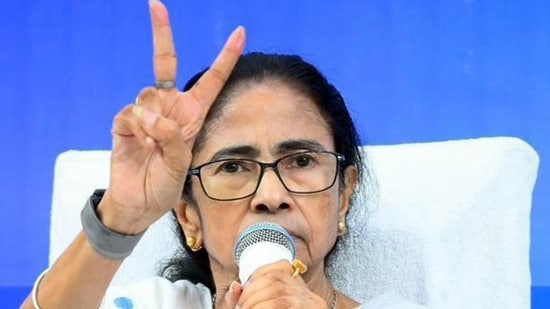
Mamata Banerjee election result 2026: After see-saw battle, surges ahead to avenge Nandigram loss; Suvendu still not out
# Mamata Leads Adhikari in 2026 Rematch
By Political Desk, India Election Observer, May 4, 2026
On May 4, 2026, West Bengal Chief Minister Mamata Banerjee established a critical lead over Bharatiya Janata Party (BJP) leader Suvendu Adhikari in a fiercely contested electoral rematch. According to the latest Election Commission of India (ECI) data, Banerjee has secured **44,729 votes** compared to Adhikari’s **37,545 votes**. This margin of 7,184 votes marks a significant pivot in what has been widely described as a see-saw battle throughout the morning hours of counting. With just eight rounds of vote tallying remaining, the outcome of this high-stakes constituency remains statistically open, capturing the attention of political observers nationwide as election officials process the final Electronic Voting Machines (EVMs). [Source: Hindustan Times]
## The Numbers So Far: A Tense Electoral Battle
The counting of votes commenced at 8:00 AM under stringent security protocols, with postal ballots being tallied first, followed by the EVM rounds. In the initial phases, the trends exhibited extreme volatility. Early reports indicated a neck-and-neck race, with the lead alternating between the Trinamool Congress (TMC) chairperson and the BJP’s Leader of the Opposition in the state assembly.
However, as the counting progressed into the middle rounds, a distinct pattern began to emerge. Election Commission updates from the counting center confirmed that Banerjee systematically consolidated her position.
**Current Tally Breakdown (As of 15:38 IST):**
* **Mamata Banerjee (TMC):** 44,729 votes
* **Suvendu Adhikari (BJP):** 37,545 votes
* **Current Margin:** +7,184 votes in favor of TMC
* **Status:** 8 rounds of counting remaining
Despite the expanding margin, electoral analysts caution against premature declarations. In constituencies characterized by stark micro-level demographics, individual panchayats and municipal wards can heavily skew results in the final rounds. The remaining eight rounds represent thousands of uncounted ballots, keeping the BJP camp hopeful for a late-stage surge that could potentially erase the deficit. [Source: Hindustan Times | Additional: ECI Live Dashboard Trends]
## Historical Context: The Shadows of 2021
To understand the immense weight of this specific electoral contest, one must look back to the political landscape of 2021. The battleground of Nandigram, located in the Purba Medinipur district, became the absolute epicenter of the West Bengal Legislative Assembly elections that year.
Historically, Nandigram holds profound emotional and political resonance in West Bengal. The 2007 anti-land acquisition movement in this very region was the catalyst that ultimately ended the 34-year rule of the Left Front government, propelling Mamata Banerjee to power in 2011. During that pivotal era, Suvendu Adhikari was one of Banerjee’s most trusted lieutenants and a key architect of the grassroots movement.
The political dynamics fractured when Adhikari left the TMC to join the BJP ahead of the 2021 elections. In a bold political maneuver, Banerjee chose to leave her traditional stronghold of Bhabanipur in Kolkata to challenge Adhikari directly on his home turf in Nandigram. The 2021 result was incredibly tight: Adhikari defeated Banerjee by a razor-thin margin of 1,956 votes. Although the TMC swept the state elections with a massive majority, Banerjee’s personal defeat in Nandigram remained a point of intense political contention. She subsequently won a by-election in Bhabanipur to retain her Chief Ministerial position.
The 2026 election represents a direct rematch. For Banerjee, it is an opportunity to reclaim the territory and avenge the 2021 loss. For Adhikari, retaining the seat is paramount to cementing his status as the premier opposition leader in the state and proving that his 2021 victory was not an anomaly. [Additional: West Bengal Electoral Archives]
## Campaign Strategies and Ground Realities
The campaign leading up to the 2026 voting day was characterized by intense mobilization, high-profile rallies, and distinct ideological pitches from both major parties.
The Trinamool Congress focused its campaign heavily on the state government’s expansive social welfare schemes. Party workers campaigned block-by-block, emphasizing the impact of programs like *Lakshmir Bhandar* (direct cash transfers to women) and *Swasthya Sathi* (universal health insurance). The TMC narrative framed Banerjee as the ultimate protector of Bengali identity and grassroots development, arguing that her previous loss in the region was a localized administrative glitch rather than a rejection of her leadership.
Conversely, the Bharatiya Janata Party, spearheaded by Adhikari, ran a vigorous campaign centered on anti-incumbency, transparency, and federal development. Adhikari leveraged his deep, long-standing connections with the local cooperative societies and panchayats in the East Midnapore belt. The BJP campaign highlighted allegations of corruption at the local administrative levels, promising voters that a mandate for Adhikari would ensure better implementation of central government schemes and improved rural infrastructure.
Both parties poured massive logistical resources into the constituency, viewing it as the ultimate prestige battle of the 2026 electoral cycle. The heavy deployment of Central Armed Police Forces (CAPF) ensured that the voting process itself remained largely peaceful, a point noted with satisfaction by election observers.
## Demographics and Voter Turnout
The constituency features a complex demographic matrix that makes electoral predictions notoriously difficult. The region is predominantly rural, heavily dependent on agriculture and local fisheries, but it also features rapidly developing semi-urban pockets.
A significant factor in the electoral math of this region is the minority vote, which comprises roughly a quarter of the electorate. Historically, this demographic has shown strong consolidation. Additionally, the female voter turnout has surged in recent electoral cycles. Both the TMC and the BJP heavily courted women voters during the 2026 campaign, recognizing them as the decisive swing demographic.
On polling day, the constituency witnessed a massive voter turnout, exceeding 85%. High turnout is often interpreted in various ways by political scientists—sometimes signaling a wave of anti-incumbency, and other times indicating a strong mobilization of the ruling party’s core base. The current counting trends suggest a highly polarized electorate, with specific geographic zones within the constituency voting decisively in favor of one candidate over the other.
## Expert Perspectives on the Counting Trends
Independent political analysts have been closely monitoring the situation as the EVMs are unsealed. The consensus among experts is that while Banerjee’s lead is substantial, the mechanics of booth-wise counting mean the race is not mathematically concluded.
“A lead of over 7,000 votes in a fiercely contested assembly seat provides a very comfortable cushion for the incumbent Chief Minister,” noted Dr. Rajiv Sen, a Kolkata-based independent political researcher. “However, East Midnapore has distinct micro-regions. Some panchayats are absolute strongholds for Suvendu Adhikari. If the remaining eight rounds happen to belong to those specific booths, the margin could shrink rapidly. The phrase ‘see-saw battle’ is entirely appropriate for the topography of this constituency.”
Another veteran election observer, Smita Roy, emphasized the psychological impact of the numbers. “Whether the final margin is 500 votes or 15,000 votes, a victory here is entirely symbolic. The TMC wants to erase the asterisk of 2021, while the BJP wants to prove that Adhikari’s regional dominance is permanent. The tension in the counting hall right now reflects these massive stakes.”
## Electoral Mechanics: The Final Eight Rounds
Understanding why eight remaining rounds keep the outcome in suspense requires a brief look at the Election Commission’s counting methodology.
In Indian elections, votes are tallied by bringing EVM Control Units from designated polling booths to a secure counting center. These units are distributed across multiple counting tables—usually 14 tables per hall. One “round” of counting is completed when the votes from the EVMs on all 14 tables have been recorded, tabulated, and verified by the counting agents representing the various candidates.
Because EVMs are grouped by geographic polling stations, a single round might represent a specific village or municipal ward. If the final eight rounds (representing roughly 112 polling booths) encompass areas where the BJP historically underperformed, Banerjee’s lead will likely expand. Conversely, if these EVMs are from Adhikari’s core stronghold areas, he could realistically pull ahead. Furthermore, mandatory VVPAT (Voter Verifiable Paper Audit Trail) slip matching for randomly selected booths will take place after the EVM counting concludes, adding a final layer of procedural verification before the Returning Officer declares the official winner.
## Broader Implications for State Politics
While this article focuses squarely on a single constituency, the broader implications for West Bengal politics are profound.
If Mamata Banerjee successfully defends her lead and emerges victorious, it will likely be interpreted as a massive vindication of her leadership and a neutralization of the BJP’s most potent regional challenger. A win here would consolidate the TMC’s narrative of unmatched grassroots connectivity.
On the other hand, if Suvendu Adhikari manages an upset in the final rounds, it will reinforce his position as the undeniable face of the opposition in West Bengal. It would demonstrate his unparalleled grip on the Midnapore political machinery and serve as a significant morale booster for the BJP’s state cadre, regardless of the overall statewide assembly tallies.
## Conclusion
As of mid-afternoon on May 4, 2026, the data from the Election Commission paints a picture of a grueling democratic exercise. Mamata Banerjee’s lead of 7,184 votes positions her favorably to avenge her 2021 defeat, but the presence of eight uncounted rounds ensures that Suvendu Adhikari remains very much in the fight.
The security apparatus remains on high alert around the counting premises, enforcing Section 144 to prevent any untoward incidents or premature celebrations that could lead to clashes. Millions of voters and political enthusiasts across India are currently glued to the ECI portal, awaiting the final tabulation. In a constituency famous for making history, the next few hours will dictate the latest chapter in one of India’s most compelling political rivalries. The final declaration by the Returning Officer is expected by early evening.





