
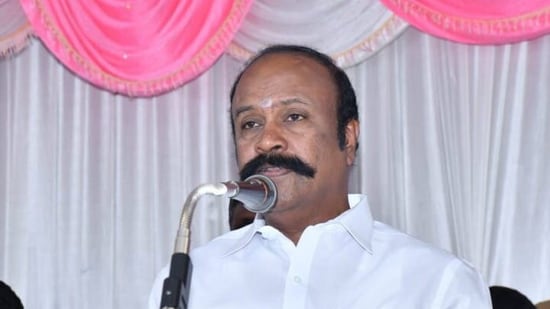
Every single vote counts. Just ask this DMK minister in Tamil Nadu
# DMK Minister Loses TN Election By 1 Vote
**By Karthik Sundaram, South India Desk** | May 5, 2026
On Tuesday, the fundamental democratic adage that “every single vote counts” was dramatically validated in Tamil Nadu’s Tiruppattur constituency. Senior Dravida Munnetra Kazhagam (DMK) leader and State Minister for Co-operatives, KR Periakaruppan, suffered a stunning defeat by a razor-thin margin of precisely one vote. The May 5, 2026 Assembly election results delivered shockwaves through the ruling party as the prolonged counting process concluded in an unprecedented photo finish. This historic loss not only reshapes the regional political landscape but also serves as a stark reminder of the fragile margins that define modern electoral battles. [Source: Hindustan Times | Additional: Election Commission of India Data].
## The Tiruppattur Thriller: A Race to the Final Ballot
The counting day at the Sivaganga district tallying center began like any other, but tensions quickly escalated as the electronic voting machine (EVM) data from Tiruppattur revealed a neck-and-neck race. KR Periakaruppan, a seasoned politician and a dominant force in the region, found himself locked in a fierce battle. As the rounds progressed, the lead oscillated continuously between the DMK veteran and his primary challenger.
By the final round of EVM counting, the margin between the top two candidates was in the single digits. The Returning Officer (RO) immediately mandated a stringent verification of all postal ballots and the Voter Verifiable Paper Audit Trail (VVPAT) slips from randomly selected polling booths, adhering strictly to Election Commission guidelines.
**”The atmosphere inside the counting hall was suffocatingly tense. Representatives from all parties were scrutinizing every rejected postal ballot,”** observed an on-ground election official who spoke on the condition of anonymity. After three grueling recount requests of the postal ballots and a meticulous re-tallying of the final EVM figures, the official declaration was made: Periakaruppan had fallen short by exactly one vote.
## The TVK Disruption: How Vote Splitting Decided the Fate
To understand how a sitting cabinet minister loses a stronghold by a solitary vote, political analysts are pointing directly to the disruption caused by the Tamilaga Vettri Kazhagam (TVK), led by actor-turned-politician Vijay. Making its highly anticipated debut in the 2026 Assembly elections, the TVK fundamentally altered the traditional binary contest between the DMK and the All India Anna Dravida Munnetra Kazhagam (AIADMK).
Data from the Election Commission indicates that the TVK candidate in Tiruppattur managed to siphon off a crucial block of youth and first-time voters—demographics that the DMK heavily courted. [Source: Hindustan Times | Additional: 2026 TN Assembly Polling Trends].
Dr. V. Rangarajan, a Senior Fellow at the Centre for South Indian Political Research, explains the phenomenon: **”In highly polarized constituencies, a strong third front doesn’t necessarily need to win to determine the outcome. By capturing even 8% to 12% of the vote share, the TVK effectively eroded the DMK’s traditional margins. Periakaruppan’s loss by a single vote is the ultimate manifestation of a fragmented voter base where every rebel candidate and independent acts as a spoiler.”**
## Historical Precedents: The “One-Vote” Anomaly in India
While incredibly rare, a margin of a single vote is not entirely without precedent in the rich history of Indian democracy. The Tiruppattur result joins a highly exclusive list of electoral anomalies that political science students will study for decades.
To put Periakaruppan’s defeat into context, here is a look at other notable Indian elections decided by microscopic margins:
| Year | Constituency / State | Defeated Candidate | Winning Candidate | Margin |
| :— | :— | :— | :— | :— |
| **2026** | **Tiruppattur, Tamil Nadu** | **KR Periakaruppan (DMK)** | **Opposition Candidate** | **1 Vote** |
| 2008 | Nathdwara, Rajasthan | CP Joshi (INC) | Kalyan Singh Chouhan (BJP) | 1 Vote |
| 2004 | Santhemarahalli, Karnataka | AR Krishnamurthy (JD-S) | R Dhruvanarayana (INC) | 1 Vote |
| 1998 | Rajmahal, Jharkhand (Lok Sabha) | Som Marandi (BJP) | Thomas Hansda (INC) | 9 Votes |
*Table: Historical instances of razor-thin electoral defeats in India. [Source: Additional: Election Commission of India Archives].*
In the case of CP Joshi in 2008, the Congress leader was projected to become the Chief Minister of Rajasthan, making his one-vote loss particularly devastating. Periakaruppan’s defeat carries similar weight, given his senior cabinet portfolio and deep roots in the cooperative sector of Tamil Nadu.
## Legal Framework and the Path to a Recount
The immediate aftermath of such a close election inevitably leads to legal and procedural scrutiny. Under Section 64 of the Conduct of Elections Rules, 1961, a candidate or their election agent has the right to demand a recount in writing before the Returning Officer officially signs the result sheet.
In Tiruppattur, DMK representatives exercised this right multiple times throughout Tuesday afternoon. The recount process in such scenarios heavily focuses on:
1. **Postal Ballots:** Ensuring no valid vote was unjustly rejected due to minor technicalities (e.g., signature mismatches or missing attestations).
2. **Test Votes:** Checking the VVPAT slips against the EVM count to ensure machine integrity.
3. **Tendered Votes:** Examining votes cast by individuals who found their vote had already been cast by an impersonator.
Despite exhausting these administrative remedies at the counting center, the final tally stood. Legal experts suggest that the DMK’s next course of action could involve filing an Election Petition in the Madras High Court.
Advocate S. Meenakshi, specializing in electoral law, notes: **”An Election Petition under the Representation of the People Act, 1951, is the only legal remedy left once the RO declares the result. The petitioner must prove that the reception of void votes or the rejection of valid votes materially affected the outcome. Given the margin is a single vote, even one improperly classified postal ballot could trigger a judicial reversal months from now.”**
## Impact on DMK Morale and Stalin’s Cabinet
The loss of KR Periakaruppan is more than just a statistical oddity; it is a significant political blow to Chief Minister MK Stalin’s government. As the Minister for Co-operatives, Periakaruppan was instrumental in executing several of the state’s flagship rural welfare schemes. His defeat in a district where he has historically commanded massive influence indicates localized anti-incumbency or dissatisfaction with rural governance structures.
Furthermore, it forces the DMK high command to re-evaluate their grassroots machinery. In tightly contested constituencies, booth committees are tasked with ensuring maximum voter turnout. A one-vote loss inevitably leads to internal finger-pointing—a realization that ensuring just one more family arrived at the polling station could have altered history.
Party insiders suggest that this defeat will prompt a massive internal audit. The DMK is expected to analyze booth-level data to understand precisely where their traditional voter base fractured, particularly concerning the inroads made by TVK and other regional players.
## The Psychological Weight of “One Vote”
Beyond the political arithmetic, the psychological toll on the candidate and the electorate is profound. Civic organizations and the Election Commission of India continually spend millions on awareness campaigns emphasizing that every vote matters. Often, voter apathy is driven by the misconception that a single individual’s choice is a drop in the ocean of millions of ballots.
Tiruppattur just shattered that misconception.
The civic implications are vast. High school civics teachers, political science professors, and democratic advocates will use KR Periakaruppan’s defeat as the ultimate case study to combat voter apathy. The voter who decided to sleep in, the expatriate who didn’t register for a postal ballot, or the individual who pressed the NOTA (None of the Above) button out of frustration—each of these micro-decisions cumulatively forged this historic outcome.
## Conclusion: A Defining Moment in Electoral History
The May 2026 Tamil Nadu Assembly elections will be remembered for many shifting political tides, particularly the entry of new cinematic heavyweights into the democratic arena. However, the legacy of Tiruppattur will outlast standard electoral analysis.
KR Periakaruppan’s loss by a single vote is a testament to the raw, unyielding nature of the democratic process. It highlights the absolute necessity of rigorous electoral oversight, the undeniable impact of third-party vote splitters like the TVK, and the critical importance of voter turnout.
As Tamil Nadu prepares for the formation of its next government, the shadow of Tiruppattur will loom large over the assembly. It is a permanent, institutional reminder to both politicians and citizens alike: in a functioning democracy, there is no such thing as an insignificant vote. Whether the DMK chooses to escalate this to the high court remains to be seen, but for now, the mandate—decided by the thinnest margin scientifically possible—stands.





