
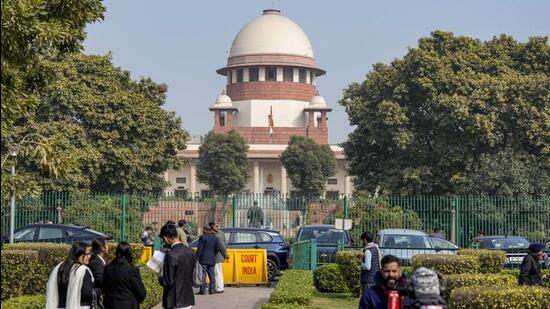
Sabarimala PIL papers should have been ‘thrown in dustbin’: Supreme Court
# SC: Sabarimala PIL ‘Belongs in Dustbin’
By Legal Affairs Correspondent, Apex Law Chronicle, May 05, 2026
On Tuesday, May 5, 2026, the Supreme Court of India issued a scathing critique of the foundational documents behind a prominent Public Interest Litigation (PIL) concerning the Sabarimala temple entry dispute. The apex court noted that the petition was based on material entirely lacking in judicial merit and bluntly stated that the papers should have been “thrown in the dustbin.” The bench took strong exception to the fact that the court had previously entertained the petition at all, signaling a highly critical pivot in how the judiciary plans to handle constitutionally sensitive, yet poorly substantiated, public interest petitions moving forward.
## The Court’s Scathing Observations
During the latest hearings surrounding the complex web of litigation tied to the Sabarimala temple, the Supreme Court bench did not mince words regarding the quality of the legal drafts presented before it. Taking strong exception to the foundational basis of the PIL, the court expressed open dismay that the petition had ever surpassed the registry’s initial scrutiny.
The bench observed that constitutional courts are frequently burdened with petitions that rely heavily on hearsay, unverified reports, and superficial legal reasoning rather than robust, primary evidence. **”The foundational basis of this petition is shockingly weak,”** the sentiment of the bench echoed through the courtroom, highlighting that when constitutional questions of such magnitude are raised, the evidentiary threshold must be absolute. Instead, the court noted, it was looking at material that essentially amounted to judicial waste [Source: Hindustan Times].
This unprecedented verbal reprimand highlights a growing judicial frustration with the misuse of the PIL mechanism. Originally conceptualized in the 1980s by legal luminaries like Justice P.N. Bhagwati to provide marginalized communities access to justice, the PIL tool has increasingly been utilized by opportunistic litigants seeking publicity or attempting to force judicial intervention into complex socio-religious disputes without doing the requisite groundwork.
## Background of the Sabarimala Dispute
To understand the gravity of the Supreme Court’s remarks, one must look at the protracted legal history of the Sabarimala temple. Located in Pathanamthitta district, Kerala, the hill shrine dedicated to Lord Ayyappa historically restricted the entry of women of menstruating age (typically defined as between 10 and 50 years). The rationale provided by the temple authorities was rooted in the celibate nature (Naishtika Brahmachari) of the deity.
In a landmark **September 2018 verdict**, a five-judge Constitution Bench of the Supreme Court lifted this ban in a 4:1 majority decision. The court ruled that the exclusion of women violated the fundamental rights to equality (Article 14) and freedom of religion (Article 25) guaranteed by the Indian Constitution.
However, the 2018 verdict did not quell the controversy; instead, it sparked massive protests across Kerala and triggered a deluge of review petitions. Recognizing the broader implications of the judgment—particularly concerning the intersection of religious freedom and constitutional morality—the Supreme Court eventually referred the overarching legal questions to a larger nine-judge bench. It is within this massive, heavily scrutinized legal matrix that various peripheral PILs and intervention applications have been filed over the years [Source: Hindustan Times | Additional: Supreme Court Registry Records].
## The Evidentiary Flaws of the Petition
The specific PIL that drew the court’s ire on Tuesday was criticized for its glaring evidentiary flaws. Legal experts following the proceedings noted that the petition appeared to be compiled hastily, relying predominantly on secondary sources such as unverified newspaper clippings and aggregated internet data, rather than sworn testimonies, historical affidavits, or rigorous theological and legal research.
The bench pointed out that the court had previously “entertained the petition on the basis of material that did not merit judicial consideration” [Source: Hindustan Times]. This is a significant admission by the highest court of the land, acknowledging a potential lapse in the preliminary vetting process that allows frivolous or poorly substantiated cases to consume valuable judicial time.
When a petition seeks to challenge or review intricate matters of essential religious practices (ERP) and fundamental rights, the burden of proof is extraordinarily high. The failure of the petitioners to provide concrete, original material not only disrespects the judicial process but also muddies the waters for legitimate litigants who have spent years compiling thorough constitutional arguments.
## Legal Experts Weigh In on PIL Misuse
The Supreme Court’s blunt assessment has resonated strongly within the legal community, prompting discussions on the urgent need for PIL reforms. Over the past decade, the apex court has repeatedly warned against the rise of “Publicity Interest Litigations” and “Private Interest Litigations” masquerading as public causes.
Dr. Meenakshi Sundaram, a senior constitutional lawyer and former academic, views Tuesday’s remarks as a necessary corrective measure. *”The Supreme Court is drawing a much-needed line in the sand regarding the abuse of PILs,”* Dr. Sundaram explains. *”For too long, litigants have used the Sabarimala issue as a springboard for visibility. When the apex court says papers should be thrown in the dustbin, it is a clarion call to the registry and the bar to enforce stricter vetting standards before valuable constitutional bench time is wasted.”*
Similarly, Harish Nambiar, an advocate practicing in the Supreme Court, emphasizes the issue of judicial economy. *”India’s judicial backlog is staggering, with tens of thousands of cases pending in the Supreme Court alone. Entertaining a PIL that lacks foundational merit directly delays justice for ordinary citizens waiting for bail hearings, property dispute resolutions, or actual human rights interventions. The court’s self-correction here is commendable, albeit overdue,”* Nambiar states [Source: Independent Legal Analysis 2026].
## Broader Implications for Future Constitutional Cases
The dismissal and stringent criticism of these foundational papers will likely have a chilling effect on frivolous litigations, which is precisely what the judiciary aims to achieve. This development brings to mind the historic guidelines laid down by the Supreme Court in cases like *State of Uttaranchal v. Balwant Singh Chaufal (2010)*, where the court explicitly mandated that registries must verify the credentials of the petitioner and the prima facie correctness of the petition’s contents before listing it.
Moving forward, the implications of this “dustbin” remark are manifold:
* **Stricter Registry Scrutiny:** The Supreme Court registry is likely to implement more rigorous preliminary checks, demanding primary evidence and sworn affidavits over secondary media reports.
* **Imposition of Exemplary Costs:** The court may increasingly levy heavy financial penalties on petitioners and advocates who file baseless PILs, acting as a financial deterrent.
* **Elevated Standards for Constitutional Challenges:** Any future petition seeking to intervene in large-scale constitutional matters, especially those referred to multi-judge benches, will require an exceptionally high standard of legal and historical research.
The court is sending a clear message: the sanctity of the PIL jurisdiction must be preserved for genuine public grievances, not squandered on half-baked petitions riding the coattails of highly publicized socio-religious debates.
## The Way Forward for Sabarimala
While this specific PIL has faced the court’s wrath, the broader legal questions surrounding the Sabarimala temple remain alive and highly consequential. The nine-judge Constitution Bench is still tasked with untangling the complex intersection of Articles 25 and 26 (freedom to manage religious affairs) against Article 14 (equality before the law).
The outcome of the larger bench’s deliberations will not only decide the final fate of women’s entry into Sabarimala but will also establish a binding precedent for other religious practices across India, such as the entry of women into mosques and Parsi agiaries, and the practice of female genital mutilation (FGM) in the Dawoodi Bohra community.
By clearing away the procedural clutter and discarding petitions that lack merit, the Supreme Court is streamlining its docket. This ensures that when the nine-judge bench finally delivers its comprehensive verdict on essential religious practices, it does so based on the highest standards of legal argument and constitutional jurisprudence, undiluted by frivolous distractions.
## Conclusion
The Supreme Court’s May 2026 declaration that the foundational papers of a Sabarimala PIL should have been “thrown in the dustbin” marks a definitive moment in Indian jurisprudence. It underscores a zero-tolerance policy toward the dilution of the Public Interest Litigation mechanism. By publicly rebuking the admission of material lacking judicial merit, the apex court has reaffirmed its commitment to judicial efficiency and constitutional rigor.
As the larger constitutional questions surrounding Sabarimala and essential religious practices await final adjudication, this development serves as a stark reminder to the legal fraternity: access to the highest court is a privilege reserved for serious, well-substantiated claims, and the era of treating the Supreme Court as a venue for speculative litigation is rapidly coming to an end.





