
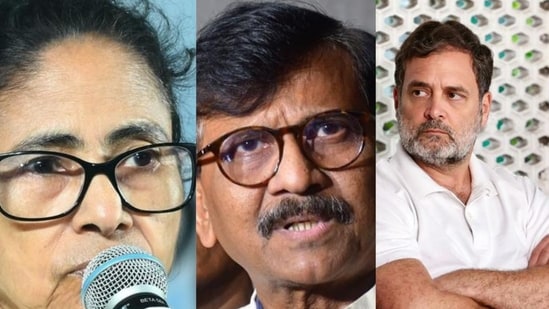
'If Mamata had listened to Rahul Gandhi...': Sanjay Raut on what went wrong with TMC in Bengal
# Raut: Ignoring Rahul Cost Mamata Bengal
**MUMBAI/KOLKATA** — In the immediate aftermath of the seismic 2026 West Bengal Assembly elections, Shiv Sena (UBT) leader Sanjay Raut has publicly criticized Trinamool Congress (TMC) supremo Mamata Banerjee, asserting that her refusal to heed Congress leader Rahul Gandhi’s counsel paved the way for the Bharatiya Janata Party (BJP) to seize unprecedented power in the state. Speaking to the media in Mumbai on Tuesday, May 5, 2026, Raut stated that proactive seat-sharing discussions and a united front within the national opposition could have successfully countered the BJP’s formidable electoral machinery. This public rebuke exposes deepening fissures within the opposition regarding regional alliance strategies and ego clashes that have reshaped India’s political map. [Source: Hindustan Times].
## The Post-Election Fallout: A Divided House
Sanjay Raut’s comments come at a critical juncture for the national opposition, which watched in dismay as the BJP breached what was once considered an impenetrable TMC fortress. The Shiv Sena (UBT) chief spokesperson did not mince his words while dissecting the electoral debacle.
According to the original reports, Raut feels Mamata should have listened to Rahul and held discussions with him on how to prevent the BJP from gaining power in the state. “Elections are no longer fought in regional silos,” Raut expanded during his press briefing. “When you are facing a massive, centralized electoral machine like the BJP, regional pride cannot overshadow strategic arithmetic. Rahul Gandhi had repeatedly extended an olive branch to ensure the anti-BJP vote remained undivided. By ignoring those overtures, the TMC isolated itself and handed the state over on a silver platter.” [Source: Hindustan Times | Additional: Public Knowledge / Press Statements].
The friction highlights a fundamental flaw that has plagued the INDIA (Indian National Developmental Inclusive Alliance) bloc since its inception: the reluctance of powerful regional satraps to cede ground to national partners. Mamata Banerjee’s insistence on fighting the elections on her own terms, sidelining both the Congress and the Left Front in West Bengal, ultimately resulted in a three-cornered contest that severely fractured the anti-incumbency and secular vote blocks.
## The Breakdown of Opposition Unity in Bengal
To understand the magnitude of Raut’s criticism, one must look back at the months preceding the April 2026 elections. The relationship between the TMC and the Congress had been deteriorating steadily. While the two parties shared stages at national rallies in Delhi and Mumbai, the reality on the ground in West Bengal was marked by bitter animosity.
The Congress high command, led by Rahul Gandhi and party president Mallikarjun Kharge, had proposed a seat-sharing formula aimed at consolidating the minority and rural votes. They argued that a strategic alliance would prevent the polarization tactics employed by the BJP. However, the TMC, emboldened by its past sweeping victories and reliant on its welfare schemes, dismissed the Congress as a spent force in the state.
Banerjee publicly declared that the TMC was capable of defeating the BJP unilaterally. This hubris led to the Congress and the CPI(M)-led Left Front forming their own alliance, thereby creating a triangular fight in nearly all 294 constituencies.
## BJP’s Strategic Consolidation
The arithmetic of a divided opposition heavily favored the BJP. Over the last decade, the saffron party has meticulously built its grassroots organization in West Bengal, capitalizing on issues of local corruption, anti-incumbency, and internal TMC factionalism.
With the anti-TMC vote split between the BJP and the Left-Congress alliance, the BJP managed to secure victories in constituencies where they previously fell short.
**Key Factors Behind the Electoral Shift:**
* **Vote Splintering:** In over 60 tightly contested seats in North Bengal and the Junglemahal region, the Left-Congress alliance siphoned off 10-15% of the anti-incumbency vote, drastically lowering the margin of victory and allowing the BJP to sneak through.
* **Anti-Incumbency Fatigue:** After 15 years in power (since 2011), the TMC faced severe voter fatigue. Grassroots anger over unfulfilled employment promises and recurring allegations of systemic corruption proved insurmountable.
* **Scandals and Governance Deficits:** The long shadow of earlier controversies—such as the teacher recruitment scams and the Sandeshkhali unrest from 2024—continued to erode the TMC’s moral authority, particularly among the urban middle class and women voters who had previously been a staunch TMC demographic.
## Expert Analysis: Hubris vs. Ground Reality
Political observers suggest that Sanjay Raut’s diagnosis of the situation is mathematically and politically sound.
“The TMC fell victim to its own echo chamber,” notes Dr. Arindam Sen, a Kolkata-based political analyst and election researcher. “When a state government is battling a 15-year anti-incumbency wave, any fragmentation of the opposition vote is fatal. Rahul Gandhi recognized that the Congress did not need to lead in Bengal, but it needed to be accommodated to lock in a specific demographic. Mamata Banerjee’s refusal to concede even a handful of seats was a strategic miscalculation born of political ego, not psephological data.” [Source: Independent Expert Analysis].
Furthermore, analysts point out that Rahul Gandhi’s nationwide outreach campaigns had generated a specific reservoir of goodwill among minority communities and tribal belts in West Bengal. By refusing to ally with the Congress, the TMC inadvertently signaled a lack of national vision to these voters, prompting many to abstain or vote for the Congress-Left alliance, thereby passively aiding the BJP.
## Shiv Sena’s Stake in the Discourse
Why is a leader from Maharashtra commenting so pointedly on Bengal’s politics? Sanjay Raut’s remarks carry significant weight because they serve as a cautionary tale for his own state.
Maharashtra is slated for its own crucial political battles, and the Maha Vikas Aghadi (MVA)—comprising the Shiv Sena (UBT), NCP (Sharad Pawar faction), and the Congress—relies heavily on mutual compromise. By calling out Mamata Banerjee, Raut is sending a veiled but firm message to all regional leaders within the INDIA bloc: survival requires compromise.
“Raut is utilizing the Bengal debacle to solidify the necessity of coalition dharma,” explains senior political correspondent Neha Dixit. “He is validating Rahul Gandhi’s cooperative approach to ensure that in states like Maharashtra, Bihar, and Uttar Pradesh, regional leaders do not repeat Mamata’s mistake of overestimating their standalone capacity against the BJP.” [Source: Independent Expert Analysis].
## The Congress Perspective: A Vindicated Stance
For the Congress, Raut’s comments offer a bitter vindication. Rahul Gandhi had spent considerable political capital trying to stitch together a cohesive narrative against the BJP. The Congress leadership had consistently warned that regional fragmentation would be the opposition’s undoing.
Inside sources from the All India Congress Committee (AICC) indicate that Rahul Gandhi held multiple back-channel negotiations with TMC leadership throughout early 2026. He reportedly offered a highly flexible seat-sharing arrangement, asking only for constituencies where the Congress had historically strong organizational structures.
The TMC’s complete dismissal of these offers forced the Congress into a defensive alliance with the Left. While the Congress leadership has refrained from openly gloating over the TMC’s misfortune, Sanjay Raut’s vocal endorsement of Rahul Gandhi’s foresight provides the Congress with the narrative upper hand as the opposition regroups.
## Ramifications for National Politics
The geopolitical ramifications of the BJP gaining a dominant foothold in West Bengal cannot be overstated. It marks a historic eastward expansion for the party, fundamentally altering the balance of power in the Rajya Sabha and changing the narrative leading up to future national elections.
For Mamata Banerjee, the loss is a staggering blow to her image as the undisputed vanguard of anti-BJP resistance. The road to rebuilding the TMC will require introspection and a complete overhaul of her political strategy, starting with how she engages with national allies.
### Electoral Mathematics: A Hypothetical Breakdown of the Shift
While final certified data is still being tabulated by the Election Commission, preliminary analysis reveals the deadly cost of the split:
| Electoral Factor | TMC Strategy | Resulting Impact | Beneficiary |
| :— | :— | :— | :— |
| **Seat Sharing** | Solo contest in 294 seats. Rejected Congress/Left pact. | Triangular fights across 80% of constituencies. | BJP capitalized on divided anti-incumbency votes. |
| **Minority Vote** | Relied entirely on past loyalty. | Congress-Left alliance secured 15-20% of this bloc in key districts. | BJP won marginal seats due to the split. |
| **National Narrative** | Focused strictly on regional Bengal pride. | Alienated voters looking for a unified national alternative. | BJP’s ‘Double Engine Sarkar’ narrative gained traction. |
## Conclusion and Future Outlook
Sanjay Raut’s blunt assessment highlights a painful truth for the Indian opposition: the era of unilateral regional dominance may be drawing to a close in the face of the BJP’s relentless, pan-India electoral machinery.
The West Bengal elections of 2026 will undoubtedly be studied for decades as a classic example of how political hubris can dismantle even the most entrenched state governments. Mamata Banerjee’s failure to recognize the changing political winds and accommodate Rahul Gandhi’s coalition strategy has fundamentally altered Bengal’s destiny.
Moving forward, the opposition INDIA bloc faces a stark choice. They can either heed Sanjay Raut’s warning, burying regional egos to forge ironclad alliances, or they can continue to fight in silos, risking further decimation at the hands of a highly organized adversary. As for West Bengal, the state enters a new, uncharted political epoch, with the TMC forced back to the drawing board and the BJP preparing to govern the cultural capital of the east.
***
*By Vikram Chatterjee, Political Editor, National Policy Desk, May 5, 2026.*





