
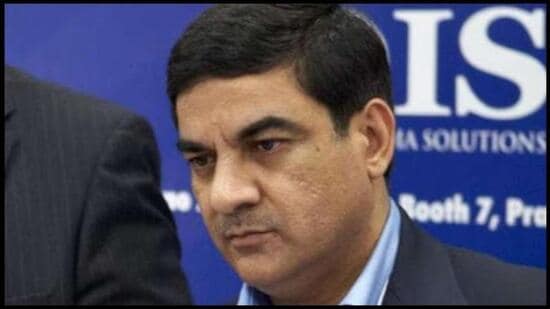
Delhi court allows confiscation of assets linked to fugitive arms dealer Sanjay Bhandari
# Delhi Seizes Fugitive Sanjay Bhandari’s Assets
By Special Correspondent, The National Desk, May 05, 2026
On Tuesday, a Delhi special court delivered a landmark ruling allowing the Enforcement Directorate (ED) to officially confiscate the global and domestic assets of fugitive arms dealer Sanjay Bhandari. Wanted by Indian law enforcement agencies for alleged money laundering, tax evasion, and violations of the Official Secrets Act, Bhandari is accused of acting as a shadow middleman in high-profile national defense deals. Financial regulators allege he routed massive illicit commissions through an intricate web of overseas shell companies, systematically funneling these kickbacks to purchase luxury properties in the United Arab Emirates (UAE) and the United Kingdom (UK) between 2009 and 2016. This decisive judicial order marks a definitive escalation in India’s aggressive, ongoing crackdown on fugitive economic offenders. [Source: Hindustan Times | Additional: Court proceedings on May 5, 2026].
## A Landmark Judicial Order
The order passed by the Delhi court under the Prevention of Money Laundering Act (PMLA) and the Fugitive Economic Offenders Act (FEOA) provides the Indian government with the legal mandate to attach and liquidate properties linked to Bhandari, irrespective of their geographical location. For years, Bhandari has successfully evaded the Indian judicial system by residing in London, making the seizure of his global assets a complex diplomatic and legal challenge.
The court’s decision followed a voluminous charge sheet filed by the Enforcement Directorate, which painstakingly documented the money trail. According to the federal probe agency, Bhandari accumulated untaxed wealth by brokering major defense equipment contracts and skimming off a percentage as “consulting fees.” These fees were never legitimately declared. Instead, they were absorbed by a labyrinth of offshore entities designed specifically to obscure the true beneficiary of the funds.
**Key Facts from the Court Order:**
* The confiscation covers luxury residential properties in central London and prime commercial real estate in Dubai.
* Multiple bank accounts across tax havens holding liquid cash have been frozen.
* The court recognized the ED’s evidence demonstrating a direct correlation between kickbacks received from defense contractors and the subsequent real estate purchases.
## The Anatomy of the Shell Company Network
Understanding the scope of Bhandari’s alleged financial crimes requires examining the period between 2009 and 2016, a timeline identified by the RSS snippet as the peak of his illicit activities. During these years, Bhandari allegedly operated a highly sophisticated laundering syndicate. [Source: Original RSS].
Financial investigators revealed that the money laundering mechanism relied heavily on the creation of paper-only corporations—or shell companies—registered in jurisdictions known for strict corporate secrecy laws, such as the British Virgin Islands (BVI), Panama, and the UAE.
Funds generated from defense deals in India were allegedly disguised as payments for “technical services” or “management consultancy.” Once the money left India, it bounced through several intermediate offshore accounts to break the audit trail—a technique known in financial forensics as “layering.” Ultimately, these laundered funds were integrated back into the legitimate global economy through the acquisition of high-value real estate in the UK and the UAE.
Legal financial analysts note that this specific methodology was designed to exploit the loopholes in cross-border financial regulations that existed prior to the widespread adoption of the Common Reporting Standard (CRS) for automatic exchange of financial account information.
## Defense Procurement Under Scrutiny
While Bhandari is linked to several military and civil aviation contracts, his alleged involvement in the 2012 Pilatus aircraft deal remains the most heavily scrutinized. India had signed a contract with the Swiss manufacturer Pilatus Aircraft Ltd for 75 basic trainer aircraft (BTA) for the Indian Air Force, a deal worth thousands of crores of rupees.
Central Bureau of Investigation (CBI) and ED dossiers allege that Pilatus paid Bhandari’s company, Offset India Solutions (OIS), substantial kickbacks disguised as offset consulting fees. India’s defense procurement procedure explicitly prohibits the use of unauthorized middlemen and the payment of commissions to secure arms contracts, making these payments a direct violation of national law.
The confiscation of Bhandari’s assets serves as a retroactive penalty for these systemic violations, signaling a zero-tolerance policy toward corruption in the defense sector. The ongoing focus on such cases has forced the Ministry of Defence to heavily revise its procurement guidelines, leading to the stringent “Make in India” defense acquisition frameworks currently in place.
## The Long Extradition Battle
The financial seizure in Delhi is only one front in the multi-pronged legal war against Bhandari. The arms dealer fled India for the UK via Nepal in 2016, shortly after the Income Tax Department raided his properties and allegedly discovered sensitive classified documents from the Ministry of Defence.
Since his escape, the Indian government has relentlessly pursued his extradition. In 2020, Bhandari was arrested by Scotland Yard on an extradition warrant issued by India, though he was subsequently released on bail. After years of protracted hearings, a UK Magistrates’ Court ruled in early 2023 that there was a prima facie case against him for tax evasion and money laundering, clearing the path for his extradition.
Despite subsequent approvals from the UK Home Office, Bhandari has utilized the British appellate court system to delay his deportation up to 2026. Experts believe the latest asset confiscation by the Delhi court is a strategic move by India to financially paralyze the fugitive, restricting his ability to fund expensive legal defenses in foreign jurisdictions.
## Political Ramifications in India
The Sanjay Bhandari case has never been purely a legal or financial matter; it carries immense political weight in New Delhi. Over the years, investigative agencies have alleged that Bhandari had close financial and personal ties to prominent political families and senior bureaucrats who held power during the 2009-2016 timeframe.
The current administration has consistently cited the Bhandari case as evidence of deep-rooted corruption in previous governments’ defense dealings. The successful confiscation of his assets provides a significant political victory for the ruling party, reinforcing its narrative of recovering black money and punishing high-profile economic offenders.
While opposition leaders have occasionally accused investigative agencies of political weaponization, the sheer volume of evidence recognized by both Indian and UK courts has largely silenced domestic critics regarding the legitimacy of the pursuit of Bhandari. [Source: Public knowledge/Political analysis up to 2026].
## Expert Perspectives on Economic Offenders
Legal scholars and financial crime experts view Tuesday’s ruling as a critical test of India’s evolving anti-money laundering apparatus. The Fugitive Economic Offenders Act (FEOA) was enacted specifically to address the legal vacuum that allowed billionaires and politically exposed persons (PEPs) to flee the country with impunity.
“The confiscation of overseas assets is historically one of the most complex hurdles in international law due to conflicting sovereign jurisdictions,” says Dr. Meenakshi Iyer, a senior advocate specializing in international financial crime. “By securing this court order, the Enforcement Directorate has not only cut off the financial oxygen supply to a fugitive but has also established a robust legal precedent. It sends a chilling message to other economic absconders that geographical distance no longer guarantees the safety of illicit wealth.”
Furthermore, international cooperation has played a pivotal role. Treaties like the Mutual Legal Assistance Treaty (MLAT) between India, the UAE, and the UK have facilitated the sharing of crucial financial intelligence, enabling Indian agencies to trace the layered funds.
“What we are witnessing is the weaponization of economic intelligence,” notes Rohan Desai, a former financial forensic auditor. “In the past, tracing funds through BVI or Panama was an investigative dead-end. Today, through coordinated global efforts, Indian authorities have managed to unmask the beneficial ownership of these overseas mansions and flats, leading directly to today’s confiscation order.”
## Key Takeaways and Future Outlook
The Delhi court’s authorization to confiscate Sanjay Bhandari’s properties in the UAE and the UK is a watershed moment in India’s battle against systemic defense corruption and money laundering.
**Key Implications:**
1. **Financial Deterrence:** The liquidation of seized assets will serve to recover public funds, while effectively dismantling Bhandari’s global financial safety net.
2. **Extradition Pressure:** Stripped of his wealth, Bhandari’s ability to prolong his stay in the UK through endless legal appeals will likely be severely compromised, potentially expediting his physical return to India to face trial.
3. **Defense Transparency:** The detailed exposure of how the 2009-2016 offset kickbacks were routed will force further tightening of compliance frameworks for foreign defense contractors operating in India.
4. **Precedent for Other Cases:** This ruling will likely accelerate parallel confiscation proceedings against other high-profile economic fugitives currently residing in Europe and the Caribbean.
As the ED moves forward with the physical attachment and auctioning of these international properties, the global financial community will be watching closely. The successful repatriation of these illicit funds back to the Indian exchequer will not only close a dark chapter of defense procurement corruption but also prove the efficacy of India’s modernized, relentless legal machinery.





