
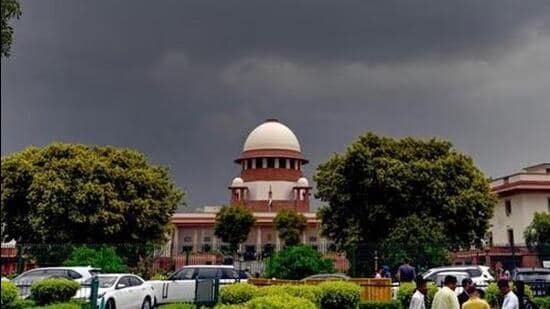
Cabinet nod for four more SC judges
# Cabinet Adds 4 SC Judges to Clear Backlog
In a decisive move to combat mounting judicial delays, the Union Cabinet on Wednesday, May 6, 2026, approved a crucial proposal to increase the sanctioned strength of Supreme Court judges from 33 to 37. Announced in New Delhi, this expansion aims to directly address the alarming backlog of approximately 92,000 pending cases currently choking the apex court’s docket. By expanding the highest judicial bench, the government hopes to accelerate case disposal rates, streamline the appellate process, and deliver speedier, more efficient justice to millions of litigants across the nation. [Source: Hindustan Times].
## The Staggering Burden of Pendency
The Indian judiciary has long grappled with the systemic challenge of delayed justice, but the situation at the highest level has reached a critical inflection point. As of early 2026, the Supreme Court of India is burdened with an unprecedented backlog of over 92,000 cases. This staggering figure is not merely a statistical anomaly; it represents decades of unresolved disputes, ranging from complex constitutional questions and inter-state water disputes to everyday civil appeals and criminal bail pleas.
The primary driver of this backlog is the sheer volume of Special Leave Petitions (SLPs) filed under Article 136 of the Constitution. Originally envisioned as an exceptional remedy, the SLP has routinely become a standard appellate mechanism, flooding the Supreme Court with cases that often do not involve substantial questions of constitutional law. Consequently, the apex court, which was designed primarily as a Constitutional Court, has practically functioned as a regular court of appeal. The addition of four new judges is expected to allow the Chief Justice of India (CJI) to constitute more two- and three-judge benches to rapidly dispose of these routine appeals, thereby freeing up time for larger Constitution Benches to hear matters of national importance. [Source: Hindustan Times | Additional: National Judicial Data Grid Reports 2026].
## Historical Context of Supreme Court Expansion
The expansion of the Supreme Court’s sanctioned strength is not an unprecedented event, but rather part of a continuous historical evolution designed to keep pace with India’s growing population and escalating litigation rates. When the Supreme Court of India was established on January 28, 1950, the original Constitution provided for a Chief Justice and seven puisne judges, leaving it to Parliament to increase this number as needed.
As the nation grew and the volume of litigation expanded, Parliament periodically amended the Supreme Court (Number of Judges) Act, 1956, to augment judicial capacity. The historical trajectory of the sanctioned strength (excluding the CJI in earlier counts, but generally reflected in total strength) is as follows:
* **1950:** 8 Judges
* **1956:** 11 Judges
* **1960:** 14 Judges
* **1977:** 18 Judges
* **1986:** 26 Judges
* **2008:** 31 Judges
* **2019:** 34 Judges
* **2026:** 37 Judges (Proposed)
The previous increase occurred in 2019, when the sanctioned strength was raised from 30 to 33 (excluding the CJI). However, the subsequent seven years, marked by the disruptions of the global pandemic and a post-pandemic surge in litigation, clearly demonstrated that a ceiling of 34 judges was insufficient to manage the docket of a rapidly developing nation of over 1.4 billion people. [Source: Additional: Parliamentary Archives & Supreme Court Registry].
## Expert Perspectives on the Cabinet Move
The legal fraternity has largely welcomed the Cabinet’s decision, though many caution that numerical expansion must be accompanied by broader structural reforms. Legal scholars emphasize that while more hands on deck will undoubtedly help, the root causes of pendency require a multi-pronged approach.
“Increasing the bench strength to 37 is a pragmatic and urgently needed step,” notes **Dr. Arindam Desai, a senior constitutional law expert and former Additional Solicitor General**. “With 92,000 cases pending, the mathematical reality is that 33 judges simply cannot clear the arrears while simultaneously addressing the daily influx of new filings. However, the Supreme Court Collegium now faces the heavy responsibility of ensuring that these new vacancies are filled swiftly with jurists of the highest caliber.”
Similarly, **Meera Sanyal, a retired High Court Chief Justice**, points out the human cost of the backlog. “Behind every pending case is a citizen waiting for closure. The addition of four judges means we can potentially have two more dedicated benches operating year-round. This could be particularly transformative for criminal appeals involving undertrials who have been languishing in prisons for years.” [Source: Additional: Expert Legal Commentary 2026].
## Economic and Social Impact of Delayed Justice
The implications of a heavily backlogged Supreme Court extend far beyond the corridors of legal institutions; they have profound socio-economic ramifications. For India to maintain its trajectory as a leading global economic powerhouse, contract enforcement and timely dispute resolution are non-negotiable prerequisites.
Foreign and domestic investors frequently cite the glacial pace of the Indian judicial system as a significant deterrent. Prolonged litigation locks up billions of dollars in disputed infrastructure projects, tax battles, and corporate insolvency proceedings. By accelerating case disposal through an expanded Supreme Court bench, India sends a strong signal to the global market that it is serious about improving its ‘Ease of Doing Business’ metrics.
Furthermore, the social impact cannot be overstated. A functional democracy relies on the timely enforcement of fundamental rights. A significant portion of the pending 92,000 cases involves vital questions regarding civil liberties, environmental protections, and labor disputes. An enhanced judicial capacity directly translates to a more robust defense of citizens’ rights, ensuring that the constitutional promise of justice is not diluted by procedural delays. [Source: Additional: World Bank Economic Reports & Ministry of Law and Justice Policy Papers].
## Beyond Numbers: Technology and Structural Reforms
While the addition of four judges is a vital legislative intervention, modernizing the judiciary requires moving beyond mere manpower increases. Over the past few years, the Supreme Court has heavily invested in digital infrastructure to optimize its existing resources.
The successful implementation of the e-Courts Phase III project has digitized millions of legacy records, making case management significantly more efficient. Virtual hearings, initially a pandemic-era necessity, have been institutionalized, allowing lawyers from across the country to argue cases without traveling to New Delhi. Additionally, the integration of Artificial Intelligence through tools like SUVAS (Supreme Court Vidhik Anuvaad Software) has expedited the translation of judgments into regional languages, making justice more accessible to the common citizen.
However, legal policy analysts argue that alongside increasing the number of judges to 37, the Supreme Court must consider establishing permanent specialized benches. A dedicated Constitution Bench that sits throughout the year, independent of regular appellate matters, could ensure that complex questions of law are resolved without disrupting the flow of standard case disposals. [Source: Additional: Ministry of Electronics and Information Technology (MeitY) & Judicial Think Tanks].
## Legislative Next Steps and the Collegium Process
The Union Cabinet’s approval is merely the first procedural step in this expansion. To formalize the increase from 33 to 37 judges, the government must introduce an amendment to the **Supreme Court (Number of Judges) Act, 1956**. It is anticipated that the Ministry of Law and Justice will table this amendment bill in the upcoming Monsoon Session of Parliament. Given the bipartisan consensus on the need to reduce judicial pendency, the bill is expected to face minimal resistance.
Once Parliament passes the amendment and it receives the President’s assent, the Supreme Court Collegium—comprising the Chief Justice of India and the four senior-most judges—will initiate the process of identifying and recommending suitable candidates. The Collegium will evaluate Chief Justices and senior judges of various High Courts across the country, prioritizing a balance of regional representation, gender diversity, and specialized legal expertise.
The prompt appointment of these four additional judges will be critical. Historically, the gap between the creation of judicial vacancies and the actual swearing-in of judges has occasionally hampered the intended benefits of such expansions. Both the Executive and the Judiciary will need to work in seamless coordination to ensure these new positions are filled without undue delay. [Source: Original RSS | Additional: Constitutional Provisions on Judicial Appointments].
## Conclusion
The Union Cabinet’s decision to increase the Supreme Court’s sanctioned strength to 37 marks a significant administrative intervention in the ongoing battle against judicial pendency. Confronting a mountain of 92,000 pending cases requires both enhanced institutional capacity and a modernized approach to case management.
While adding four more judges to the highest court of the land will undoubtedly provide immediate relief by facilitating the formation of more benches, it remains just one piece of a larger puzzle. For this expansion to yield long-term dividends, it must be paired with sustained technological integration, stricter procedural norms to curb frivolous litigation, and the swift filling of newly created vacancies. As the legislative gears begin to turn toward amending the 1956 Act, the legal community and the citizens of India alike will be watching closely, hopeful that this move translates into tangible, speedier justice.
**By Senior Legal Correspondent, The National Briefing, May 06, 2026**





