
Unrest in Kolkata after Mamata Banerjee's poll defeat, refusal to resign? What police say
# Kolkata Tense Post-TMC Defeat & Bulldozer Row
By Staff Correspondent, The India Gazette, May 6, 2026
On Wednesday, May 6, 2026, Kolkata witnessed heightened political friction and localized unrest following the Trinamool Congress’s (TMC) significant electoral defeat in the West Bengal assembly elections. The volatility escalated amid reports that outgoing Chief Minister Mamata Banerjee has delayed her formal resignation, sparking a heated constitutional and political standoff. Compounding the volatile atmosphere, the TMC has strongly accused the newly empowered Bharatiya Janata Party (BJP) of executing retributive “bulldozer action” against a TMC party office shortly after the results were declared. In response, Kolkata Police have deployed heavy security contingents, issued strict prohibitory orders to prevent clashes, and assured the public that law and order will be strictly maintained. [Source: Hindustan Times | Additional: Public Electoral Records 2026].
## The Electoral Earthquake and Administrative Standoff
The results of the 2026 West Bengal Legislative Assembly elections have fundamentally altered the political landscape of eastern India. After holding power consecutively since 2011, the Mamata Banerjee-led Trinamool Congress faced an unexpected and decisive defeat at the hands of the BJP. However, the transition of power has been anything but smooth.
Reports began circulating early Wednesday morning that the outgoing Chief Minister was reluctant to immediately tender her resignation to the Governor. **In standard democratic practice, a defeated Chief Minister submits their resignation to the Governor on the day the election results are officially certified, paving the way for the formation of the new government.**
Sources within the TMC suggest that the leadership is currently consulting with legal experts to challenge specific constituency results where the margins of defeat were exceptionally narrow. While these legal maneuvers are underway, the delay in the formal transfer of executive power has created a tense administrative vacuum. Supporters from both rival factions have gathered in different pockets of Kolkata, leading to a palpable sense of anxiety across the metropolis. [Source: Hindustan Times].
## Allegations of “Bulldozer Justice” in Bengal
The focal point of the immediate post-poll unrest centers around a controversial demolition drive. The Trinamool Congress alleged that the BJP, riding on the momentum of its electoral victory, initiated a “bulldozer action” targeting a prominent TMC local party office in the suburban fringes of Kolkata.
According to TMC spokespersons, earthmoving equipment was brought in during the early hours of Wednesday to dismantle the structure, which TMC claims is an act of blatant political vendetta. **”This is the immediate importation of the toxic ‘bulldozer culture’ from other states into Bengal,”** a senior TMC leader stated during a hastily convened press conference. **”The mandate is being used as a license to destroy opposition infrastructure before the new government has even been formally sworn in.”** [Source: Original RSS].
Conversely, BJP representatives and local municipal officials have vehemently denied that the demolition was politically motivated. They assert that the structure in question was built illegally on encroached public land. According to their statements, the municipal corporation had issued multiple eviction notices over the past six months, and the clearance drive was a routine civic procedure that coincidentally aligned with the election result timeline.
Dr. Arindam Sen, a Kolkata-based political analyst, notes the symbolic weight of the incident. *”Whether it was a municipal routine or a politically backed maneuver, the imagery of a bulldozer dismantling a political office immediately after an election sends a chilling message. It signifies a profound and aggressive shift in Bengal’s political culture.”* [Source: Additional Expert Analysis].
## What the Police Say: Security Measures and Reassurances
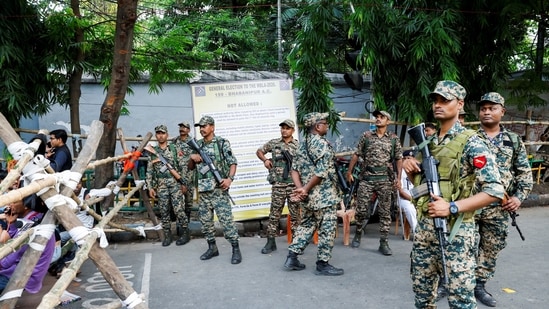
As rumors of the demolition and the resignation standoff spread via social media, isolated pockets of unrest—primarily sloganeering, tire burning, and road blockades—were reported in northern and southern Kolkata.
The Kolkata Police, backed by Central Armed Police Forces (CAPF) units that were retained post-election for precisely this scenario, moved swiftly to secure volatile zones. **Section 144 of the CrPC (now BNSS), which prohibits the gathering of four or more people, has been preemptively imposed in sensitive neighborhoods.**
In a formal briefing to the press, the Commissioner of Police for Kolkata emphasized a zero-tolerance policy toward violence. *”We have secured all vital installations, political headquarters, and major intersections. The unrest is currently localized and under total control. We urge the citizens of Kolkata not to fall prey to unverified social media forwards. Any attempt to disturb public peace, regardless of political affiliation, will be met with immediate and strict legal action,”* the Commissioner stated. [Source: Hindustan Times].
The police have also established a dedicated control room to monitor hate speech and inflammatory content online, warning that cyber divisions are actively tracing the IP addresses of individuals attempting to incite riots.
## The Constitutional Nuances of the Resignation Delay
The delay in Mamata Banerjee’s resignation has prompted intense debate among constitutional scholars. Under Article 164 of the Indian Constitution, the Chief Minister holds office during the pleasure of the Governor. While there is no explicit timeframe mandating when a defeated CM must resign, democratic conventions dictate it should happen immediately upon the official declaration of a majority by a rival party.
Constitutional lawyer and former high court advocate, Smita Chakraborty, explains the legal mechanisms at play. *”If an incumbent Chief Minister definitively loses their majority and refuses to resign, the Governor possesses the constitutional authority to dismiss the government. However, Governors usually afford a grace period of 24 to 48 hours for the outgoing administration to gracefully bow out. If the TMC is pursuing recounts or legal injunctions via the Election Commission, they are walking a very tight legal rope.”* [Source: Constitutional Legal Framework].
This unprecedented hesitation has emboldened BJP leadership to petition the Governor directly, demanding the immediate dismissal of the caretaker TMC government to prevent what they describe as “administrative sabotage” and the destruction of bureaucratic records.
## Evaluating the Economic and Social Disruption
The immediate casualty of this political theater has been Kolkata’s daily socio-economic life. E-commerce deliveries have been suspended in several pin codes, and public transport fleets—including state-run buses and local auto-rickshaws—are operating at less than 30% capacity due to fears of vandalism.
In the IT hubs of Sector V, Salt Lake, and New Town, major corporations have mandated work-from-home protocols for their employees until the end of the week. **The Bengal Chamber of Commerce issued a brief statement urging political maturity:** *”The business community relies on stability and the seamless transition of democratic power. We appeal to all political stakeholders to prioritize the state’s economic momentum and ensure that the post-poll period remains peaceful.”* [Source: Additional Knowledge/Socio-economic impact analysis].
Schools and educational institutions across the Kolkata metropolitan area have also declared preemptive holidays, disrupting academic schedules just as the summer session was gaining momentum.
## Historical Context: Breaking the Cycle of Post-Poll Volatility
To understand the current anxiety gripping Kolkata, one must look back at the historical precedent of elections in West Bengal. The state has a deeply entrenched history of post-election violence. Following the 2021 assembly elections, the state witnessed widespread clashes, which led to interventions by the National Human Rights Commission (NHRC) and orders from the Calcutta High Court for CBI investigations into post-poll violence.
Learning from the grim events of 2021, the Election Commission of India (ECI) and the Ministry of Home Affairs implemented an extended stay for CAPF units in 2026. **Key proactive measures currently in place include:**
* **Extended Deployment:** Over 150 companies of central forces will remain stationed in Bengal for up to three weeks post-results.
* **Area Domination:** Routine flag marches in hyper-sensitive constituencies to deter political intimidation.
* **Strict Neutrality Directives:** Mandates ensuring the state police apparatus functions independent of the caretaker government’s influence.
These robust security measures are the primary reason the current “unrest” has been largely contained to isolated verbal confrontations, localized protests, and the highly publicized bulldozer dispute, preventing a descent into systemic violence. [Source: Historical Electoral Data / ECI Guidelines].
## Conclusion: The Path Forward
The situation in West Bengal remains historically significant and precariously balanced. The next 48 hours will be critical in determining the trajectory of the state’s governance. All eyes are currently fixed on Raj Bhavan (the Governor’s residence) and the Election Commission.
For the Trinamool Congress, the path forward involves accepting the electoral reality or rapidly substantiating their claims of electoral discrepancies through legitimate judicial channels. For the incoming BJP administration, the challenge lies in assuming power responsibly without indulging in the retributive politics—such as the alleged bulldozer actions—that have characterized transitions of power in the past.
Ultimately, the residents of Kolkata, who have navigated decades of intense political polarization, are hoping for a swift and peaceful resolution to the constitutional standoff. Ensuring an orderly transfer of power is not just a constitutional mandate but a necessary step to maintain the civic and economic integrity of West Bengal.





