
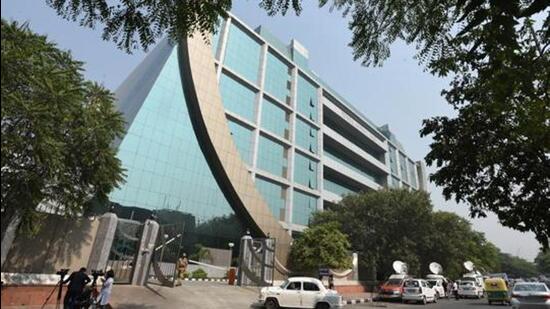
High-level meet on May 12 to pick next CBI chief; Praveen Sood’s extension in play
# Next CBI Chief: May 12 Meet to Decide
**By Senior Political Correspondent, The National Desk**
**May 06, 2026**
**New Delhi** — A high-powered selection committee comprising the Prime Minister, the Chief Justice of India, and the Leader of the Opposition is scheduled to convene on May 12 to decide the appointment of the next Director of the Central Bureau of Investigation (CBI). The critical summit will determine whether incumbent CBI Director Praveen Sood will receive another extension to his tenure or if a new chief will take the helm of India’s premier investigative agency. Over the past three years, the agency has undergone a significant operational overhaul, sharpening its focus on core functions, prioritizing high-stakes corruption cases, and structurally reforming its internal processes to ensure that major investigations are completed within a strict one-year timeframe. [Source: Hindustan Times]
## The High-Level Selection Committee
The appointment of the CBI Director is governed by a stringent statutory process designed to insulate the agency from unilateral executive influence. The Delhi Special Police Establishment (DSPE) Act mandates that the Director be chosen by a three-member collegium. As the May 12 meeting approaches, all eyes are on the deliberations between the Prime Minister, the Chief Justice of India (or a designated Supreme Court judge), and the Leader of the single largest opposition party in the Lok Sabha.
Historically, these meetings involve rigorous scrutiny of a shortlist prepared by the Ministry of Home Affairs (MHA) and the Department of Personnel and Training (DoPT). The shortlist comprises senior Indian Police Service (IPS) officers, typically from the four oldest serving batches, evaluated on their experience in anti-corruption investigations, impeccable integrity records, and overall administrative acumen. The upcoming meeting is particularly consequential, as it balances the prospect of leadership continuity against the introduction of fresh administrative vision. [Source: Public Records / DSPE Act Framework]
## Praveen Sood’s Extension in Play
A central agenda item for the May 12 meeting is the potential extension of the current CBI Director, Praveen Sood. Appointed to the top post in May 2023, the 1986-batch Karnataka cadre IPS officer has overseen a transformative period for the agency. While the standard tenure for a CBI Director is two years, legislative amendments passed in late 2021 allow the central government to extend the tenures of the CBI and Enforcement Directorate (ED) chiefs by one year at a time, up to a maximum of five years.
If the collegium reaches a consensus, Sood could be granted a further extension, allowing him to consolidate the institutional reforms initiated under his watch. Proponents of his extension argue that continuity at the highest echelon is vital for seeing complex, multi-jurisdictional investigations to their logical conclusion.
“When an agency is undergoing a fundamental shift in its operational methodology—particularly involving international financial crimes and digitized corruption tracking—leadership continuity is not just a preference; it is a strategic necessity,” notes Dr. Rajeshwar Singh, a former senior law enforcement official and public policy analyst. “A sudden change in leadership can often stall the momentum of systemic reforms.” [Source: Independent Legal Analysis]
## Sharpened Focus on Core Functions
The core argument favoring an extension for the current administration lies in the agency’s performance metrics over the last 36 months. According to internal reviews and recent reports, the CBI has deliberately pivoted back to its foundational mandate. Over the past three years, the agency has sharpened its focus on core functions, notably the registration of substantive corruption cases involving public servants and large-scale economic offenses, while simultaneously streamlining its investigative timelines. [Source: Hindustan Times]
In previous decades, the CBI often faced criticism for becoming bogged down in a sprawling array of cases, ranging from local homicides transferred by state governments to minor administrative infractions. This case-overload frequently resulted in massive pendency and delayed justice. However, a strategic policy shift has seen the agency politely decline cases that do not strictly fit its mandate as India’s premier federal anti-corruption and economic offense watchdog, referring localized crimes back to state Crime Investigation Departments (CIDs).
### Key Operational Shifts (2023-2026):
* **Mandated Timelines:** Implementation of a strict internal policy requiring the completion of initial investigations and the filing of charge sheets within a one-year window for standard corruption cases.
* **Digital Forensics Integration:** Massive resource reallocation toward state-of-the-art cyber and financial forensics, reducing reliance on slow, traditional paper-trail investigations.
* **Case Triage System:** A more rigorous preliminary screening process to ensure that only cases of national importance, massive financial fraud, or significant public corruption are formally registered as Regular Cases (RCs).
* **Specialized Prosecution:** Strengthening the Directorate of Prosecution within the CBI to ensure better coordination between investigating officers and legal teams from day one of an inquiry.
## The Contenders: Who is in the Fray?
Should the high-level committee decide against an extension, the DoPT has prepared an exhaustive dossier of eligible IPS officers from the 1989, 1990, and 1991 batches. The selection of a new chief involves assessing officers who are currently serving as Directors General of state police forces or heading vital Central Armed Police Forces (CAPFs) and intelligence wings.
The empanelment process strictly adheres to Supreme Court guidelines laid out in the landmark *Vineet Narain* judgment, which emphasized that the appointee must possess unblemished integrity and extensive experience in anti-corruption work. If a new appointment is made, the chosen officer will inherit an agency that operates at a significantly faster pace than it did half a decade ago, but will also face the immense pressure of maintaining this accelerated momentum without compromising the evidentiary quality of investigations.
Legal experts suggest that the government will be looking for a candidate who is highly conversant with the newly implemented Bharatiya Nyaya Sanhita (BNS) and other updated criminal laws that fully replaced the colonial-era IPC and CrPC codes, as navigating these new legal frameworks requires modern administrative foresight.
## Legislative Framework and the 2021 Amendment
The framework governing the CBI Director’s tenure has been a subject of intense legal and political discourse. The Delhi Special Police Establishment (Amendment) Act, 2021, fundamentally altered the administrative landscape for federal investigative agencies. Before this amendment, the Director was guaranteed a fixed two-year tenure, an insertion originally meant to protect the chief from arbitrary transfers by a displeased executive.
The 2021 amendment retained the two-year minimum but allowed for three subsequent one-year extensions, theoretically providing a maximum five-year term. The government argued this was necessary to handle complex, transnational financial investigations that often take years to unravel via Letters Rogatory and mutual legal assistance treaties (MLATs).
“The piecemeal extension mechanism has always been a double-edged sword,” explains Meenakshi Iyer, a constitutional lawyer based in New Delhi. “While it allows an efficient officer to see major corporate fraud or corruption cases through to the end, critics argue it can also keep the agency chief perpetually dependent on the executive’s goodwill. This is why the May 12 collegium meeting—where the judiciary and the opposition have a decisive voice—is the ultimate safeguard.” [Source: Independent Legal Analysis]
## Political Implications and Institutional Autonomy
As with any major appointment in federal law enforcement, the political implications of the May 12 decision cannot be understated. The CBI frequently handles highly sensitive cases involving political figures, high-net-worth individuals, and massive public infrastructure contracts.
The presence of the Leader of the Opposition in the selection panel ensures a degree of bipartisan oversight. In recent years, opposition parties have frequently accused federal agencies of partisan bias, making the consensus-building process within the selection committee critical to maintaining the public’s trust in the institution.
If Praveen Sood’s extension is granted unanimously, it would serve as a strong endorsement of his tenure’s strict adherence to the one-year investigation completion mandate and his success in depoliticizing the agency’s day-to-day operations. Conversely, if the opposition registers a dissent note—a mechanism utilized several times in the past decade—it will highlight the ongoing friction regarding the agency’s independence.
## Modernization and Global Collaborations
Whoever assumes or retains the Director’s chair after May 12 will lead a CBI that is increasingly global in its orientation. Over the past three years, the agency has established unprecedented, real-time intelligence-sharing protocols with Interpol and global financial watchdogs.
The successful extradition of several high-profile economic offenders over the last few years has been credited to the CBI’s modernized approach to evidence gathering and international diplomacy. Furthermore, with cyber-enabled financial crimes emerging as the primary threat to India’s economic security, the CBI has had to rapidly evolve from a traditional police force into a highly specialized, tech-driven investigative body.
The requirement to complete investigations within a year—as highlighted in recent organizational reports—is heavily reliant on artificial intelligence tools that scan massive datasets of financial transactions to establish money trails, a far cry from the physical ledger audits of the past. [Source: Hindustan Times / Ministry of Home Affairs Public Briefings]
## Conclusion: What to Expect
The upcoming high-level meeting on May 12 represents a critical juncture for the Central Bureau of Investigation. The decision made by the Prime Minister, the Chief Justice of India, and the Leader of the Opposition will dictate the agency’s strategic direction for the foreseeable future.
**Key Takeaways:**
1. **Continuity vs. Change:** The collegium will weigh the benefits of extending incumbent Director Praveen Sood under the 2021 DSPE amendment against appointing a new leader from the 1989-1991 IPS batches.
2. **Operational Efficiency:** The CBI’s successful drive over the past three years to complete corruption probes within a 12-month window will be a major factor in evaluating the current administration’s performance.
3. **Institutional Integrity:** The outcome will serve as a bellwether for the agency’s ongoing battle to maintain administrative autonomy while effectively combating high-level financial and public corruption.
As India’s economic footprint expands globally, the demands placed on its premier investigative agency will only intensify. Whether guided by an extended veteran or a newly appointed chief, the CBI’s commitment to speedy, specialized, and technologically advanced investigations will remain its most crucial test in the years to come.





