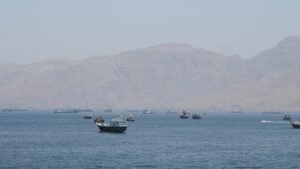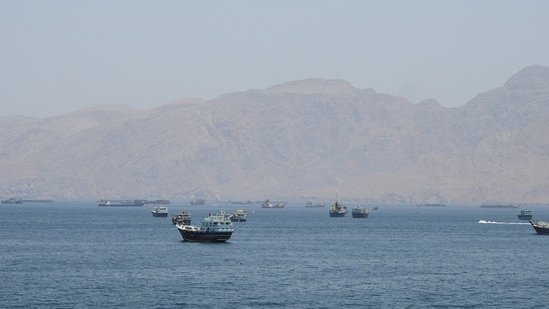
Indian sailor dies as vessel gets caught in Hormuz Strait crossfire amid US-Iran war
# Indian Sailor Killed in Hormuz Strait Crossfire
**By Rohan Desai, Maritime Affairs Correspondent | May 9, 2026**
An Indian national was tragically killed on Saturday, May 9, 2026, when the commercial dhow he was working aboard became caught in a deadly naval crossfire in the Strait of Hormuz. The victim, identified as Altaf Talab Ker, was serving as an engine driver on the cargo vessel when stray munitions struck the ship amid rapidly escalating maritime clashes between United States and Iranian naval forces. Ker, a native of Salaya village in Gujarat’s Dwarka district, was killed instantly. The incident has sent shockwaves through India’s extensive coastal seafaring communities, highlighting the severe, immediate risks posed to civilian maritime workers and global shipping routes by the volatile geopolitical conflict in the Middle East. [Source: Hindustan Times | Additional: Ministry of External Affairs Advisory Updates].
## Tragedy Strikes a Gujarat Seafaring Community
The loss of Altaf Talab Ker has cast a deep pall of gloom over Salaya, a coastal village in the Devbhumi Dwarka district of Gujarat. Salaya boasts a centuries-old, proud tradition of seafaring, with generations of local men serving on wooden dhows and modern cargo ships that ply the historic trade routes connecting the western coast of India to the Persian Gulf, the Arabian Peninsula, and the eastern seaboard of Africa.
Ker served as the engine driver—a critical role responsible for maintaining the mechanical integrity of the dhow’s propulsion systems during grueling voyages. **Dhows**, traditional wooden sailing vessels now often retrofitted with heavy diesel engines, are the lifeblood of regional trade in the Gulf, transporting everything from agricultural produce to electronics. Unfortunately, their traditional construction offers absolutely no ballistic protection, making the crews exceptionally vulnerable in conflict zones. Local community leaders in Gujarat have expressed immense sorrow and growing anxiety for the thousands of other Indian sailors currently navigating the perilous waters of the Middle East.
## Caught in the Crossfire: The Strategic Strait of Hormuz
The Strait of Hormuz is arguably the world’s most critical maritime chokepoint. Situated between Oman and Iran, it connects the Persian Gulf to the Gulf of Oman and the wider Arabian Sea. At its narrowest point, the strait is just 21 miles wide, and the shipping lanes within it are merely two miles wide in either direction.
When the conflict between US and Iranian forces erupted into active naval engagements in early 2026, the Strait immediately transformed from a bustling commercial artery into a highly dangerous militarized zone. Civilian vessels, particularly smaller, slower-moving dhows lacking advanced radar or the ability to swiftly alter course, find themselves trapped alongside heavily armed frigates, fast-attack craft, and unmanned aerial drones.
| Strait of Hormuz Shipping Data (Pre-Conflict 2025 Estimates) | Volume / Metric |
| :— | :— |
| **Daily Oil Transit** | ~21 million barrels |
| **Percentage of Global Liquid Petroleum** | ~20% |
| **Liquefied Natural Gas (LNG) Transit** | ~20% of global trade |
| **Average Daily Commercial Traffic** | 80-100 major vessels |
“The tragic death of Altaf Talab Ker underscores a terrifying reality for commercial shipping,” notes Dr. Meena Menon, a Middle East Geopolitics Expert at the Institute for Defense Studies and Analyses. “The Strait of Hormuz leaves virtually no room for error. When military exchanges occur in a corridor just a few miles wide, the collateral impact on slow-moving merchant vessels is almost inevitable.” [Source: Hindustan Times | Additional: Independent Geopolitical Think Tank Analysis].
## Escalating US-Iran Tensions Threaten Civilian Lives
The current US-Iran war has severely destabilized the region, with naval engagements becoming increasingly frequent and unpredictable. The waters of the Persian Gulf are currently saturated with military hardware. Recent weeks have seen an uptick in asymmetric warfare tactics, including the deployment of smart sea mines, localized drone swarms, and rapid intercept maneuvers by fast-attack craft.
For civilian mariners, this creates a chaotic and lethal environment. Standard operating procedures for commercial vessels—such as maintaining radio contact on international distress channels and utilizing Automatic Identification Systems (AIS)—are no longer guarantees of safety. In several documented instances, communication networks have been jammed, and radar systems have been confused by electronic warfare measures. The dhow on which Ker was serving reportedly found itself inadvertently positioned between a patrol squadron and an incoming aerial threat, resulting in the fatal crossfire.
## The Plight of Indian Migrant Maritime Workers
India supplies nearly 10% of the world’s commercial seafaring workforce. Beyond the massive ultra-large crude carriers (ULCCs) and container ships, an undocumented but vast number of Indian nationals work on the smaller dhows operating out of Gulf ports like Dubai, Doha, and Bandar Abbas. These men often hail from impoverished coastal districts and take on significant physical risks to send vital remittances back to their families.
The death of Ker has ignited urgent discussions among Indian maritime unions regarding the safety protocols and hazard pay for sailors entering designated war risk zones. Capt. R. K. Sharma, a spokesperson for the Maritime Union of India, stated, “Our sailors are economic non-combatants. They are out there to earn a livelihood for their families in Gujarat, Maharashtra, and Kerala. Ship owners and international regulatory bodies must immediately reassess the viability of routing these small, defenseless vessels through active combat zones. Human life cannot be the cost of doing business.”
Many of these sailors operate under complex employment contracts, sometimes lacking comprehensive life insurance or immediate emergency evacuation provisions. The tragedy in the Strait of Hormuz has prompted calls for a mandatory overhaul of maritime labor protections for those deployed to the Persian Gulf.
## Global Supply Chain and Economic Repercussions
Beyond the tragic human toll, the incident highlights the fragility of global supply chains. As the news of the civilian casualty broke, global energy markets reacted sharply, with Brent crude prices experiencing immediate upward volatility. The realization that commercial vessels are actively taking fire has forced major shipping conglomerates and local traders alike to reconsider their operational strategies.
Maritime insurance premiums, particularly War Risk Premiums (WRP), have skyrocketed to unprecedented levels. In some cases, insurers are refusing to underwrite voyages for certain classes of vessels passing through the Strait of Hormuz altogether. This bottleneck effect is threatening to significantly delay the delivery of crucial crude oil to Asian markets, including India, China, and Japan, while also stifling the export of refined petroleum products and general cargo from the Gulf states.
If shipping companies opt to reroute larger vessels around the Cape of Good Hope to avoid the Middle East entirely, transit times could increase by up to 14 days, drastically raising fuel costs and exacerbating global inflationary pressures.
## Diplomatic Response and Repatriation Efforts
The Government of India faces a delicate diplomatic tightrope. New Delhi maintains strategic partnerships with both the United States and Iran, relying heavily on the region for its energy security and diaspora remittances. Following the confirmation of Altaf Talab Ker’s death, the Ministry of External Affairs (MEA) immediately engaged its consular missions in the region to facilitate the prompt repatriation of his mortal remains to his grieving family in Salaya. [Source: Hindustan Times].
The Indian government has historically been proactive in executing massive maritime and aerial evacuations during Middle Eastern crises, such as Operation Rahat in Yemen. However, extracting civilian sailors spread across hundreds of independent commercial vessels moving through an active naval chokepoint presents an unprecedented logistical challenge.
The MEA has reportedly issued high-level advisories urging Indian nationals employed on merchant vessels to exercise maximum caution and, wherever possible, avoid transiting through the Strait of Hormuz until further notice. Indian naval vessels deployed in the region for anti-piracy operations are also reportedly on high alert, monitoring the situation to assist distressed merchant shipping.
## International Maritime Law and Protection of Non-Combatants
The killing of a civilian sailor in international waters raises profound questions regarding compliance with international humanitarian law and the Law of the Sea. Under customary international law, all parties to an armed conflict are required to distinguish between military and civilian objectives. Attacks that cause incidental loss of civilian life, which are excessive in relation to the concrete military advantage anticipated, are strictly prohibited.
The International Maritime Organization (IMO) has urgently convened to address the escalating crisis. The United Nations has repeatedly emphasized that freedom of navigation and the safety of maritime workers are paramount, warning that the militarization of crucial trade arteries violates the fundamental principles of global commerce.
However, enforcing these legal frameworks in the chaotic environment of asymmetrical naval warfare remains highly problematic. The speed at which modern naval engagements unfold often precludes the ability to fully clear the area of civilian maritime traffic, leading to tragic outcomes like the one experienced by the crew of the Indian dhow.
## Conclusion: A Somber Warning for Global Shipping
The death of Altaf Talab Ker is a grim reminder that the consequences of the US-Iran geopolitical conflict extend far beyond military casualties. For the tight-knit community of Salaya, Gujarat, the loss of a son, father, and provider brings the distant war in the Strait of Hormuz devastatingly close to home.
As the international community grapples with the economic fallout of restricted oil transits and surging insurance premiums, the human element of global supply chains must not be ignored. Thousands of maritime workers remain trapped in a perilous environment, tasked with keeping the world’s economy afloat amidst artillery fire and drone strikes.
Moving forward, it is imperative that global regulatory bodies, flag states, and maritime employers collaborate to enforce stricter safety corridors and enhance war-risk compensations. Until diplomatic de-escalation can be achieved, the waters of the Persian Gulf will remain a treacherous frontier, threatening both global economic stability and the innocent lives of the mariners who navigate it.