
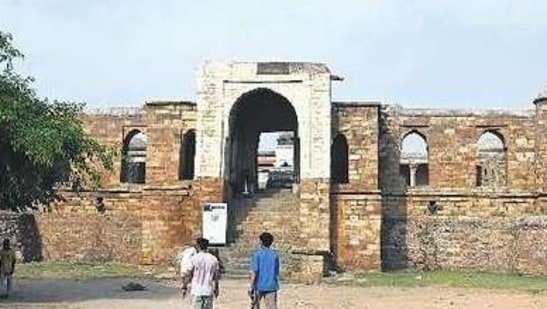
Experts debate conservation approach under Sultan Ghari revival plan
# DDA Sultan Garhi Park Plan Sparks Fierce Debate
By Staff Correspondent, Heritage Chronicle | May 9, 2026
**New Delhi** — Sultan Garhi, the formidable 13th-century mausoleum widely recognized as India’s oldest Islamic tomb, has become the epicenter of a mounting conservation controversy. The Delhi Development Authority (DDA) recently unveiled a comprehensive revival plan to transform the 1231 AD heritage site into a manicured archaeological park. However, as of May 2026, this urbanization strategy has ignited fierce opposition from historians, ecologists, and heritage experts. Critics argue that imposing modern landscaping on the site’s rugged, historically significant topography threatens its architectural authenticity and the delicate Aravalli ecosystem, highlighting a broader national struggle between commercial heritage tourism and pristine, historically accurate conservation. [Source: Hindustan Times]
## The 13th-Century Legacy of Sultan Garhi
To understand the gravity of the current debate, one must look at the profound historical significance of Sultan Garhi. Commissioned in 1231 AD by Shams ud-Din Iltutmish, the third ruler of the Delhi Sultanate, the mausoleum was built to honor his eldest son, Prince Nasiru’d-Din Mahmud. Predating the completion of the iconic Qutub Minar in its current form, Sultan Garhi stands as a crucial architectural bridge between early Ghurid aesthetics and indigenous Indian craftsmanship.
Unlike the grand, soaring domes characteristic of later Mughal architecture, Sultan Garhi resembles a compact, octagonal fortress. Built from Delhi quartzite and clad locally in red sandstone and white marble, the tomb is uniquely submerged into the earth—the name “Garhi” itself translates to “cave” or “crypt.” Furthermore, the site boasts reused pillars from older Hindu and Jain temples, showcasing a fascinating, albeit complex, syncretic architectural history. Over the centuries, the tomb has evolved into a living shrine, venerated by both local Hindus and Muslims who view the interred prince as a protective *Peer Baba* (saint). This dual identity—a monument of immense archaeological value and an active site of subaltern worship—makes any intervention highly sensitive. [Source: General Archaeological Survey of India Records up to April 2026]
## The DDA’s Vision for an Archaeological Park
The Delhi Development Authority has framed its new intervention as a necessary rescue mission. For decades, the area surrounding Sultan Garhi in Vasant Kunj has been plagued by illegal encroachments, rampant garbage dumping, and anti-social activities. The DDA’s proposed master plan aims to reclaim the land and integrate it into Delhi’s broader heritage tourism circuit, drawing inspiration from the successful, though heavily altered, Mehrauli Archaeological Park.
**Key elements of the DDA’s revival plan include:**
* **Perimeter Securitization:** Installing high-grade fencing to prevent further land grabbing and unauthorized vehicular access.
* **Tourist Amenities:** Constructing interpretation centers, ticketing booths, public restrooms, and a dedicated parking facility.
* **Horticultural Landscaping:** Laying down extensive manicured lawns, ornamental flower beds, and shaded, paved walkways to facilitate easy access for tourists of all ages.
* **Illumination:** Installing architectural lighting to promote night tourism and improve nighttime security.
“Our primary objective is to protect Sultan Garhi from the very real threat of urban erasure,” states Rajesh Sharma, a senior urban planner familiar with the DDA’s development proposals. “By transforming the dilapidated surroundings into a world-class archaeological park, we are ensuring that future generations can access and appreciate this 13th-century marvel in a safe, clean, and welcoming environment.” [Source: Hindustan Times | Contextual Public Policy Proposals]
## Conservationists Sound the Alarm over “Beautification”
Despite the DDA’s intentions, the proposal has been met with severe backlash from India’s prominent heritage conservation bodies. The core of the experts’ argument lies in the fundamental difference between “conservation” and “beautification.” Conservationists assert that a monument cannot be divorced from its historical landscape. Sultan Garhi was intentionally built in a rugged, arid terrain, its fortress-like austerity designed to complement the rocky outcrops of the Aravalli ridge.
“The imposition of manicured, British-style lawns and polished sandstone pathways around an early medieval crypt is anachronistic and highly destructive to the site’s spirit,” argues Dr. Meera Chatterjee, a Delhi-based architectural historian. “When we overly domesticate these sites to cater to contemporary aesthetic preferences, we strip them of their contextual history. Sultan Garhi was never meant to sit in the middle of a golf-course-like park; it was an austere, solemn resting place integrated into a harsh natural landscape.”
Furthermore, experts warn that the heavy irrigation required to maintain artificial lawns can cause significant moisture damage to the 800-year-old subterranean crypt. Capillary action from continuously damp soil threatens to accelerate the degradation of the monument’s foundational stonework and the ancient lime mortar. [Source: Hindustan Times | General Heritage Conservation Principles]
## The Ecological Impact on the Ridge Forest
The debate extends far beyond architectural aesthetics, bleeding heavily into Delhi’s ongoing ecological crisis. Sultan Garhi is situated within the South-Central Ridge, a crucial segment of the Aravalli hill range that acts as the primary “green lung” for the highly polluted capital. The area immediately surrounding the tomb is characterized by a native scrub forest ecosystem, dominated by indigenous species such as *dhak*, *ronjh*, and the resilient *kikar*, which sustain a diverse array of local fauna including nilgai, golden jackals, and native bird species.
Environmentalists fear that the DDA’s park project will involve the clearing of this native brush to make way for exotic, ornamental plant species that require high water consumption. “Heritage conservation in Delhi cannot be executed in an ecological vacuum,” notes environmental activist Vikram Soni. “The native Aravalli flora is just as much a part of Delhi’s heritage as the Sultanate monuments. Replacing a self-sustaining scrub forest with water-intensive, ornamental parkland is an ecological misstep that Delhi, currently grappling with severe water scarcity and climate change, cannot afford.”
## Global Precedents vs. Local Realities
The ideological clash at Sultan Garhi is reflective of a global debate within the field of archaeology. International guidelines, such as the Venice Charter for the Conservation and Restoration of Monuments and Sites, strongly advocate for minimal intervention, urging authorities to preserve both the monument and its traditional setting. In countries like Italy and Greece, ruins are frequently stabilized and left to coexist with their natural, unaltered landscapes.
In contrast, urban heritage management in India has frequently leaned toward heavy-handed beautification. Similar controversies have plagued the Red Fort and Purana Qila, where vast historical moats and natural terrains were transformed into heavily manicured recreational spaces. Proponents of the DDA’s approach argue that the socio-economic realities of India—where unprotected open land is swiftly engulfed by slums or illegal construction—necessitate aggressive spatial management. They argue that creating a formal park is the only practical legal mechanism to secure the land from the land mafia.
However, conservationists counter that security does not have to come at the cost of authenticity. They advocate for a nuanced approach: securing the perimeter and providing basic security, but leaving the internal landscape as an “eco-archaeological” zone rather than a recreational park.
## Balancing Tourism, Faith, and Authenticity
Finding a middle ground remains the most pressing challenge for the authorities heading into the latter half of 2026. Experts from organizations like the Indian National Trust for Art and Cultural Heritage (INTACH) have proposed alternative blueprints that prioritize ecological and historical harmony.
These alternative proposals suggest:
1. **Using Permeable Materials:** Constructing pathways from stabilized earth or gravel rather than concrete, ensuring the site retains its rustic character while allowing rainwater harvesting.
2. **Native Landscaping:** Limiting horticultural efforts to the restoration of endemic Aravalli plant species, requiring zero artificial irrigation once established.
3. **Community Integration:** Involving the local communities who use Sultan Garhi as an active place of worship. Ensuring that the site remains freely accessible for religious practices, rather than entirely gentrifying it for ticketed tourism.
## A Blueprint for India’s Heritage Future
As the debate surrounding the Sultan Garhi revival plan intensifies, the outcome of this clash is expected to set a critical precedent for how urban heritage is managed across India. The controversy highlights a critical inflection point in urban planning: the realization that the historical value of a monument is intrinsically tied to its environment.
The DDA is currently reviewing the feedback from various heritage committees, and a revised draft of the park plan is anticipated in the coming months. If the authorities can pivot from a model of aggressive “beautification” to one of sensitive, minimal intervention, Sultan Garhi could become a pioneering model for eco-heritage conservation in South Asia. Conversely, pushing forward with a conventional park design may permanently alter the solemn, historic ambiance of India’s oldest Islamic mausoleum. Ultimately, the survival of Sultan Garhi’s true essence depends on a delicate balancing act—protecting its physical boundaries without suffocating its 800-year-old soul.





