
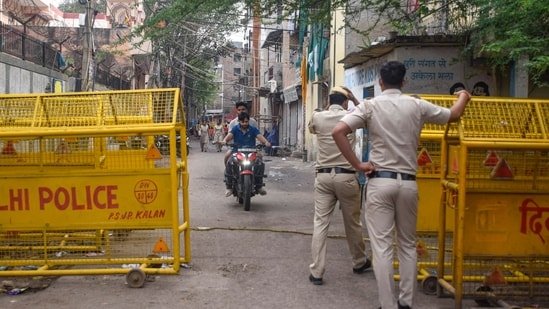
Two friends, returning after IPL match, crushed under speeding car
# Speeding Car Kills Two After IPL Match
By Devansh Tiwari, National News Desk | May 09, 2026
Late Friday night, a joyous evening turned into an irreversible tragedy when two friends were fatally struck by a speeding car while returning home from an Indian Premier League (IPL) cricket match. The severe collision, which took place on a relatively empty stretch of the city’s arterial road, resulted in both two-wheeler riders dying on the spot due to the sheer impact of the crash. Local law enforcement agencies rushed to the scene shortly after receiving distress calls, but medical intervention was tragically too late. This hit-and-run incident has reignited pressing debates regarding late-night road safety, urban traffic management, and the deadly consequences of reckless driving following major public events. [Primary Source: Hindustan Times]
## The Anatomy of a Late-Night Tragedy
The victims, both young professionals in their late twenties, had just finished watching a high-octane IPL fixture and were navigating their way back home. According to preliminary reports from the traffic police, the two friends were traveling at a moderate speed, adhering to the standard traffic guidelines, when a luxury sedan, reportedly traveling at speeds well above the legal limit, rammed into their motorcycle from behind.
**”The impact of the collision was severe, and both riders died on the spot,”** local officials stated during a morning press briefing. Emergency medical services (EMS) personnel who arrived at the scene pronounced both individuals dead before they could be transported to the nearest trauma center.
The driver of the offending vehicle did not stop to offer assistance or alert the authorities. Instead, they fled the scene under the cover of darkness, leaving behind a mangled two-wheeler and shattered debris scattered across a 50-meter radius. The police have since cordoned off the area to reconstruct the accident scene and collect forensic evidence, including paint transfers and tire skid marks, to identify the make and model of the absconding vehicle.
## Ongoing Investigation and Manhunt
Law enforcement agencies have registered a First Information Report (FIR) under several sections of the Bharatiya Nyaya Sanhita (BNS), including causing death by negligence and rash driving on a public way. A specialized task force has been formed to apprehend the culprit.
**Key investigative steps currently underway include:**
* **CCTV Footage Analysis:** Police are scouring hundreds of hours of surveillance footage from toll plazas, commercial establishments, and residential complexes along the suspected escape route.
* **Automated Number Plate Recognition (ANPR):** Traffic control rooms are utilizing AI-driven ANPR cameras to track any vehicles matching the description of the offending car that passed through the vicinity during the estimated time of the crash.
* **Forensic Examination:** Debris left at the site is being analyzed to determine the exact color, manufacturing year, and model of the sedan, which will drastically narrow down the search parameters.
“We have formed three distinct teams to crack this case,” an investigating officer noted under the condition of anonymity. “The absolute disregard for human life shown by the driver is appalling. We are confident that with the digital footprint left behind, an arrest is imminent.” [Additional Context: General Police Procedures in Urban Hit-and-Run Cases]
## The Systemic Menace of Speeding
This heartbreaking incident is not an isolated anomaly but a symptom of a much larger, systemic crisis plaguing Indian roads. Despite stringent amendments to the Motor Vehicles Act, speeding remains the leading cause of road traffic fatalities across the country.
According to data released by the Ministry of Road Transport and Highways (MoRTH) in late 2025, over **1.68 lakh individuals** lose their lives on Indian roads annually, translating to roughly 460 deaths every single day.
**Primary Causes of Road Accidents in India (2025-2026 Estimates):**
| Cause of Accident | Percentage of Total Fatalities | Vulnerable Demographics |
| :— | :— | :— |
| **Over-speeding** | 72.4% | Two-wheeler riders, Pedestrians |
| **Wrong-side Driving** | 5.8% | All vehicle types |
| **Drunk Driving** | 4.2% | Late-night commuters |
| **Use of Mobile Phones** | 3.1% | Commercial and private drivers |
| **Poor Road Conditions** | 2.5% | Two-wheeler riders |
The statistics paint a grim picture, particularly for two-wheeler riders, who account for nearly 45% of all road fatalities. The lack of physical barriers between the rider and a colliding vehicle means that high-speed impacts are almost always fatal, as demonstrated in this tragic post-match collision.
## Mega Events and Late-Night Commute Risks
The IPL is India’s biggest sporting spectacle, drawing tens of thousands of fans to stadiums across the nation. Matches typically conclude between 11:30 PM and midnight. When the floodlights dim, massive crowds disburse simultaneously into the city’s streets.
This mass exodus creates a highly volatile traffic environment. Several compounding factors increase the risk of severe accidents during these late hours:
1. **Exhaustion and Fatigue:** Both fans and general commuters are often physically exhausted late at night, leading to slower reaction times.
2. **Lack of Public Transport:** While metro services are occasionally extended on match nights, last-mile connectivity remains notoriously poor, forcing fans to rely on two-wheelers or unregulated private cabs.
3. **The Adrenaline Factor:** The high energy of a stadium environment sometimes translates into aggressive or competitive driving behaviors on empty night-time roads.
4. **Impaired Driving:** Post-match celebrations occasionally involve alcohol consumption, drastically increasing the likelihood of fatal errors behind the wheel.
For two friends simply trying to return to the safety of their homes, these systemic failures culminated in an unavoidable disaster. The stark contrast between the joy of a cricket match and the sudden violence of a road accident has sent shockwaves through the local community.
## Expert Perspectives on Urban Mobility and Safety
To understand the broader implications of this tragedy, we must look to urban planning and road safety experts who have long advocated for a paradigm shift in how Indian cities handle nighttime traffic.
**Dr. Meera Sanyal, Senior Researcher at the Institute for Road Traffic Education (IRTE),** emphasizes the need for infrastructural changes over mere punitive actions. “We continuously blame human error, but we design our arterial roads like highways. Wide, straight roads within city limits practically invite speeding late at night when traffic volume is low. We need traffic calming measures—like raised pedestrian crossings, chicanes, and rumble strips—that naturally force vehicles to slow down, even if the driver is reckless.”
Similarly, **Rajiv Khurana, a former Joint Commissioner of Traffic Police,** points to the enforcement gap. “During the day, our intersections are heavily manned. At 1:00 AM, the visible police presence drops significantly. Automated enforcement through speed cameras is effective, but it does not stop a drunk or speeding driver in real-time. We need dynamic highway patrolling, especially on nights when the city hosts major events drawing 40,000 to 50,000 spectators.”
## Technological Interventions: The Way Forward
To prevent future tragedies of this magnitude, civic authorities must leverage modern technology. While smart city initiatives have introduced several digital tools, their integration into life-saving mechanisms remains sluggish.
* **Intelligent Traffic Management Systems (ITMS):** Real-time monitoring can instantly detect vehicles exceeding speed limits by dangerous margins. When integrated with patrol units, interceptor vehicles can be dispatched immediately to halt a speeding car before it causes a collision.
* **Geofencing and Speed Limiters:** For commercial vehicles and app-based cabs, mandatory speed governors have proven effective. Extending software-based speed-limiting technologies (geofencing) in modern passenger vehicles within city limits is a debated but potentially revolutionary step.
* **Enhanced Night Visibility:** Many late-night collisions involve poor lighting. Upgrading streetlights to high-luminescence LEDs, ensuring highly reflective road markings, and mandating reflective safety gear for two-wheeler riders are immediate, low-cost solutions.
## The Human Cost and Community Grief
Beyond the cold statistics and policy debates lies the profound human cost of this accident. Two families have been irreparably shattered. The victims, described by friends as passionate cricket enthusiasts and dedicated professionals, had their entire lives ahead of them. Social media platforms have been flooded with condolences, accompanied by a rising chorus of outrage demanding stricter traffic enforcement and swift justice for the absconding driver.
Cricket fan clubs and local resident welfare associations are now calling upon IPL organizers and city administrators to collaborate more closely. Suggestions include dedicated shuttle services post-match, restricted private vehicle entry near stadiums, and heavy deployment of traffic marshals on arterial roads until the early hours of the morning.
## Conclusion
The crushing death of two friends returning from an IPL match serves as a harrowing reminder of the lethal potential of speeding vehicles on Indian roads. As authorities continue their manhunt for the driver responsible, the incident exposes glaring vulnerabilities in late-night urban traffic management.
Until structural changes—ranging from infrastructural traffic calming to rigorous night-time enforcement—are implemented, vulnerable road users will continue to face unacceptable risks. True justice for the victims will not only require the apprehension of the fleeing driver but also a steadfast commitment from city planners and lawmakers to ensure that a simple journey home from a cricket match never again ends in such profound tragedy.





