
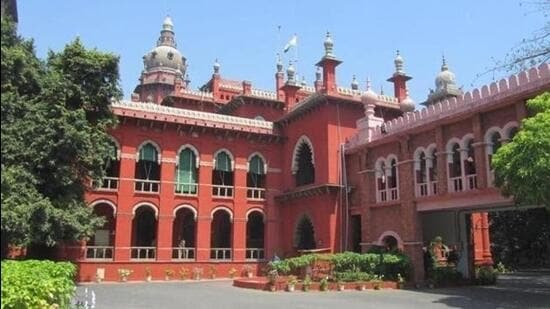
Unity cannot be forced: Madras HC allows village temple drama in Tamil Nadu
# Madras HC Permits Sivagangai Temple Drama
By Special Correspondent, India Legal Desk, May 09, 2026
**Sivagangai, Tamil Nadu** — The Madras High Court on Saturday, May 9, 2026, granted permission for a traditional village temple drama to proceed in the Sivagangai district, overruling local administrative bans rooted in long-standing caste tensions. Addressing the bitter rivalries over festival control, the court observed that “unity cannot be forced” upon warring factions by the state. The judicial intervention ensures that the cultural performance will take place under strict police protection, safeguarding the community’s right to religious and cultural expression while simultaneously maintaining law and order in a region frequently plagued by social friction.
## The Judicial Verdict on Cultural Rights
The judgment from the Madurai Bench of the Madras High Court struck a delicate balance between public safety and fundamental religious freedoms [Source: Hindustan Times | Additional: Public Legal Records]. Local law enforcement authorities had previously denied permission for the overnight cultural drama—often a mythological play known locally as *Therukoothu* or *Nadagam*—citing credible threats of violence between two rival community groups vying for administrative control over the temple festival.
However, the presiding judge emphasized that the constitutional right to practice one’s religion and organize traditional cultural events cannot be held hostage to the threats of a disruptive minority or a rival faction. In its ruling, the court articulated that while the state has a duty to foster social harmony, attempting to force a joint organizing committee upon groups with entrenched historical animosities often results in an indefinite suspension of cultural life.
“Unity cannot be forced by executive mandates,” the court noted, pointing out that stopping the festival altogether unjustly penalizes the deity and the broader community of peaceful devotees. By directing the district police to provide adequate security—and warning that any instigators of violence would face severe legal repercussions under the Bharatiya Nyaya Sanhita (BNS)—the court laid down a clear precedent: administrative convenience cannot override constitutional liberties.
## Background of the Sivagangai Dispute
To understand the gravity of the High Court’s intervention, one must examine the socio-cultural fabric of Tamil Nadu’s southern districts, particularly Sivagangai. Temple festivals, or *Kovil Thiruvizhas*, are not merely religious gatherings; they are profound expressions of social hierarchy, agrarian economic power, and caste identity.
The dispute in question revolves around the right to organize the annual drama, a key highlight of the multiday temple festival. Historically, the right to fund, cast, and stage these dramas has been associated with *Muthal Mariyathai* (first honors)—a highly coveted social validation in rural Tamil Nadu. In this specific village, demographic shifts and rising economic empowerment among historically marginalized groups have challenged the traditional hegemony of dominant castes, leading to friction over who dictates the festival’s proceedings.
When the two groups failed to reach a consensus on the casting, funding, and seating arrangements for the drama, local peace committee meetings chaired by the Revenue Divisional Officer (RDO) collapsed. The district administration, fearing a breakdown of public order, took the customary route of denying permission to both factions. This administrative stalemate prompted the aggrieved organizers to file a writ petition before the High Court, seeking a writ of mandamus to direct the police to grant permission.
## Law and Order vs. Religious Freedom
The conflict highlights a recurring dilemma in rural Indian administration: the tension between preemptive policing and the facilitation of fundamental rights. Under the Bharatiya Nagarik Suraksha Sanhita (BNSS), executive magistrates possess broad powers to prohibit gatherings that might lead to an affray or public riot. Police routinely leverage these provisions to cancel temple festivals at the first sign of caste-based disagreement.
However, the Madras High Court has historically frowned upon this “easy way out.” Legal experts argue that it is the fundamental duty of the police to protect citizens exercising their lawful rights, rather than suppressing those rights to avoid the logistical burden of deployment.
In this ruling, the court reiterated that if an event has been conducted peacefully for decades, an emergent dispute by a rival faction should not automatically result in the event’s cancellation. The court ordered the primary organizers to submit an affidavit pledging to strictly adhere to sound pollution norms, avoid obscene dances, and refrain from erecting flex boards or banners that praise specific caste leaders—a common trigger for inter-caste violence in the region.
## Expert Perspectives on Legal Interventions
Sociologists and constitutional scholars have weighed in on the significance of the Madras High Court’s pragmatic approach.
**Dr. V. Ramanathan**, a Chennai-based sociologist specializing in Dravidian cultural studies, explains the dynamics at play: *”In the agrarian villages of southern Tamil Nadu, the temple is the ultimate seat of sovereign authority. To control the temple festival is to control the village’s social narrative. When the state forces an artificial unity—demanding that dominant and marginalized castes co-host an event without addressing the underlying power imbalances—it is a recipe for disaster. The court’s acknowledgment that ‘unity cannot be forced’ is a rare, realistic appraisal of rural sociology.”*
Similarly, **Anjali Deshmukh**, a senior advocate focusing on constitutional law, notes the legal nuances of the ruling: *”Article 25 of the Constitution guarantees the freedom of religion, which includes customary practices like temple dramas. The state apparatus often treats public order as a blanket excuse to deny these rights. The High Court’s insistence on managing the friction rather than suffocating the tradition is a victory for civil liberties. It forces the local police to do their job—maintain order while allowing lawful assembly.”*
## Precedents in Tamil Nadu Temple Disputes
The Sivagangai ruling is not an isolated incident. During the peak summer months—aligning with the Tamil calendar months of *Panguni*, *Chithirai*, and *Vaikasi* (March to June)—the Madurai Bench of the Madras High Court is inundated with hundreds of similar writ petitions.
Villagers from Madurai, Dindigul, Ramanathapuram, Virudhunagar, and Sivagangai frequently approach the judiciary for permissions ranging from pulling temple chariots to organizing *Aadal Paadal* (music and dance) programs. To handle the volume, the judiciary has developed a standardized set of conditions for such events.
### Common Flashpoints in Temple Disputes
| Dispute Category | Description | Typical Judicial Resolution |
| :— | :— | :— |
| **First Honors (Mariyathai)** | Rivalry over who receives the first garland or sacred ash from the priest. | Directed to be given to the deity first, eliminating individual human precedence. |
| **Procession Routes** | Objections to the temple deity’s procession passing through specific caste streets. | Police directed to ensure the traditional route is maintained without discrimination. |
| **Tax Collection (Vari)** | Disputes over who has the right to collect mandatory donations for the festival. | Permitted as voluntary donations; forced collections strictly prohibited. |
| **Cultural Events** | Contested control over dramas, dances, and musical performances. | Event permitted with strict curfews (usually 10 PM) and bans on caste-based songs. |
These standardized conditions ensure that the cultural life of the village continues while minimizing the risk of violence. The recent Sivagangai ruling builds upon this framework by explicitly stating that administrative efforts to force disparate groups into joint committees are legally and practically flawed.
## The Role of the Hindu Religious and Charitable Endowments (HR&CE) Department
The dispute also throws light on the jurisdiction of the Hindu Religious and Charitable Endowments (HR&CE) Department of Tamil Nadu. While the HR&CE department manages thousands of temples across the state, many smaller village temples (*Grama Devata* shrines) remain under the control of local trusts or hereditary village committees.
When a temple falls outside direct HR&CE control, disputes over management cannot be easily resolved by state-appointed executive officers. In such vacuums, local revenue and police officials become the de facto arbiters of religious practice. The High Court’s ruling indirectly cautions the district administration against overstepping its boundaries. While officials can regulate the public order aspects of a festival, they cannot dictate the internal religious and cultural management of an event simply because a rival group threatens a boycott or violence.
By allowing the Sivagangai temple drama to proceed, the court has reinforced the autonomy of traditional organizers, provided they do not violate the law of the land. It sends a strong signal that the state must act as an impartial referee, ensuring safety, rather than an authoritarian manager attempting to force a superficial social cohesion.
## Conclusion: Key Takeaways and Future Outlook
The Madras High Court’s decision to permit the temple drama in Sivagangai serves as a crucial reaffirmation of cultural rights in the face of administrative risk-aversion.
**Key Takeaways:**
* **Protection of Cultural Rights:** The judiciary recognizes that traditional village dramas are integral to the freedom of religion and cultural expression under the Constitution.
* **Pragmatic Governance:** The observation that “unity cannot be forced” highlights a realistic approach to rural sociology, acknowledging that artificial peace enforced by the state is unsustainable.
* **Accountability of Law Enforcement:** Police forces are mandated to proactively secure events and deter violence, rather than passively banning festivals to avoid logistical challenges.
As Tamil Nadu moves deeper into the 2026 festival season, this ruling is expected to serve as a vital touchstone for hundreds of villages grappling with similar internal divisions. While deep-seated caste tensions and rivalries may take generations of education and social reform to fully heal, the High Court has made one thing abundantly clear: until true social harmony is organically achieved, the show must go on.





