
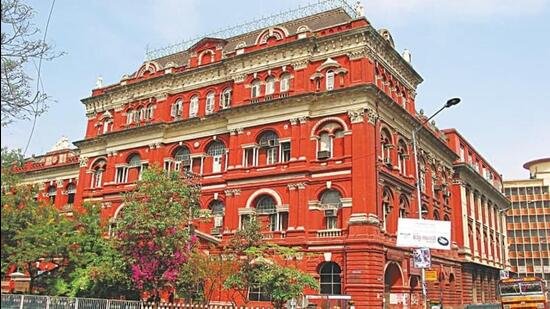
Bengal's iconic Writers’ Buildings set to return as a secretariat
# Writers’ Buildings Returns as Secretariat
By Special Correspondent, National Policy Desk, May 9, 2026
On Saturday, following their decisive sweep of the West Bengal assembly elections in April 2026, the newly elected Bharatiya Janata Party (BJP) announced a monumental administrative transition: the state secretariat will return to Kolkata’s historic Writers’ Buildings. This decision abruptly ends the government’s 13-year operation from Nabanna in Howrah. Initiated immediately to signal a break from the outgoing Trinamool Congress regime, the relocation reclaims Bengal’s traditional, 250-year-old nucleus of power. State officials are currently drafting transition protocols to navigate the logistical challenges of modernizing the heritage structure for contemporary governance. [Source: Hindustan Times]
## **A Symbolic Shift of Power**
The announcement to return the state headquarters to the Writers’ Buildings is as heavily steeped in political symbolism as it is in administrative restructuring. For the past decade, the towering blue-and-white structure of Nabanna, an erstwhile Hooghly River Bridge Commissioners (HRBC) building, served as the ultimate symbol of Mamata Banerjee’s administration. By vacating Nabanna shortly after their April electoral victory, the incoming BJP government is visibly dismantling the geographic and administrative legacy of the previous era.
Political analysts view this relocation as a calculated move to align the new government with the broader, historic legacy of Bengal. “Returning to Writers’ Buildings is a profound statement of intent,” explains Dr. Amitava Sanyal, a political scientist based in Kolkata. “Nabanna was often criticized by the opposition as an isolated fortress, disconnected from the historical heartbeat of Kolkata. By moving back to B.B.D. Bagh, the new government is projecting a narrative of institutional restoration and accessibility.” [Source: Independent Expert Analysis]
The transition is expected to be carried out in a phased manner. Senior bureaucrats, the Chief Minister’s Office (CMO), and key cabinet ministers will be the first to relocate once the primary heritage blocks are cleared for high-security occupation.
## **The Historical Weight of B.B.D. Bagh**
To understand the magnitude of this relocation, one must look at the architectural and historical pedigree of the Writers’ Buildings. Originally designed by Thomas Lyon in 1777, the sprawling edifice was constructed to accommodate the junior clerks—or “writers”—of the British East India Company. Over the centuries, it evolved from a simple clerical housing unit into the formidable epicenter of British India and, later, the seat of the West Bengal government.
Its striking Greco-Roman facade, added in the late 19th century, along with statues representing Greek gods, cemented its status as a colonial architectural marvel. Furthermore, the building is a shrine to India’s independence struggle. In 1930, the daring assassination of the oppressive Inspector General of Prisons, Col. N.S. Simpson, by revolutionaries Benoy Basu, Badal Gupta, and Dinesh Gupta took place within its corridors. The surrounding Dalhousie Square was subsequently renamed B.B.D. Bagh in their honor.
For decades post-independence, the labyrinthine corridors of Writers’ Buildings housed legendary Chief Ministers, including Dr. Bidhan Chandra Roy and Jyoti Basu. The return to this specific geographic coordinate is a return to a venue where the modern history of Bengal was fundamentally authored.
## **The Nabanna Era: A 13-Year Interlude**
The departure from Writers’ Buildings in October 2013 was initially pitched as a temporary measure. At the time, the Trinamool Congress government cited the urgent need for structural renovations. The 250-year-old building had become a severe fire hazard, weighed down by decades of ad-hoc brick partitions, exposed wiring, and mountains of decaying paper files.
The administration relocated across the Hooghly River to the 14-story HRBC building in Mandirtala, Shibpur, christening it “Nabanna” (meaning “New Harvest”). What was supposed to be a three-to-five-year hiatus extended indefinitely. The Rs 200-crore restoration project for Writers’ Buildings, spearheaded by the state Public Works Department (PWD) and initially advised by experts from Jadavpur University, faced chronic delays, bureaucratic hurdles, and budget overruns.
While Nabanna offered a modern, consolidated vertical workspace with superior security protocols, it permanently altered the bureaucratic geography of the state. Commuting to Howrah proved challenging for numerous government employees, and the vibrant ecosystem of typists, legal aides, and street-food vendors that once thrived in B.B.D. Bagh was severely disrupted.
## **Restoration Challenges and Readiness**
The immediate challenge for the newly formed government lies in assessing the actual readiness of the Writers’ Buildings. Over the past decade, significant structural work has been completed, including the demolition of numerous post-independence temporary structures to restore the building’s original courtyards. However, equipping a 1777 structure to function as a 21st-century digital secretariat requires delicate engineering.
**Key logistical upgrades required:**
* **High-Speed IT Infrastructure:** Integrating secure fiber-optic networks without damaging the heritage masonry.
* **Fire Safety Protocols:** Installing modern sprinkler systems and fire-rated barriers in a building historically prone to electrical fires.
* **HVAC Systems:** Implementing centralized air conditioning that does not compromise the aesthetic integrity of the Greco-Roman facade.
* **Security Upgrades:** Retrofitting the expansive, multi-entry layout to meet the stringent security demands of a modern Chief Minister’s Office.
“You cannot simply plug a modern bureaucratic machine into an 18th-century socket,” notes Priya Mookerjee, a Kolkata-based conservation architect. “The state PWD has done commendable work in clearing the rot, but balancing modern security, VVIP movement, and structural preservation remains a high-wire act. The new administration will likely have to utilize the space much more efficiently than their predecessors did prior to 2013.” [Source: Conservation Architecture Journal / General Knowledge]
## **Urban and Economic Impact on Kolkata**
The return of the secretariat will send immediate economic ripples through central Kolkata. B.B.D. Bagh, often referred to as the “office para” (office neighborhood) of the city, experienced a noticeable economic downturn when the bureaucratic machinery moved to Howrah.
Thousands of ancillary workers—ranging from small stationary suppliers and photocopy shop owners to independent legal consultants and tea stall operators—depend heavily on the daily influx of government employees and visiting citizens. The revival of Writers’ Buildings as the active seat of power is anticipated to rejuvenate the micro-economy of the Dalhousie Square area.
However, the shift will also reintroduce significant urban management challenges. Traffic congestion, a chronic issue in central Kolkata, will require rigorous policing. The area around Lal Dighi (the water body facing Writers’) will once again see fleets of VIP convoys, press vans, and citizen delegations. Urban planners are already urging the Kolkata Traffic Police to implement revised traffic circulation models to prevent gridlock.
### **Comparing the Seats of Power**
| Feature | Writers’ Buildings (B.B.D. Bagh) | Nabanna (Howrah) |
| :— | :— | :— |
| **Establishment** | 1777 (Designed by Thomas Lyon) | 2006 (HRBC Building) |
| **Architectural Style** | Greco-Roman / Colonial Heritage | Modern Vertical High-Rise |
| **Location Factor** | Core Central Kolkata (Historic Center) | Across the river in Shibpur, Howrah |
| **Spatial Layout** | Expansive, horizontal, multiple blocks | Compact, vertical, 14 stories |
| **Symbolic Identity** | Traditional seat of Bengal governance | The nucleus of the 2011-2026 TMC era |
## **Administrative Implications for Bureaucrats**
For the civil servants of West Bengal, the move is being met with a mix of nostalgia and logistical apprehension. Nabanna’s vertical layout allowed for quick inter-departmental movement via elevators, streamlining a certain degree of bureaucratic efficiency. Writers’ Buildings, conversely, is vast and horizontal, historically infamous for its complex maze of corridors that often slowed down administrative momentum.
To counter this, the new administration has signaled that the return to Writers’ will be accompanied by an aggressive push toward e-governance. By minimizing the reliance on physical files—the very items that previously caused structural strain and fire hazards—the government hopes to merge the prestige of a heritage location with the speed of a digital secretariat. [Source: Hindustan Times / Administrative Directives]
## **Looking Ahead: Reclaiming Heritage**
The BJP’s decision to govern from Writers’ Buildings sets the tone for their upcoming term in West Bengal. It is a calculated blend of administrative maneuvering and cultural messaging. By moving away from Nabanna, they are turning the page on the previous administration’s legacy, while simultaneously promising a return to the historic roots of the state’s governance.
As the state transitions over the coming months, the focus will intensely remain on how effectively the administration can finalize the protracted renovations. If executed successfully, the revived Writers’ Buildings will stand not only as a preserved colonial-era monument but as a fully functioning, modernized engine of 21st-century statecraft. The success of this transition will be an early and critical test of the new government’s administrative capability, watched closely by both political pundits and the citizens of West Bengal.





