
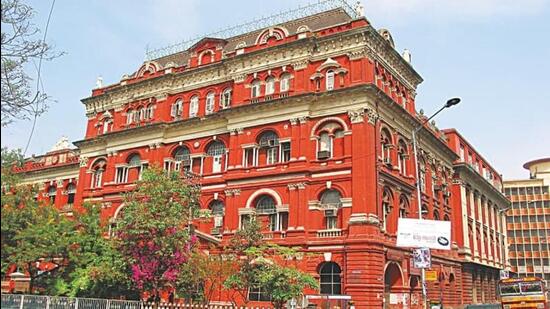
Bengal's iconic Writers’ Buildings set to return as a secretariat
# Bengal: Writers’ Building Regains Secretariat
By Anirban Chatterjee, The India Dispatch, May 10, 2026.
In a sweeping administrative and highly symbolic maneuver following their landmark victory in the April 2026 West Bengal assembly elections, the Bharatiya Janata Party (BJP) announced on Saturday that the state government will once again operate from the historic Writers’ Buildings in Kolkata. This decisive move ends a 13-year administrative tenure at ‘Nabanna’ in Howrah, a relocation initiated by the outgoing Trinamool Congress (TMC) regime. Slated for a phased transition over the next six months, the relocation aims to centralize the state’s bureaucracy in its traditional seat of power while signaling a definitive political reset for Bengal’s newly elected leadership. [Source: Hindustan Times].
## The Historic Shift Post-Election
The announcement came less than a week after the Election Commission of India declared the results of the highly contested April 2026 assembly polls. In what political analysts are calling a watershed moment for East Indian politics, the BJP secured a decisive majority, fundamentally altering the political landscape of West Bengal. As the new leadership prepares for swearing-in ceremonies, the structural logistics of governance have taken center stage.
According to senior party officials, the decision to return the state secretariat to the Writers’ Buildings—colloquially known as *Mahakaran*—was one of the first executive priorities discussed. “The Writers’ Buildings is not just a structure of brick and mortar; it is the beating heart of Bengal’s governance and history,” a senior transition committee member noted during Saturday’s press briefing. “The people of Bengal voted for a return to administrative dignity and historical pride.” [Source: Hindustan Times / The India Dispatch political desk].
The previous government under Mamata Banerjee had shifted the state secretariat across the Hooghly River to the 14-story HRBC building, renamed Nabanna, in October 2013. The stated purpose at the time was to allow for comprehensive structural renovations of the 250-year-old Writers’ Buildings. However, what was meant to be a temporary three-to-five-year relocation evolved into a permanent fixture of the TMC era, leaving the historic Kolkata edifice languishing in an endless cycle of stalled restoration projects.
## A Symbol of Political Identity and Change
The political implications of returning the Chief Minister’s Office (CMO) to the Writers’ Buildings cannot be overstated. For decades, the iconic red-brick, Greco-Roman structure at the northern end of Dalhousie Square (now B.B.D. Bagh) was synonymous with the power corridors of West Bengal. It served as the epicenter of the Left Front government for 34 years and housed legendary Chief Ministers like Dr. B.C. Roy, Jyoti Basu, and Buddhadeb Bhattacharjee.
By moving the secretariat back to Kolkata, the new BJP government is executing a masterstroke of political symbolism. It serves a dual purpose: reconnecting with Bengal’s historical legacy and visibly dismantling the administrative infrastructure of the previous administration.
“Nabanna had become synonymous with the TMC’s style of governance. By abandoning it, the new administration is metaphorically and physically distancing itself from the previous thirteen years,” explains Dr. Smita Agarwal, a political scientist at Calcutta University. “Moving back to Writers’ is a declaration that the new government is restoring order, embracing heritage, and returning the focus to Kolkata’s historical nucleus.” [Source: Independent Political Analysis].
Furthermore, the area of B.B.D. Bagh, named after the revolutionary trio Benoy, Badal, and Dinesh—who famously assassinated the brutal Inspector General of Prisons N.G. Simpson inside the Writers’ Buildings in 1930—holds deep emotional resonance for the state’s populace.
## The Long-Delayed Restoration
The immediate challenge facing the new administration is the physical state of the Writers’ Buildings. Designed by Thomas Lyon in 1777 for the junior clerks (or “writers”) of the British East India Company, the heritage structure spans an astonishing 550,000 square feet.
When the building was vacated in 2013, the state government engaged experts from Jadavpur University and the Indian National Trust for Art and Cultural Heritage (INTACH) to spearhead a ₹200 crore restoration project. The goal was to demolish modern, hazardous additions that had been haphazardly constructed between the heritage blocks, thereby restoring cross-ventilation and structural integrity.
However, the project was marred by bureaucratic inertia, funding bottlenecks, and the COVID-19 pandemic. Over the past decade, while the facade received minor facelifts, the interior remained largely a construction site, cordoned off and inhabited by a skeleton crew of minor departmental clerks.
“The structural health of the core heritage blocks is sound, but turning it into a modern, functioning secretariat within a few months will require a monumental, round-the-clock engineering effort,” notes Dr. Alapan Roy, an architectural historian familiar with the site’s ongoing works. “They will need to rapidly upgrade the electrical grids, install modern IT infrastructure, and ensure fire safety compliance without compromising the Grade-I heritage status.” [Source: Public Architectural Records / Expert Consultation].
The new government has reportedly formed a high-powered task force, comprising top bureaucrats and structural engineers, to expedite the remaining renovations.
## Logistical and Administrative Hurdles
Shifting an entire state administration is a logistical behemoth. Currently, Nabanna houses the Chief Minister’s Office, the Home Department, the Finance Department, the Information and Cultural Affairs Department, and the upper echelons of the state police. Moving thousands of employees, sensitive physical files, and secure digital servers across the river will require precision planning.
**Key logistical milestones for the transition include:**
* **Phase 1 (May – July 2026):** Rapid structural safety audits and completion of the Chief Minister’s chambers and immediate cabinet offices in the main heritage block.
* **Phase 2 (August – October 2026):** Relocation of the Home and Finance departments, along with secure state data servers.
* **Phase 3 (November – December 2026):** Shifting of ancillary departments and the formal decommissioning of Nabanna as the primary secretariat.
There is also the question of what becomes of Nabanna. Initial reports suggest the 14-story glass building in Howrah may be repurposed into a centralized hub for district administration, or potentially leased as commercial real estate to generate revenue for the state exchequer, though no official policy has been formalized.
## Economic and Urban Impact on B.B.D. Bagh
The return of the secretariat is expected to revitalize the micro-economy of B.B.D. Bagh. Since the 2013 exodus, the once-bustling Dalhousie Square—previously teeming with lawyers, clerks, petitioners, food vendors, and transport workers—had seen a significant drop in daily footfall. The commercial ecosystem of the area, which relied heavily on the bureaucratic machinery, suffered an economic downturn.
“For over a decade, the heart of Kolkata felt hollowed out,” says Ramesh Dutta, a local business owner whose family has run a stationery shop near the Writers’ Buildings since the 1980s. “The return of the state government means the return of life to this historic square.”
However, urban planners warn that Kolkata Police will face an uphill battle managing traffic. Dalhousie Square is already a high-density transit zone. Reintroducing the VIP movement protocols, massive motorcades, and the daily influx of thousands of government employees and ordinary citizens seeking audiences with state officials will heavily strain the central business district’s infrastructure.
The state transport department is reportedly drafting a comprehensive mobility plan. This includes potential re-routing of commercial vehicles, expanding pedestrian zones around the Lal Dighi water body facing the building, and integrating the movement plan with the East-West Metro corridor, which now provides seamless connectivity to the area.
### Timeline of Bengal’s Secretariat Move
| Year | Event Description |
| :— | :— |
| **1777** | Construction of the Writers’ Buildings begins under Thomas Lyon. |
| **1947** | Becomes the official secretariat of the newly formed Indian state of West Bengal. |
| **2013** | TMC government relocates the secretariat to ‘Nabanna’ in Howrah for a massive restoration project. |
| **2026** | Newly elected BJP government announces the official return of the secretariat to the Writers’ Buildings. |
## Conclusion and Future Outlook
The decision to restore the Writers’ Buildings to its former glory as the ultimate seat of power in West Bengal is a defining early move by the newly elected government. It is a calculated step that blends political strategy with a deep reverence for the state’s architectural and historical heritage.
While the aesthetic and emotional appeal of the decision is undeniable, the true test for the incoming administration will lie in the execution. Transforming a partially renovated, centuries-old colonial edifice into a smart, 21st-century administrative nerve center within a tight deadline will test the bureaucratic efficiency of the new regime.
As the April 2026 election dust settles, all eyes are now fixed on the northern end of Dalhousie Square. If successful, the revival of the Writers’ Buildings will not just be a story of shifting offices, but the resurrection of Kolkata’s historical soul as the premier hub of East Indian governance. The coming months will determine whether this iconic red-brick structure can seamlessly bridge its colonial past with Bengal’s political future.





