
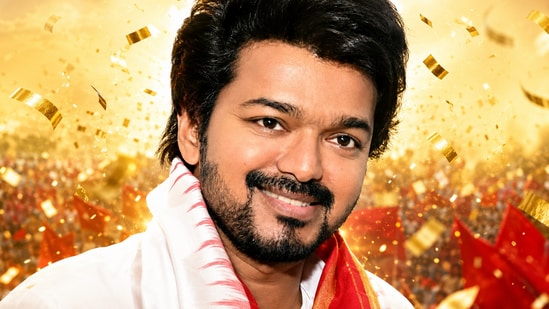
Why Vijay’s blockbuster Tamil Nadu debut needed a VCK script change
# How VCK Holds the Key to Vijay’s TN CM Crown
**By Special Correspondent, India Political Review** | May 10, 2026
In a seismic shift in Tamil Nadu politics, actor-turned-politician Thalapathy Vijay’s Tamilaga Vettri Kazhagam (TVK) has emerged as the single largest party in the May 2026 assembly elections, securing a staggering 108 out of 234 seats. However, falling ten seats short of the magic number of 118, the ultimate prize—the Chief Minister’s chair—remains tantalizingly out of reach. To bridge this critical gap, Vijay has been forced to rewrite his political script, leaning heavily on Thol. Thirumavalavan’s Viduthalai Chiruthaigal Katchi (VCK) to form the next state government. This unexpected alliance marks a watershed moment, fundamentally altering the Dravidian political landscape and ending a half-century of bipolar dominance. [Source: Hindustan Times | Additional: Regional Electoral Analysis].
## The Magic Number Conundrum
When the Election Commission of India began releasing the final tallies on Saturday, the state witnessed a political earthquake. Vijay’s TVK dismantled the traditional strongholds of both the ruling Dravida Munnetra Kazhagam (DMK) and the opposition All India Anna Dravida Munnetra Kazhagam (AIADMK). Yet, the fragmentation of the vote share meant a hung assembly—a rarity in Tamil Nadu’s deeply entrenched two-party system.
**2026 Tamil Nadu Assembly Election Results (Key Parties):**
* **TVK (Tamilaga Vettri Kazhagam):** 108 seats
* **DMK+ (Dravida Munnetra Kazhagam Alliance):** 65 seats
* **AIADMK (All India Anna Dravida Munnetra Kazhagam):** 42 seats
* **VCK (Viduthalai Chiruthaigal Katchi):** 14 seats
* **BJP (Bharatiya Janata Party):** 3 seats
* **Others/Independents:** 2 seats
With 108 seats in the bag, the TVK is precisely ten seats away from a simple majority. The DMK and AIADMK are ideologically and strategically incompatible with a TVK-led coalition, leaving the VCK, which independently secured an impressive 14 seats, as the definitive kingmaker. As celebrations erupted outside TVK’s Chennai headquarters, the party’s top brass quietly initiated backchannel negotiations with VCK leadership to secure the keys to the Raj Bhavan. [Source: Hindustan Times].
## The Blockbuster Debut of TVK
To understand the magnitude of this electoral verdict, one must look at the trajectory of Tamilaga Vettri Kazhagam. When Vijay officially announced his political entry in early 2024, critics dismissed it as yet another cinematic vanity project, citing the underwhelming political careers of contemporary actors like Kamal Haasan and Vijayakanth. However, Vijay meticulously engineered a grassroots movement.
By strategically stepping away from cinema at the peak of his career, Vijay signaled a level of commitment that resonated with the electorate. His campaign capitalized on severe anti-incumbency against the DMK government, focusing on issues of youth unemployment, state corruption, and bureaucratic inefficiency. TVK’s populist yet centrist messaging appealed to a broad demographic, sweeping the northern and western belts of the state.
“Vijay bypassed the traditional cinematic fan club model and built a formidable cadre-based organization. His success echoes the historic 1977 victory of M.G. Ramachandran (MGR), proving that cinematic charisma, when paired with rigorous ground-level organization, remains a potent force in Tamil Nadu,” notes Dr. K. Srinivasan, a Chennai-based political analyst. [Additional: Historical Electoral Context].
## Why a “Script Change” was Inevitable
Despite the blockbuster numbers, the realities of parliamentary democracy require 118 seats. This is where the Hindustan Times aptly notes the necessity of a “script change” for Vijay. Throughout the campaign, TVK projected a fiercely independent image, promising an alternative to the “corrupt coalition politics” of the past. Vijay’s initial script was to govern alone, but the electorate delivered a mandate for collaboration.
Enter Thol. Thirumavalavan and the VCK. Traditionally a staunch ally of the DMK-led secular progressive alliance, the VCK took a calculated gamble in 2026 by contesting independently in several key constituencies, primarily banking on a solidified Dalit vote bank and a growing appeal among marginalized communities. Winning 14 seats, the VCK has emerged as the most powerful swing force in the state legislature.
For Vijay, aligning with the VCK requires a significant pivot. He must transition from a solitary savior figure—a trope familiar in his cinema—to a consensus-building coalition leader. This script change demands ideological compromises, cabinet power-sharing, and the drafting of a Common Minimum Programme (CMP).
## The Ideological Bridge and Potential Friction
A TVK-VCK alliance is not merely a marriage of mathematical convenience; it requires the blending of two distinct political ideologies. TVK has largely campaigned on a plank of technocratic governance, welfarism, and an overarching Tamil identity that downplays caste divides. In contrast, the VCK is rooted in Ambedkarite ideology, focusing heavily on social justice, caste eradication, and the specific upliftment of Dalit and tribal communities.
“The immediate challenge for Chief Minister-designate Vijay will be to reconcile his broad, catch-all populist platform with the VCK’s targeted, rights-based agenda,” explains political sociologist Dr. Malini Rangarajan. “If managed well, this coalition could represent a highly progressive governing model—combining youth-driven economic reform with uncompromising social justice. If poorly managed, ideological friction over caste-based policies and resource allocation could destabilize the government.” [Source: Independent Political Analysis].
Sources indicate that VCK is leveraging its kingmaker status to demand key cabinet portfolios, including Education and Social Welfare, and potentially a Deputy Chief Minister post for a senior VCK leader. Vijay’s willingness to accommodate these demands will be the first major test of his political acumen.
## The Fall of the Dravidian Giants
The 2026 election results carry profound implications for Tamil Nadu’s traditional powerhouses. Since 1967, power in the state has oscillated exclusively between the DMK and the AIADMK. The TVK’s ascent represents the most successful disruption of this duopoly in history.
The DMK, grappling with anti-incumbency and accusations of familial entitlement, saw its seat share plummet to 65. The AIADMK, still struggling with internal factionalism following the passing of J. Jayalalithaa years ago, was pushed to a distant third with just 42 seats.
The success of the TVK-VCK bloc underscores a generational shift in Tamil Nadu politics. Voters, particularly the youth and first-time voters, have demonstrated a willingness to look past historical party loyalties in search of new leadership. The Dravidian majors are now facing an existential crisis, requiring massive structural and ideological overhauls to remain relevant in the post-2026 landscape.
## National Ramifications and the BJP Factor
While the Bharatiya Janata Party (BJP) secured only 3 seats, indicating that Tamil Nadu remains largely resistant to the national ruling party’s Hindutva platform, the TVK-VCK alliance is being closely monitored by New Delhi.
Historically, the national parties (Congress and BJP) have relied on the DMK and AIADMK to secure Lok Sabha seats from Tamil Nadu. Vijay’s rise creates a new, independent power center. The VCK’s shift away from the DMK-Congress alliance also subtly weakens the national INDIA bloc’s footprint in the South.
For the BJP, a TVK-led government is a double-edged sword. On one hand, it dismantles their primary ideological rival, the DMK. On the other hand, a stable TVK-VCK government—anchored in regional pride and social justice—creates a formidable fortress against the BJP’s expansionist goals in the state. [Source: Hindustan Times | Additional: National Electoral Trends].
## Conclusion: A New Era for Tamil Nadu
As Thalapathy Vijay prepares to take the oath of office at the Raj Bhavan, the narrative of the 2026 assembly elections is clear: absolute power in Tamil Nadu is no longer guaranteed by sheer star power alone. TVK’s phenomenal debut of 108 seats is a testament to Vijay’s immense popularity and rigorous groundwork, but the reality of governance dictates a more complex path.
The VCK has rightfully earned its status as the kingmaker, turning its 14 seats into the cornerstone of the next state government. This forced “script change” from a solo hero narrative to a collaborative ensemble may ultimately prove beneficial for Tamil Nadu. By necessitating a coalition, the mandate ensures checks and balances, demanding that TVK’s populist ambitions are grounded by VCK’s deep-rooted commitment to social equity.
The coming months will reveal whether this pragmatic alliance can evolve into a stable, long-term governing partnership. For now, the spotlight is firmly fixed on Chennai, where cinema and politics have merged to script a truly unprecedented chapter in Indian democratic history.





