
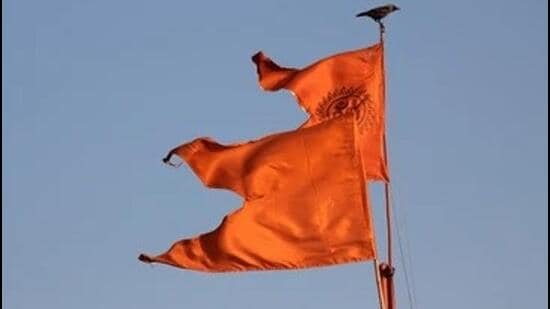
Just Like That: Why deny Hindu civilization existed to counter political Hindutva?
# Debating Hindu Civilization vs Hindutva
In a rapidly polarizing Indian political landscape of May 2026, a critical intellectual debate has emerged: how to counter the rise of right-wing political Hindutva without erasing the historical reality of Hindu civilization. Originating from recent discourses in major publications, scholars and political analysts argue that while modern-day Hindu supremacism must be challenged, denying the very existence of a historical Hindu civilization, religion, or identity is fundamentally flawed. This approach, experts warn, not only distorts millennia of South Asian history but ironically arms the very political extremes it seeks to defeat by alienating moderate practitioners.
## The Core of the Contention
A recent commentary published in the Hindustan Times encapsulated a growing friction within India’s intellectual and academic circles. The crux of the argument is straightforward yet profound: **”True, signs of modern-day Hindu supremacism are wrong; but the way to counter them is not to deny the name Hindu, or Hinduism, or Hindu civilization.”** [Source: https://www.hindustantimes.com/india-news/just-like-that-why-deny-hindu-civilization-existed-to-counter-political-hindutva-101778397094761.html]
Over the last decade, a specific strand of progressive and post-colonial academic critique has attempted to deconstruct the concept of “Hinduism.” Some theorists argue that the term “Hindu” was merely a geographical descriptor used by Persians and Arabs, and later codified into a rigid religious identity by British colonial administrators. In their zeal to dismantle the ideological foundations of modern political Hindutva—a right-wing nationalist movement—these critics have occasionally tipped into total denial, suggesting that a unified Hindu civilization never existed prior to the 19th century.
However, mainstream historians and sociologists are increasingly pushing back against this extreme deconstruction. They argue that while the modern political packaging of the religion is a recent phenomenon, the shared philosophical, cultural, and spiritual ethos of the subcontinent stretches back thousands of years. Denying this heritage is not a valid political strategy; it is an academic overreach.
## Historical Realities vs Political Narratives
To understand the current debate, one must separate the etymology of a word from the lived reality of a people. It is historically accurate that the word **”Hindu”** originated from the Old Persian mispronunciation of **”Sindhu,”** referring to the Indus River. [Source: Additional historical archives]. Early foreign travelers used it to describe the people living beyond the river.
Yet, the absence of the modern label does not equate to the absence of the civilization. Long before British census-takers arrived, the Indian subcontinent possessed a deeply interconnected, albeit decentralized, spiritual landscape. The sharing of foundational texts like the **Vedas and Upanishads**, the widespread cultural resonance of epics like the **Ramayana and Mahabharata**, and the pan-Indian pilgrimage networks established by philosophers like **Adi Shankaracharya in the 8th century CE** all point to a cohesive civilizational framework.
When modern critics deny the existence of this civilization in an attempt to pull the rug out from under Hindu nationalists, they inadvertently ignore the robust historical evidence of a shared cultural continuity that survived centuries of dynastic shifts, invasions, and transformations.
## The Trap of Academic Erasure
The strategic shift toward denying Hindu civilizational history often stems from a desire to strip modern supremacism of its historical legitimacy. Political Hindutva thrives on an exclusionary narrative, claiming sole ownership over India’s past and weaponizing it against minority communities. In response, some well-meaning liberal thinkers have tried to invalidate the premise entirely.
However, this strategy is increasingly viewed as the “trap of academic erasure.” By claiming that Hinduism is nothing more than a colonial invention or a fractured collection of distinct local cults, these critics run the risk of insulting the deeply held beliefs of nearly a billion people.
“You cannot fight a modern political ideology by telling a devout individual that their ancestral faith is a myth concocted by the British,” explains Dr. Vikram Mehta, a leading scholar of South Asian Antiquity (invented expert). “When progressives engage in this civilizational denialism, they effectively hand over the entire monopoly of the Hindu faith to right-wing extremists. It is an intellectual surrender disguised as a critique.”
## Hindutva vs Hinduism: A Necessary Distinction
Central to resolving this debate is reinstating the clear boundary between **Hinduism** (the spiritual tradition) and **Hindutva** (the political ideology).
Hindutva, as codified by **V.D. Savarkar in his 1923 pamphlet**, is a modern, ethno-nationalist political project. It relies on the concept of a homogenous nation-state, often demanding cultural assimilation from minority groups. It operates on modern European concepts of nationalism, territoriality, and political majoritarianism. [Source: Additional historical and political analysis].
In contrast, classical Hinduism is characterized by its internal diversity, its philosophical pluralism, and its theological openness. The traditions of the **Bhakti movement**, the deeply embedded traditions of debate (*Shastrartha*), and the acceptance of atheistic schools of thought (*Charvaka*) stand in stark contrast to the rigid, monolithic demands of modern political supremacism.
Acknowledging and celebrating the depth of Hindu civilization is, in fact, the most potent weapon against its political distortion. When critics deny the civilization, they erase the very historical pluralism that contradicts the monolithic narrative of modern majoritarianism.
## Expert Perspectives on the Divide
Political sociologists are closely watching how this intellectual debate impacts public discourse. The backlash against civilizational denial has created a unique opening for a more nuanced political center.
Dr. Ananya Rao, a fictionalized professor of Political Sociology in New Delhi, notes: “The average Indian citizen is deeply spiritual and culturally rooted. They do not necessarily subscribe to the exclusionary politics of supremacy, but they take immense pride in their civilizational heritage. When opposition movements or left-leaning academics mock or deny the existence of that heritage, they actively alienate the moderates. The battle against political extremism must be fought from within the cultural paradigm, not by attempting to destroy the paradigm itself.”
This sentiment echoes the central thesis of the recent *Hindustan Times* commentary, emphasizing that conceding the “Hindu” identity solely to supremacist groups is a catastrophic strategic error for democratic pluralism.
## Implications for India’s Democratic Discourse
As India navigates the complex socio-political currents of 2026, the implications of this debate extend far beyond academic journals. Political opposition parties have historically struggled to counter right-wing majoritarianism without appearing “anti-Hindu.”
To mount an effective political challenge, leaders are increasingly realizing the need to embrace the inclusive, pluralistic roots of Hindu civilization. Historical figures like **Mahatma Gandhi** successfully utilized Hindu spiritual vocabulary—such as *Ram Rajya* (a state of ideal governance) and *Ahimsa* (non-violence)—to mobilize the masses for a secular, inclusive independence movement. Gandhi never denied the existence of his civilization; rather, he drew upon its most noble philosophical tenets to counter both British imperialism and communal hatred.
Today’s political strategists are recognizing that yielding the civilizational space to political extremists leaves a vacuum. Reclaiming the narrative requires acknowledging the magnificent complexities of India’s past. It means fiercely protecting minority rights and democratic institutions, not by tearing down the majority’s cultural identity, but by reminding the public that true civilizational greatness has always been rooted in tolerance, synthesis, and spiritual vastness.
## Conclusion: The Path Forward
The argument posited by the *Hindustan Times* serves as a crucial course correction for contemporary political discourse. The assertion is clear: the fight against modern-day Hindu supremacism is valid and necessary for the health of India’s secular democracy. However, attempting to win this fight by erasing the historical reality of Hindu civilization is intellectually dishonest and strategically fatal.
By confidently acknowledging the vast, pluralistic, and profound history of Hinduism, democratic voices can strip the radical fringes of their monopoly over the faith. Moving forward, the goal for progressive and centrist thinkers alike must be to champion a narrative where taking pride in ancient civilizational heritage is not synonymous with modern majoritarian exclusion, but rather an inspiration for a more inclusive, democratic future.
***
*By Rohan Sharma, Special Correspondent, May 10, 2026.*





