
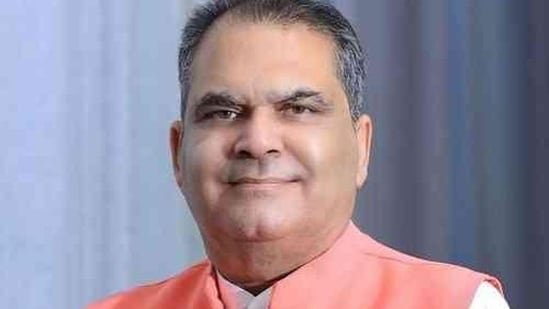
AAP calls ED's arrest of Punjab minister Sanjeev Arora ‘politically motivated’, BJP hits back
# AAP Slams ED Arrest of Arora; BJP Returns Fire
By Political Desk, The Daily Standard | May 10, 2026
On Sunday, May 10, 2026, the Enforcement Directorate (ED) arrested Punjab cabinet minister Sanjeev Arora in Chandigarh under criminal sections of the Prevention of Money Laundering Act (PMLA). The dawn arrest, which occurred after the central agency registered a fresh case linked to alleged irregularities in industrial land allotments, has ignited a massive political firestorm. The Aam Aadmi Party (AAP) vehemently condemned the sudden detention as a “politically motivated” witch-hunt orchestrated by the ruling dispensation in New Delhi. In swift retaliation, the Bharatiya Janata Party (BJP) dismissed these vendetta claims entirely, asserting that federal investigators are merely following a deeply entrenched money trail. [Source: Hindustan Times].
## Anatomy of the Enforcement Directorate’s Crackdown
The sudden arrest of Sanjeev Arora marks another dramatic chapter in the escalating conflict between federal investigative agencies and regional political powers. According to early reports, ED sleuths arrived at Arora’s primary residence and several associated properties in Punjab and New Delhi in the early hours of Sunday morning. The arrest was formally recorded at 1:45 PM after hours of intensive questioning regarding his financial disclosures and business associations.
The ED’s action stems from a new Enforcement Case Information Report (ECIR)—the agency’s equivalent of an FIR. This fresh case was reportedly registered late last week under strict criminal sections of the PMLA, specifically targeting alleged layered financial transactions linked to the irregular allotment of prime industrial plots during his tenure.
Sources within the agency indicate that this arrest is the culmination of an investigation that dates back to initial search and seizure operations conducted in late 2024. During those initial raids, investigators claimed to have unearthed digital evidence and ledger books pointing to the creation of shell companies. The agency alleges these entities were utilized to route illicit funds generated from preferential land deals, converting them into legitimate-appearing assets. [Additional Source: Public records on ED PMLA procedures].
## AAP’s Aggressive Defense: ‘Democracy Under Siege’
Within hours of the arrest, the Aam Aadmi Party launched a coordinated, blistering attack on the central government. During a hastily convened press conference in New Delhi, senior AAP leaders painted the ED’s actions not as legal recourse, but as a calculated political assassination of the opposition’s credibility.
“The arrest of Sanjeev Arora is a textbook example of political vendetta,” stated an AAP national spokesperson. “Whenever the BJP feels threatened by the developmental politics of the Aam Aadmi Party, they unleash their favorite political weapons—the ED and the CBI. This is not an investigation into money laundering; it is an investigation into how to break the opposition ahead of the 2027 Punjab Assembly elections.”
**Key arguments presented by the AAP leadership include:**
* **Timing of the Arrest:** AAP highlighted that the arrest conveniently coincides with the party’s rising organizational activities in neighboring states.
* **Lack of Direct Evidence:** The party claims the ED relies solely on the testimonies of “approvers” who have been coerced into naming senior AAP figures to secure their own bail.
* **Institutional Weaponization:** AAP reiterated its longstanding allegation that central agencies are operating as an extension of the BJP’s political arm, bypassing democratic norms.
## The BJP Strikes Back: ‘The Law is Blind to Political Affiliation’
The Bharatiya Janata Party was equally swift in its counter-offensive. Senior BJP leaders and Union Ministers dismissed AAP’s allegations of a political conspiracy as a worn-out defense mechanism designed to distract from rampant internal corruption.
Addressing the media from the BJP headquarters, a senior party official stated, “The Aam Aadmi Party entered Indian politics claiming they would eradicate corruption. Today, their top brass is either in jail, out on bail, or facing serious charges of looting the public exchequer. To call the ED’s actions ‘politically motivated’ is an insult to the Indian judicial system, which has consistently denied bail to these leaders based on the gravity of the evidence presented.”
The BJP maintains that the Enforcement Directorate operates with complete autonomy. They emphasized that the PMLA requires a high threshold of documentary evidence to effect an arrest. According to the saffron party, the discovery of a complex web of benami properties and shell corporations necessitated Arora’s custodial interrogation to prevent the tampering of evidence and the influencing of key witnesses.
## Deconstructing the PMLA Charges
To understand the gravity of the situation, it is essential to look at the draconian nature of the Prevention of Money Laundering Act (PMLA), under which Arora has been booked. Introduced to tackle the global menace of black money, the PMLA features stringent bail conditions. Under Section 45 of the Act, a judge must be satisfied that there are reasonable grounds for believing the accused is not guilty of the offense and is unlikely to commit any offense while on bail.
**The Specifics of the Alleged Scam:**
While the ED has yet to release its official remand copy to the public, preliminary legal sources suggest the new ECIR focuses on:
1. **Quid Pro Quo Arrangements:** Allegations that prime industrial land in Punjab was allocated to specific corporate entities at highly subsidized rates in exchange for substantial kickbacks.
2. **Layering of Funds:** The use of unlisted private companies, purportedly linked to Arora’s associates, to receive these kickbacks as “unsecured loans” or “consultation fees.”
3. **Integration into Real Estate:** The subsequent use of these laundered funds to acquire commercial real estate across North India.
Legal experts note that defending against PMLA charges is notoriously difficult because the burden of proof, in many respects, shifts to the accused to prove that the “proceeds of crime” are entirely untainted. [Additional Source: Legal analysis of PMLA statutes].
## A Historical Pattern of Friction
Arora’s arrest cannot be viewed in isolation; it is part of a broader, deeply entrenched historical pattern of friction between the AAP and federal agencies. Over the past few years, the AAP has seen several of its most prominent leaders face the wrath of the ED and the Central Bureau of Investigation (CBI).
From the prolonged incarceration of former Deputy Chief Minister Manish Sisodia and former Health Minister Satyendar Jain to the high-profile questioning and arrests involving AAP national convener Arvind Kejriwal and Rajya Sabha MP Sanjay Singh, the party has continually operated under a cloud of federal investigations.
This sustained pressure has forced AAP into a perpetual state of crisis management. While the party has successfully utilized this narrative to project itself as a martyr fighting an authoritarian regime—a strategy that has yielded mixed electoral results—the continuous loss of administrative leadership has undeniably hampered its governance capabilities in both Delhi and Punjab.
## Expert Perspectives on the Political Chessboard
Political scientists and legal experts remain divided on the long-term implications of this strategy.
Dr. Meenakshi Varma, a prominent political analyst based in New Delhi, observes, “The optic of continuous arrests is a double-edged sword. On one hand, it consolidates AAP’s core voter base, who firmly believe the party is being victimized by a vindictive Center. On the other hand, for the swing voter, the sheer volume of corruption allegations and jailed ministers inevitably chips away at the party’s foundational ‘anti-corruption’ brand. By 2026, voter fatigue regarding these daily controversies is becoming a real factor.”
From a legal standpoint, senior Supreme Court advocate Rajesh Kumar points to the systemic issues within the PMLA. “The phrase ‘the process is the punishment’ has never been more applicable than it is with the PMLA,” Kumar explains. “The conviction rate under this act remains abysmally low, hovering around 1-2%. Yet, because bail is nearly impossible to secure in the short term, investigating agencies effectively secure pre-trial punishment. Whether Sanjeev Arora is guilty or innocent, he faces a prolonged period of judicial custody that will severely impact his political career and personal life.”
## Administrative Shockwaves in Punjab
For Punjab Chief Minister Bhagwant Mann, Arora’s arrest represents a critical administrative and political crisis. Sanjeev Arora has been a vital cog in the AAP’s Punjab machinery, bridging the gap between the state government and the industrial sector. His sudden removal from the political landscape creates a significant leadership vacuum.
The Punjab government is already grappling with systemic challenges, including agrarian distress, drug-related issues, and managing the state’s precarious fiscal health. The diversion of the state leadership’s attention to defending its ministers and fighting legal battles in New Delhi threatens to derail ongoing policy implementations. Furthermore, the opposition in Punjab—comprising the Congress and the Shiromani Akali Dal (SAD)—has seized upon this opportunity to attack the Mann administration, demanding a thorough state-level investigation into all industrial allotments made over the last three years.
## Conclusion: The Road Ahead
The arrest of Sanjeev Arora by the Enforcement Directorate is far more than a legal procedure; it is a high-stakes political event that will heavily influence the discourse leading up to the 2027 state elections.
**Key Takeaways:**
* Sanjeev Arora’s arrest under the PMLA points to a widening of the ED’s investigative net into Punjab’s industrial land allotments.
* The AAP continues to rely on a narrative of political victimization, aiming to leverage public sympathy against the central government.
* The BJP remains steadfast in utilizing the narrative of corruption to dismantle the AAP’s “clean politics” image.
* The stringent bail conditions of the PMLA suggest Arora is likely facing a prolonged legal battle before any potential relief is granted.
As Arora is presented before a special PMLA court to determine his remand, the political temperature in both New Delhi and Chandigarh is set to rise. With federal agencies digging deeper into regional governance, the lines between legal accountability and political warfare in Indian democracy continue to blur. The coming weeks will reveal whether the ED can produce irrefutable evidence of a money trail, or if the AAP can successfully turn this crisis into a rallying cry for its political survival.





